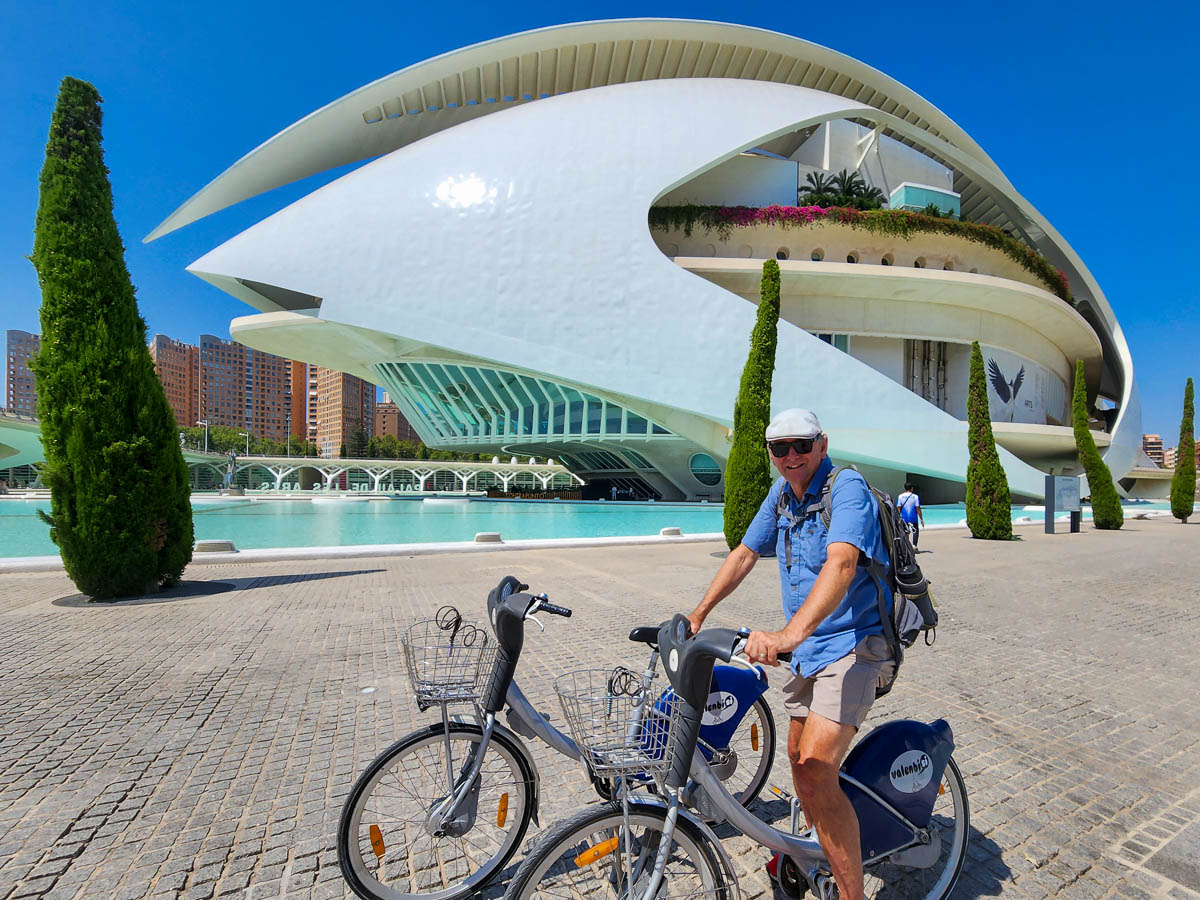
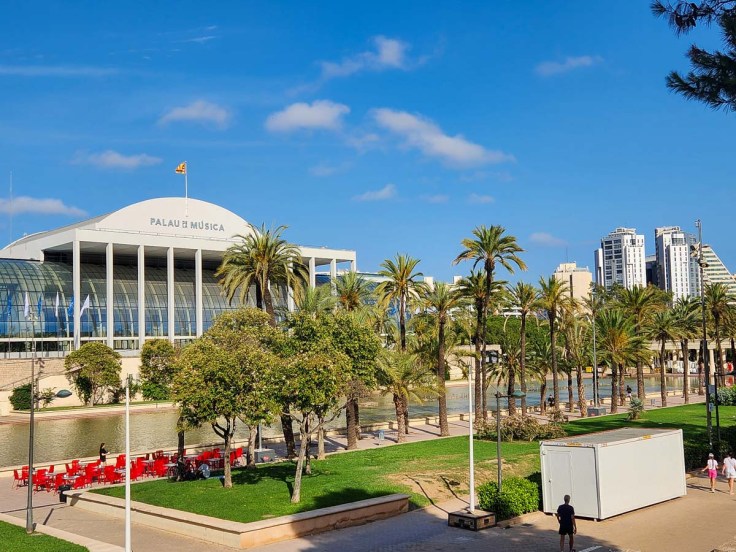
We arrived in Valencia by train from Barcelona and grabbed an Uber for the short drive from the train station to our hotel. Valencia has a beautiful green space that meanders through the city and contains many recreational and cultural buildings. Referred to as the Jardine del Turia (Turia Gardens), parklands replaced an empty riverbed after the Turia River was rerouted in 1969 to the city’s outskirts–a plan put in place following a catastrophic and deadly flood some years earlier. Over the next 40 years, the 18 zones of this elbow-shaped strip have been developed to include parks, bridges, and many of the buildings that are now recognizable landmarks of Valencia. Our hotel was across the street from this greenway and the Palau de la Música. Pathways through the gardens offer walking or riding access from the old town to the Mediterranean beaches and the many sites that now call this space home.
Old town
From our hotel, we walked partway toward old town on our first afternoon, stopping to check out the Mercat de Colón. The Mercat is a former market that has been repurposed into an upscale dining hall and shopping area. The building is beautiful but we never made it back to check out any of the restaurants and bars inside.
On another day, we walked to the nearest Valenbisi (bike share) bike rack and checked out bikes for the ride through the Jardine del Turia and up into old town. We managed to get a little lost in the pathways and it was very hot so we appreciated finding a shaded seating area in a little park near the Catedral de València (Valencia Cathedral). Over two days, we explored the old town, at times guided by a GPSmyCity audio walking tour. It’s not large, but the heat made us glad we had the time to take it slowly.
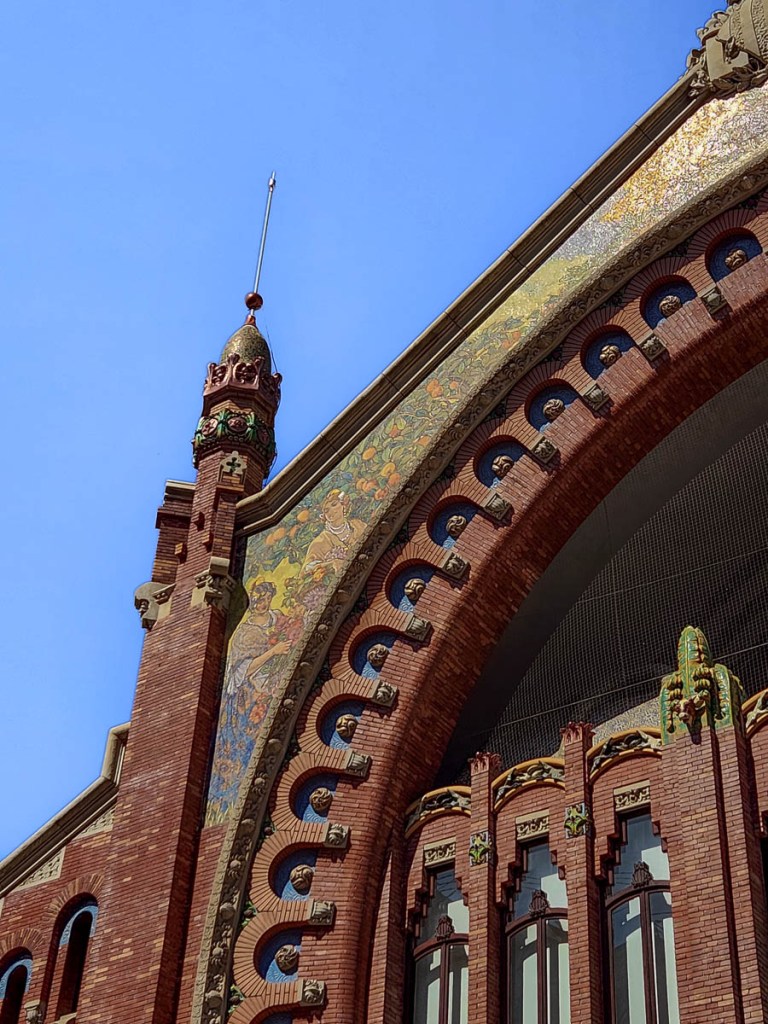
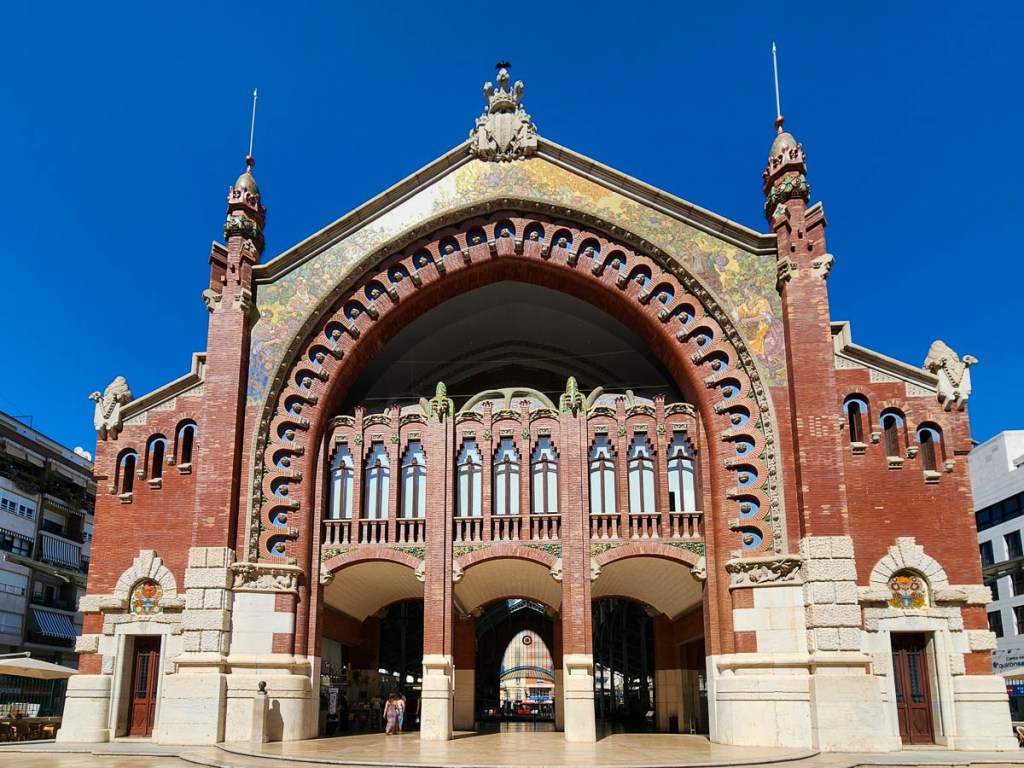
Mercat de Colón 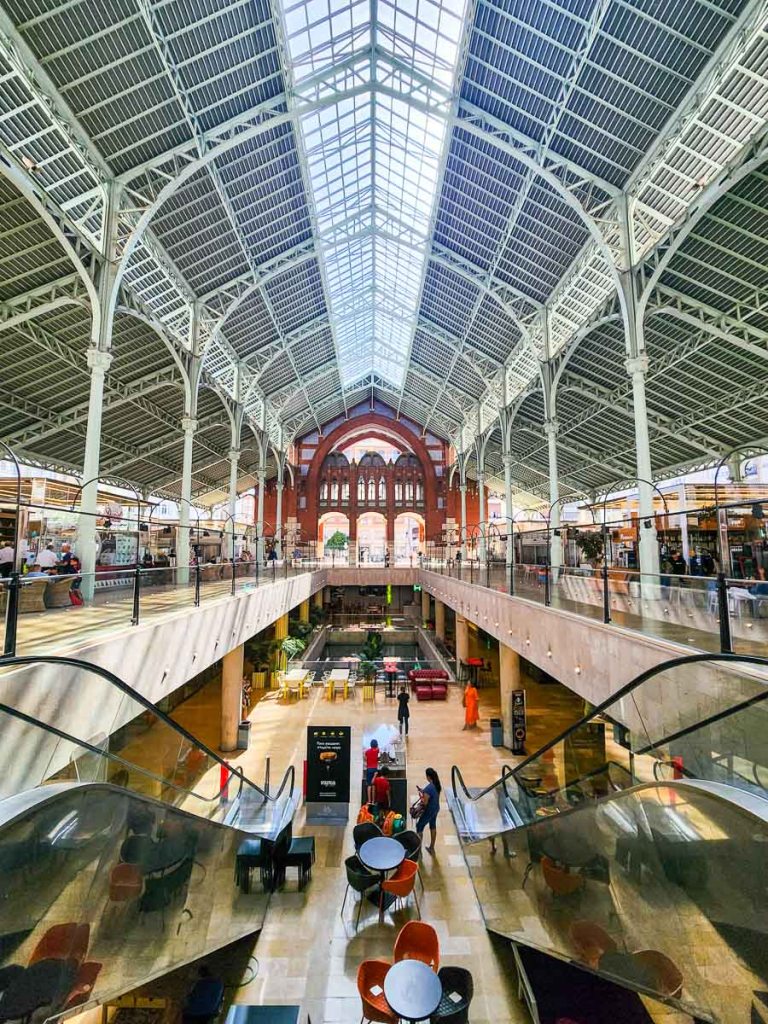
Inside the Mercat de Colón 
Catedral de València and plaza 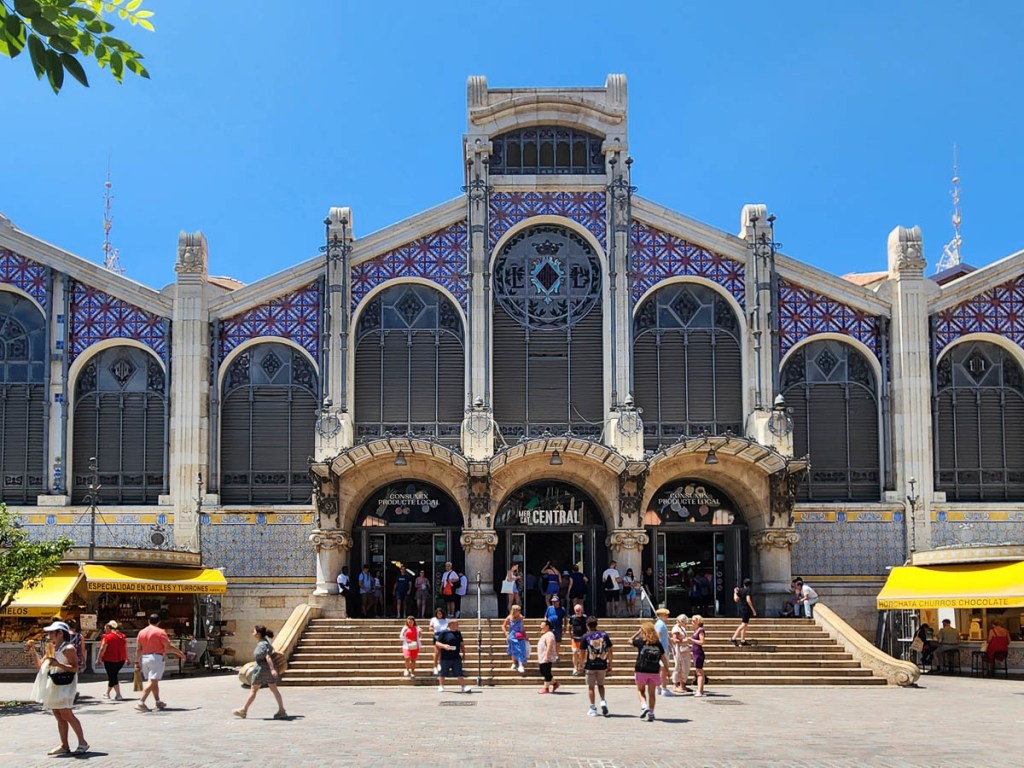
Central Market 
Tiled balconies and greenery on one of the pretty streets
City of Arts and Sciences
At the end of the Jardines du Turia closest to the ocean, La Ciutat de les Arts i les Ciències is a complex of stunning buildings and bridges built between 1996 and 2009, when the last building was completed. (A set of three towers is on hold.) The buildings include an open-air garden walk (L’Umbracle), the largest aquarium in Spain (L’Oceanogràfic), an opera house and performing arts center (Palau de les Arts Reina Sofía), a covered plaza for concerts and sporting events (L’Àgora has recently been remodeled to house the CaixaForum Valencia), and a science center whose structure resembles that of a whale skeleton (Museu de les Ciències Príncipe Felipe).
On our last day, forecasted to be even hotter than the previous ones, we decided to buy tickets for the aquarium, not realizing that much of it was open air (however, plenty of shady areas and some indoor spaces allowed us to enjoy several hours there). For just a few Euros more, we bought a combination ticket that included the science center, mostly to see the building since we assumed (and rightly so) that we would likely not be up to much more walking by the time we got there.
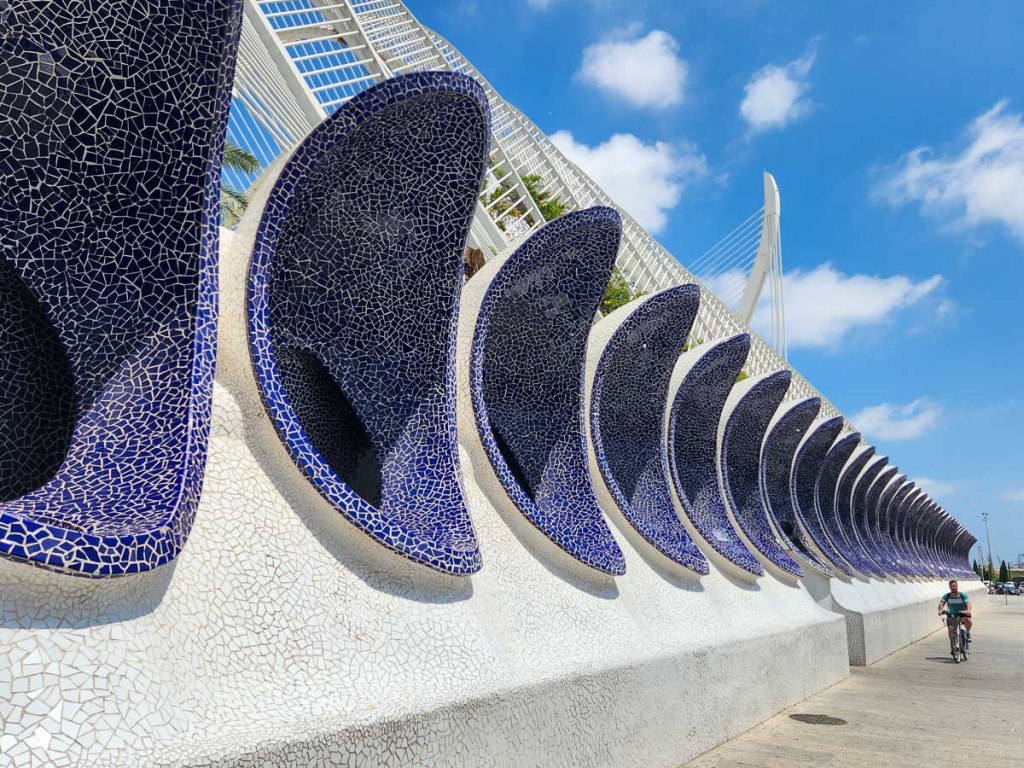
One wall of L’Umbracle 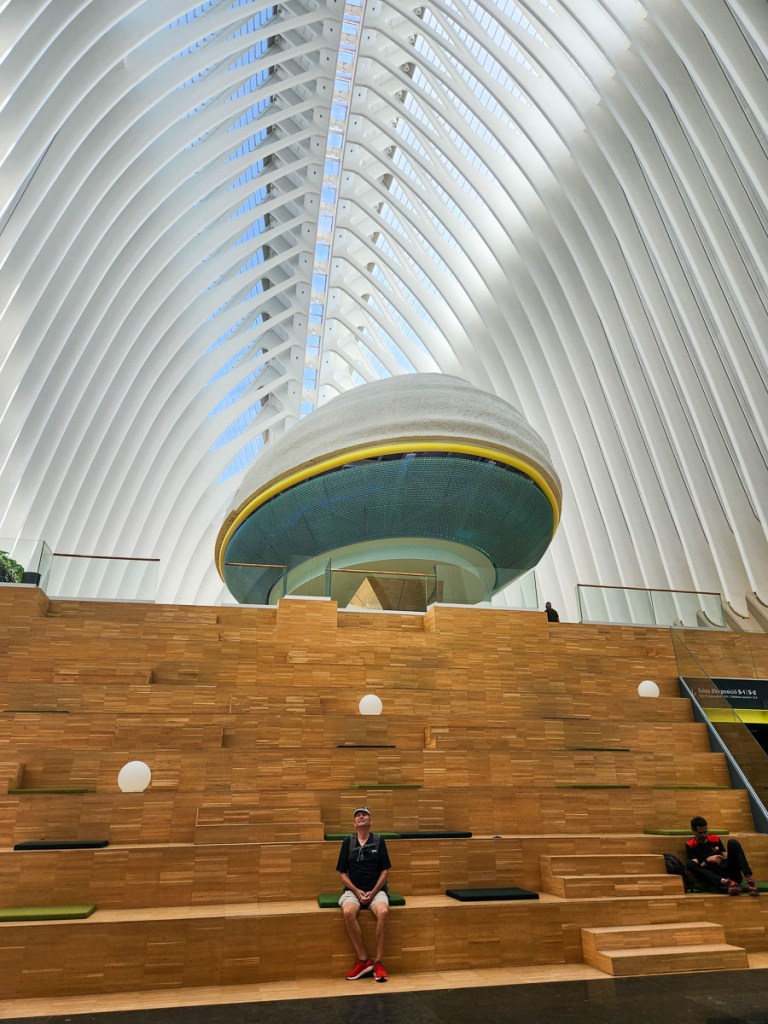
Inside L’Àgora 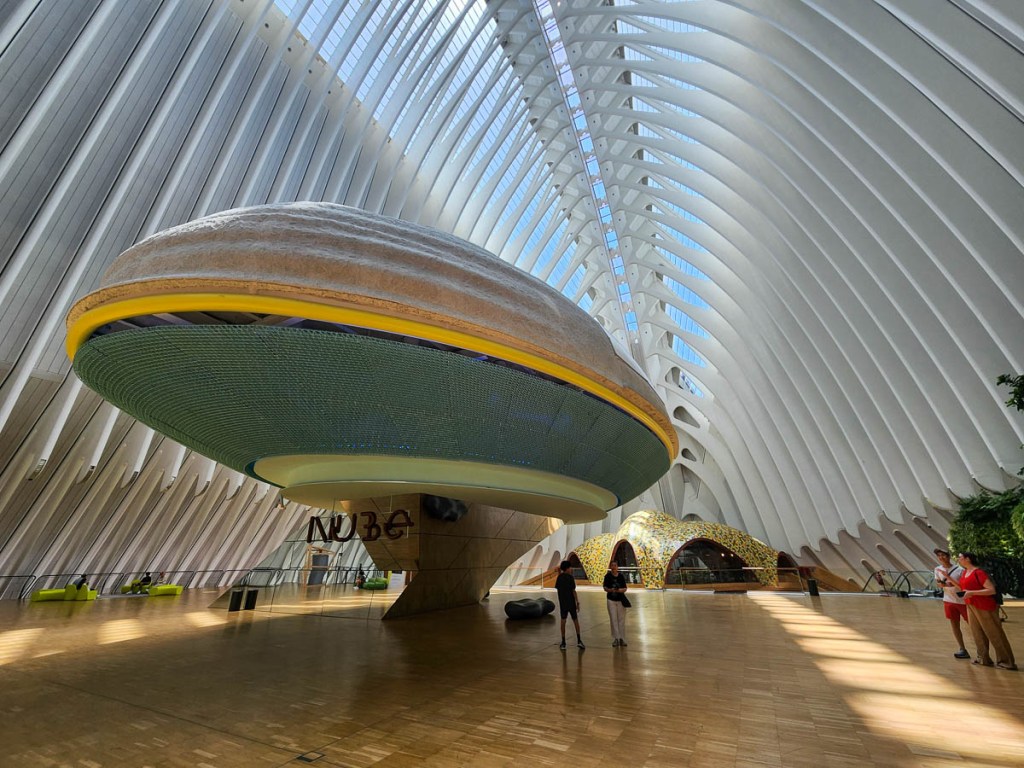

Dolphins at L’Oceanogràfic 
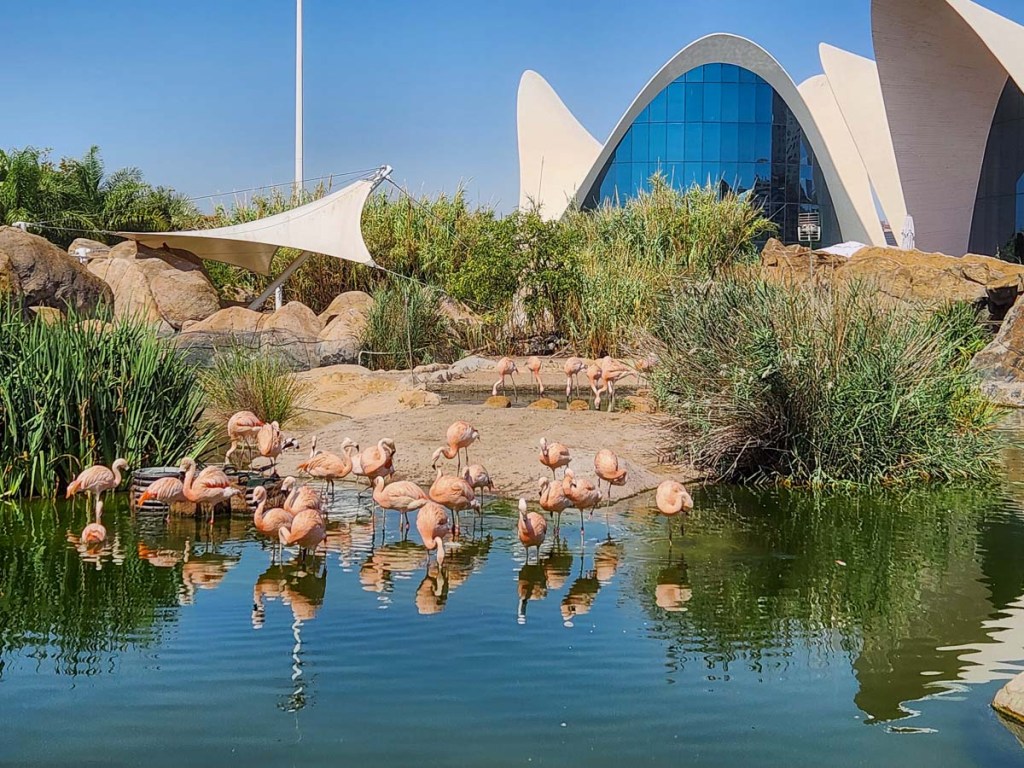
L’Oceanogràfic 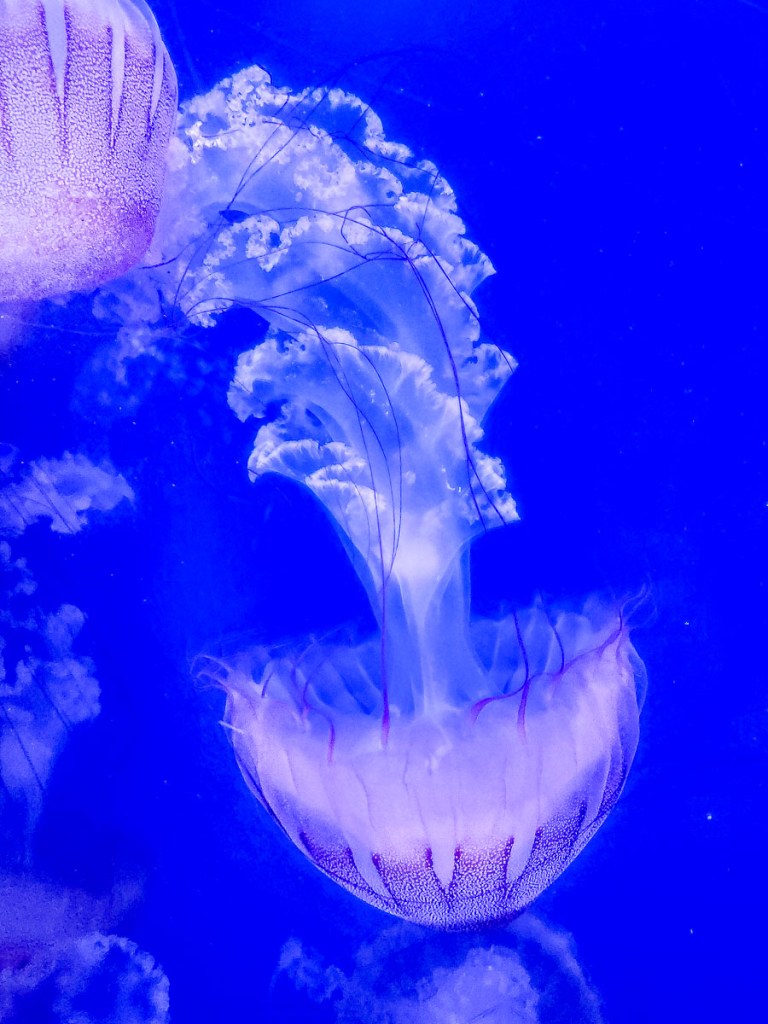
L’Oceanogràfic 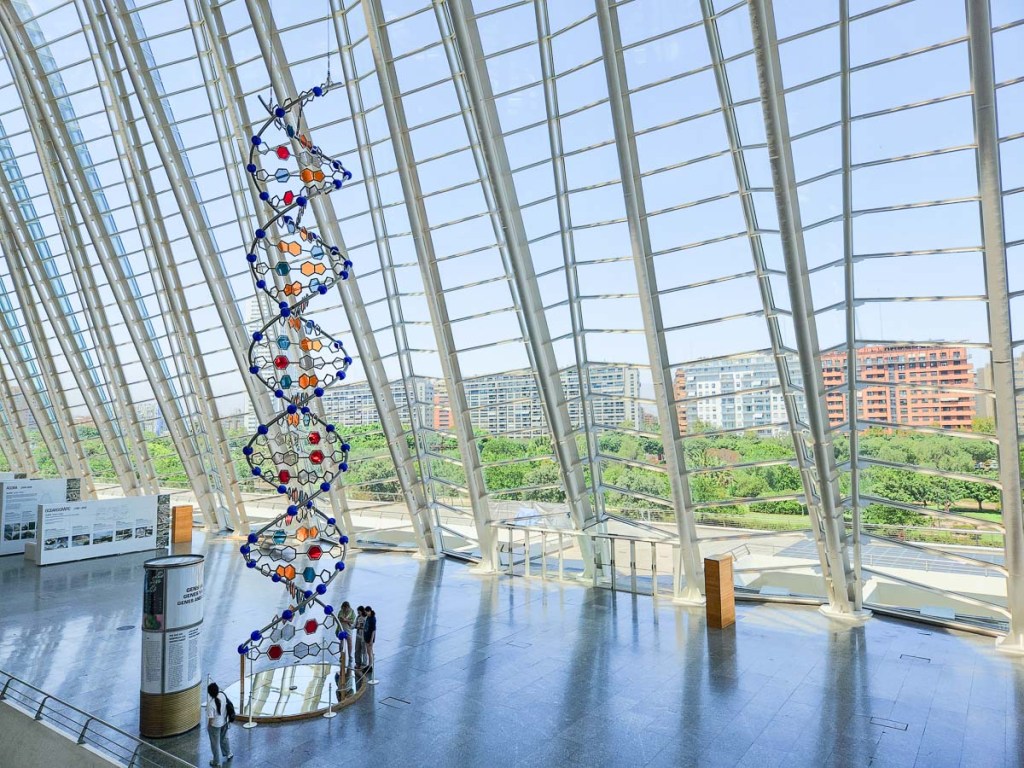
Museu de les Ciències 
View from inside Le Museu de les Ciències
Fallas Museum
Fallas is a five-day street party filled with processions, fireworks, and mayhem. The Fallas season, though, runs from late February through to mid-March each year. Temporary sculptures, sometimes comical or cartoonish, often making political statements or speaking to topical issues, decorate the streets during Fallas. At the very end of the festival these sculptures go up in flames and fireworks. Since we visited the city in July, we didn’t have the opportunity to see any of the festival goings on, but we did visit the Museu Faller where one or two sculptures per year have been saved since 1934. The detail of sculptures destined to be burned was surprising and it was fascinating to view 90 years of Valencian life through the sculptures and the signage provided.


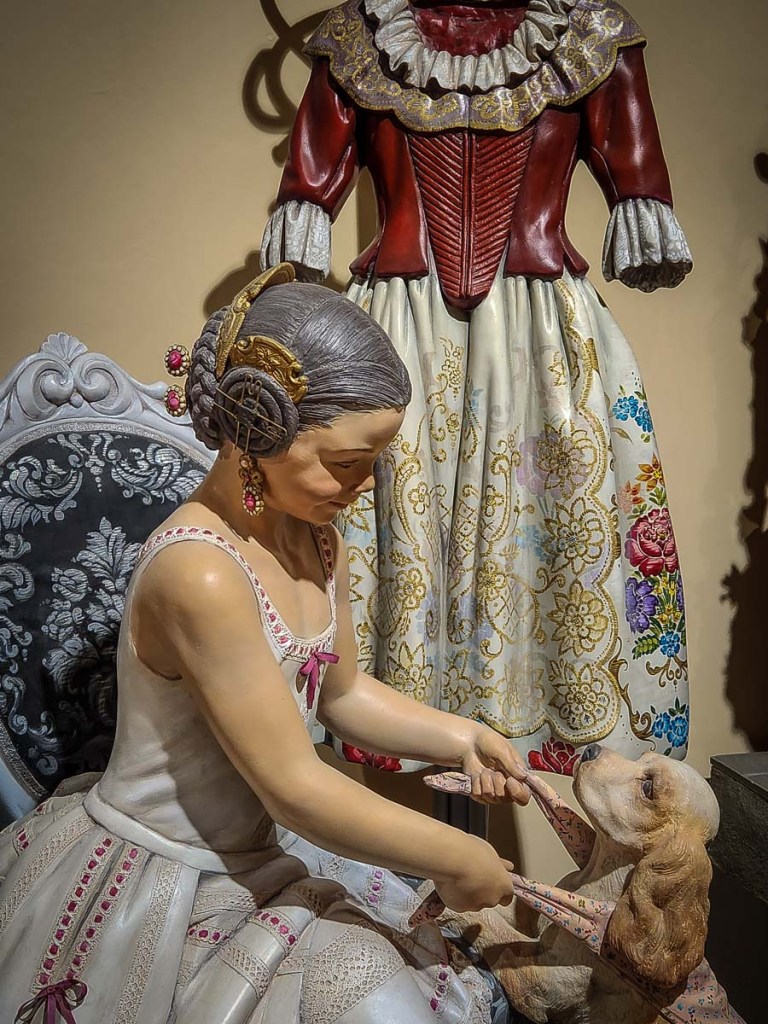
On another day, we were lucky enough to see a bevy of young women dressed in traditional Valencian garb (surely suffering in the heat), ready to participate in what appeared to be a “Miss Fallas” type of event. Staging and chairs were set up down in the Jardine del Turia in front of the Palau de la Música. We sat out on the grass with a picnic and could hear each of the falleras being introduced individually to loud applause. At the Fallas Museum, we had seen large portraits of each year’s reina fallera (fallera queen) lining the hallways and, presumably, these women were vying for their spot in the galllery.

Beaches
Though we could have ridden bikes to the seashore, we hopped on a bus to avoid riding in the strong sun. We were expecting a hive of activity in the Puerto de Valencia (Valencia port) where we disembarked to begin our walk along the waterfront, but it was very quiet. A few people skateboarded in the shade of 1914 warehouse buildings, repurposed (with walls removed) into shelters for dances and other community events. The Veles e Vents (built for the 2007 America’s Cup ) was set up for a conference, but we didn’t see anyone around there either.

With nothing much to see in the port area, we continued our walk to the four-kilometer stretch of sandy beaches. Almost 150 meters deep, the hot sand was topped with boardwalks at regular intervals to allow easy access to the water. Where there were boardwalks there were also bathrooms or change houses. The back edge of the beach was a treed walkway lined with hotels, restaurants and bars. We stopped at the popular Beach Boa for lunch and were lucky to get a table inside where it was much cooler than at the exposed outdoor tables.
Valencia is a clean, pretty city with much to do and see. We could easily see ourselves spending a prolonged time there, though maybe at a different (and slightly cooler) time of year.
TripBits
- Train from Barcelona: We booked through Trainline.com about three weeks in advance, three-hour trip, €68.50 for both of us.
- Valenbisi bicycles: Download the Valenbisi app to purchase passes, view locations and sign bicycles out and in. A day pass is €3.99 and a week pass is €13.30. The first 30 minutes of each ride is free so if you plan your trips in short bursts, you’ll only pay for your pass. We found bicycles and available empty stalls everywhere we wanted them to be. The bikes were in good condition.
- Transit: Our hotel was on a main bus route making it easy to go anywhere beyond our ability to walk or ride. Tap a credit card (or Google/Apple Pay) as you board (tap the same card again for more riders) and you will be charged €1.50 per trip. There are other ticket options for longer visits. The EMT app was useful for tracking the buses before and during our rides.
- Museu Faller: €2 entry fee, free on Sundays. Interpretive signs include English.
- Oceanográfic and Museu de les Ciències: Buy tickets on the official website. We paid €74.90 for one senior and one adult, combo tickets.

 Life: Phase Next
Please drop us a note!