Iceland was our final stop on our Europe 2024 trip. With Iceland Air offering multi-day layovers, we couldn’t resist squeezing in a couple of nights before returning to Vancouver.
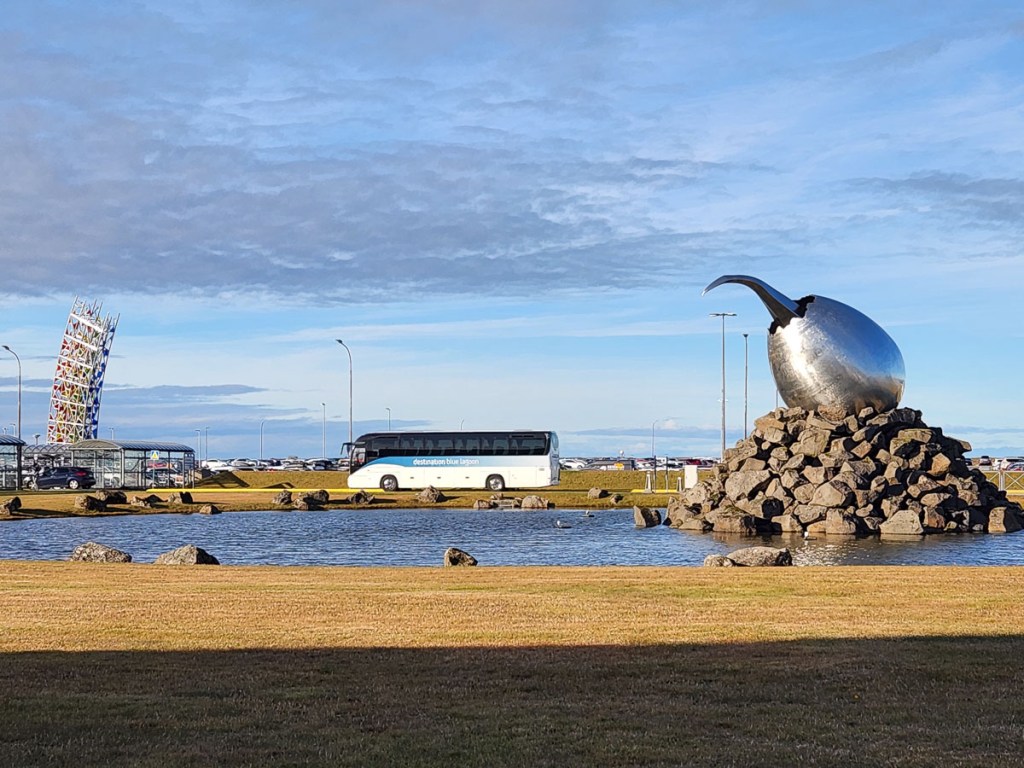
Walking out of the airport
With so little time to explore, my first thought was to spend one day walking around Reykjavik, Iceland’s capital city, and the other day on a tour bus so we didn’t have to do any planning at all. Once we started looking at our options in detail, we decided to rent a car at the airport, stay in town, and explore independently. This was a perfect solution for us, offering us the most flexibility. With the cost of transport from the airport to town and back, and tour costs, we probably ended up with the more economical approach as well.
Road Trip Day 1: The South Coast
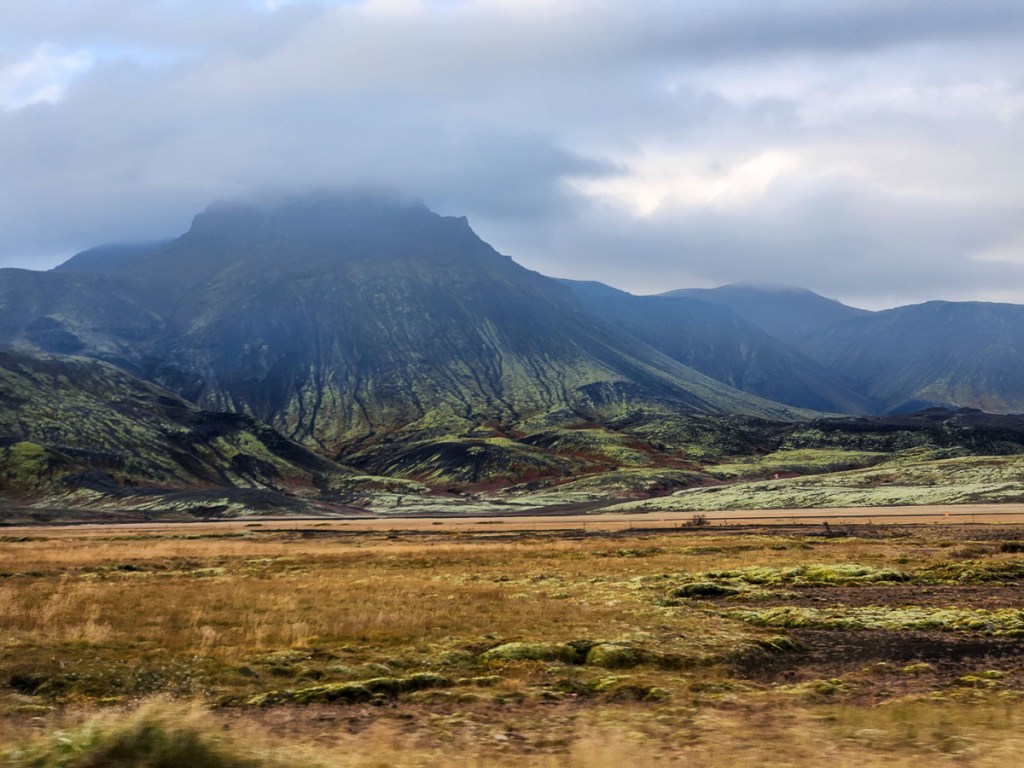
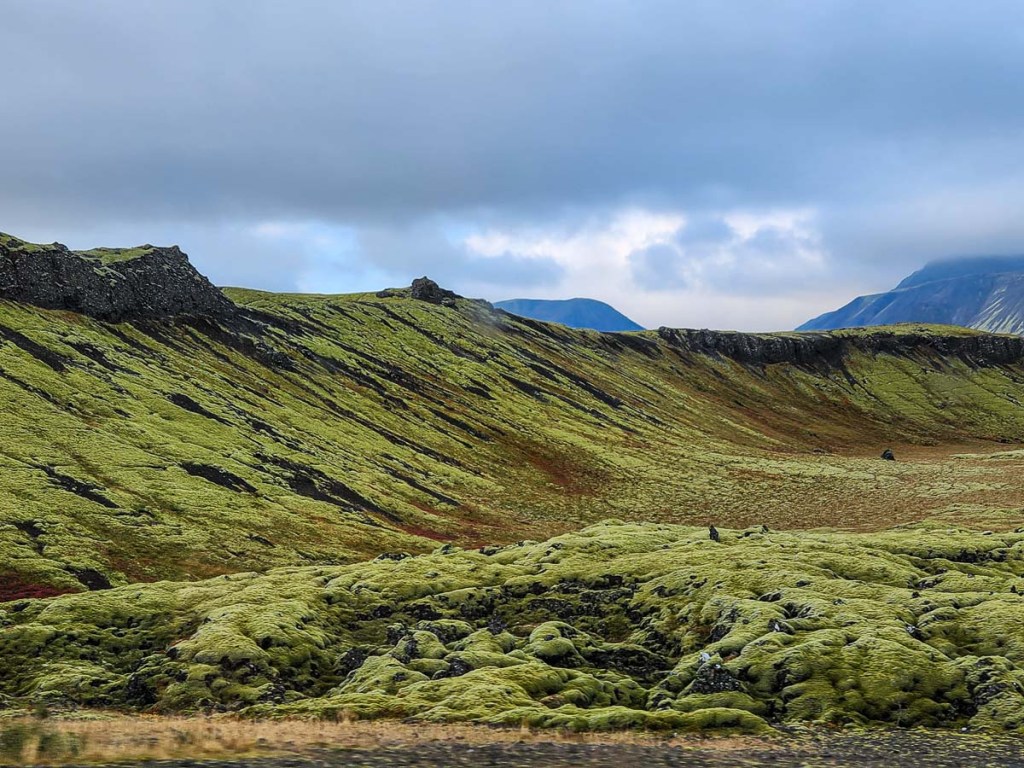
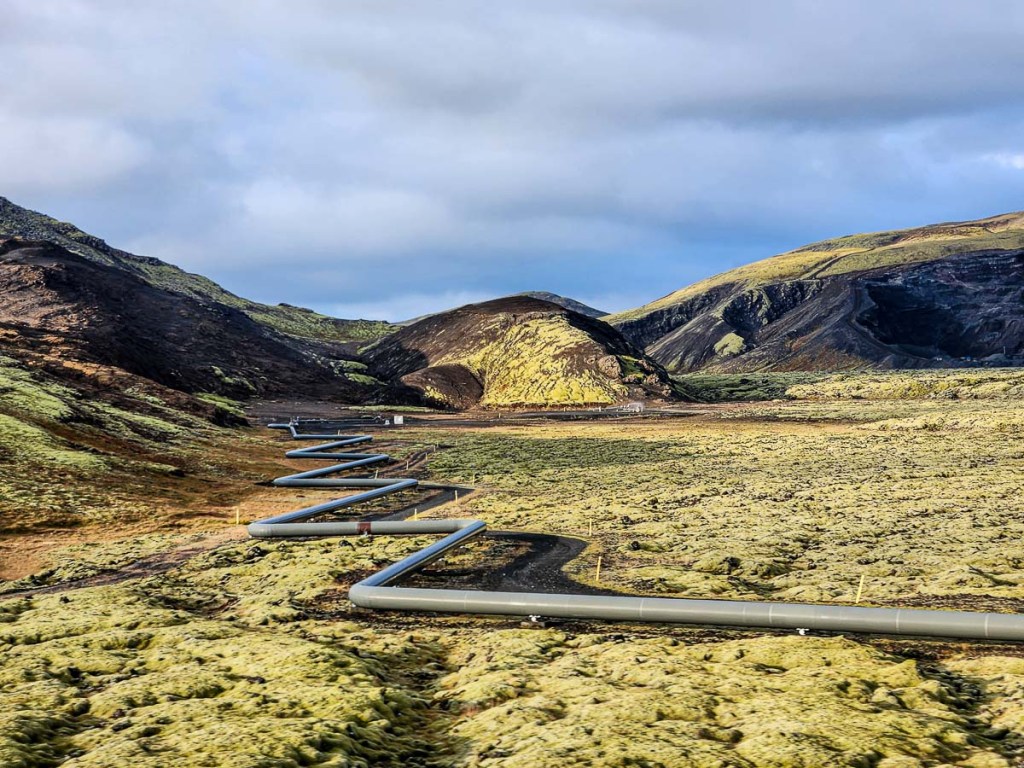
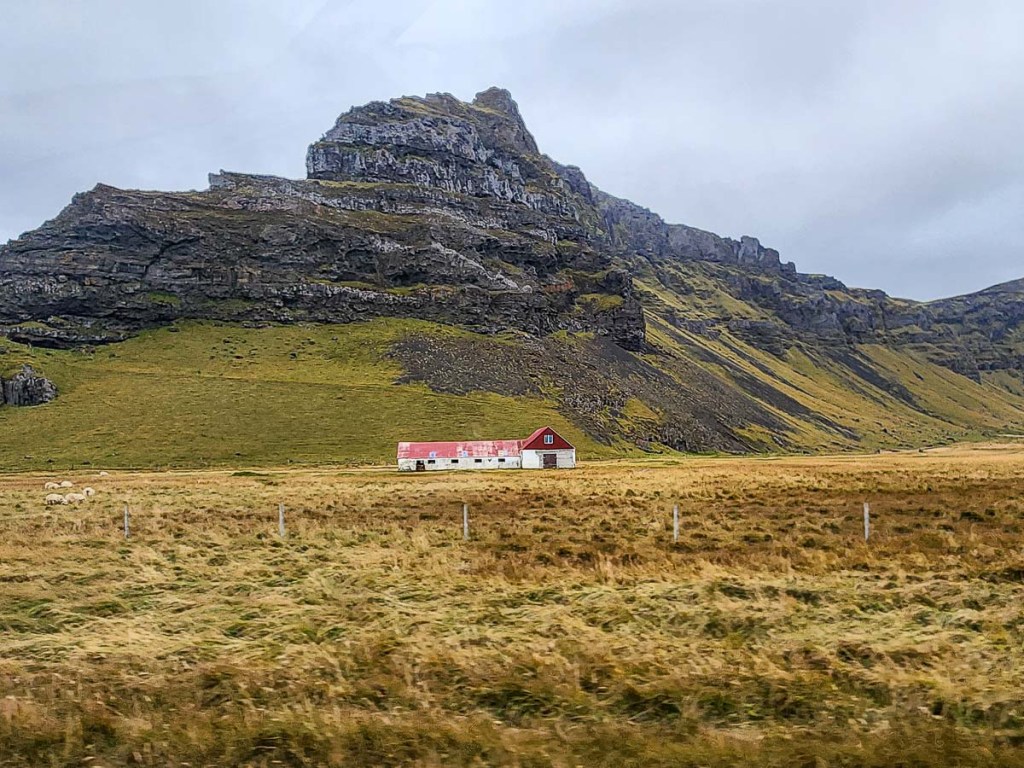
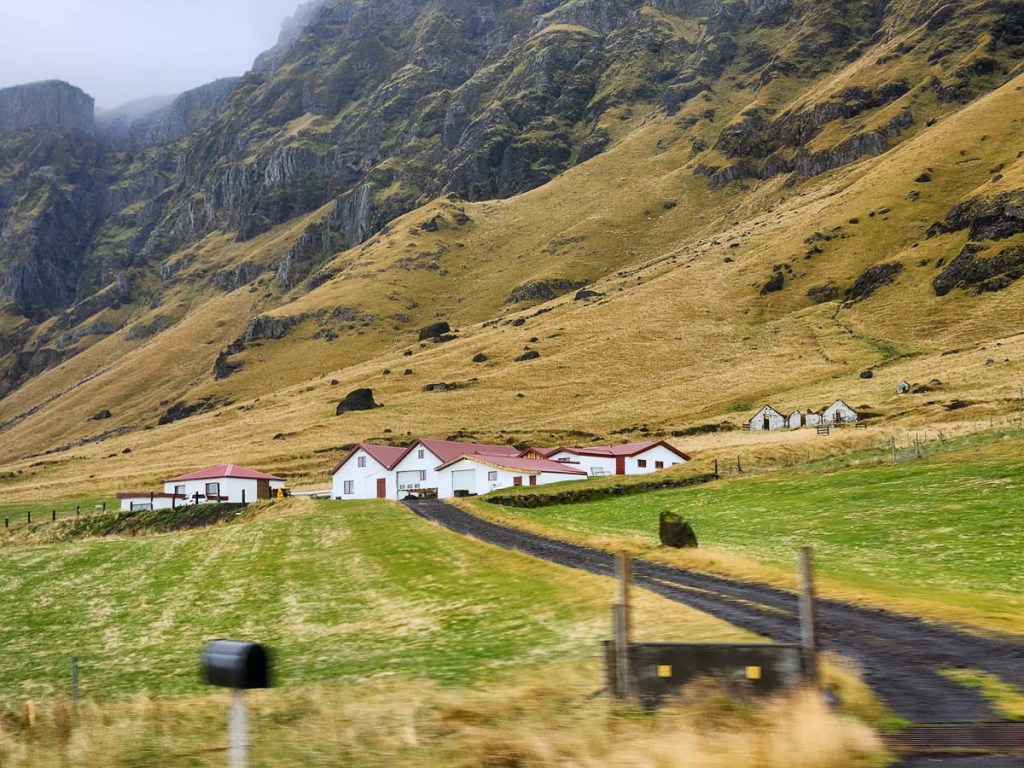
Thanks to the research shared by one of our housesit homeowners, we focussed our road trip on Iceland’s South Coast. I had marked a bunch of highlights on Google Maps so we sketched out a route to see what we could see in the time we had. The scenery between our planned stops was often stunning, but pulling over along the roadways was prohibited except at designated pullouts. If any photos look like they were taken through the window of a moving vehicle, they probably were.

On the way to Urriðafoss
In Icelandic, foss means waterfall. Many towns are named for their waterfall neighbours and waterfalls feature prominently on must-see lists in this island nation filled with volcanoes, lava fields, and hot springs. More water flows over the Urriðafoss than any other waterfall in Iceland.
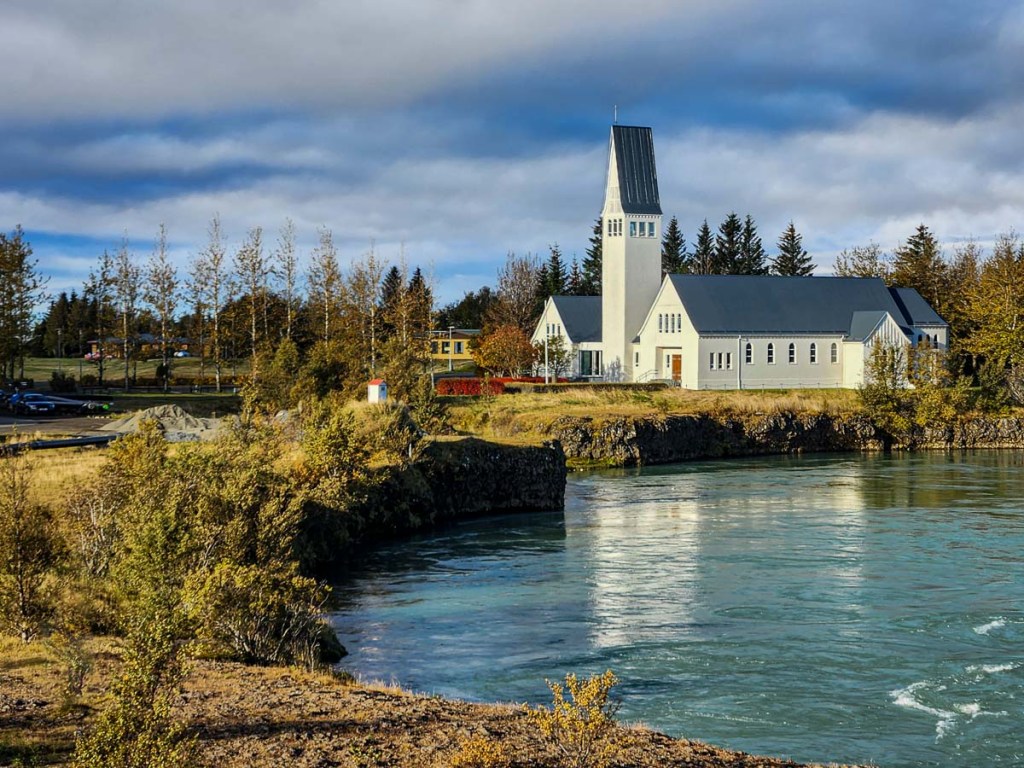
The town of Selfoss 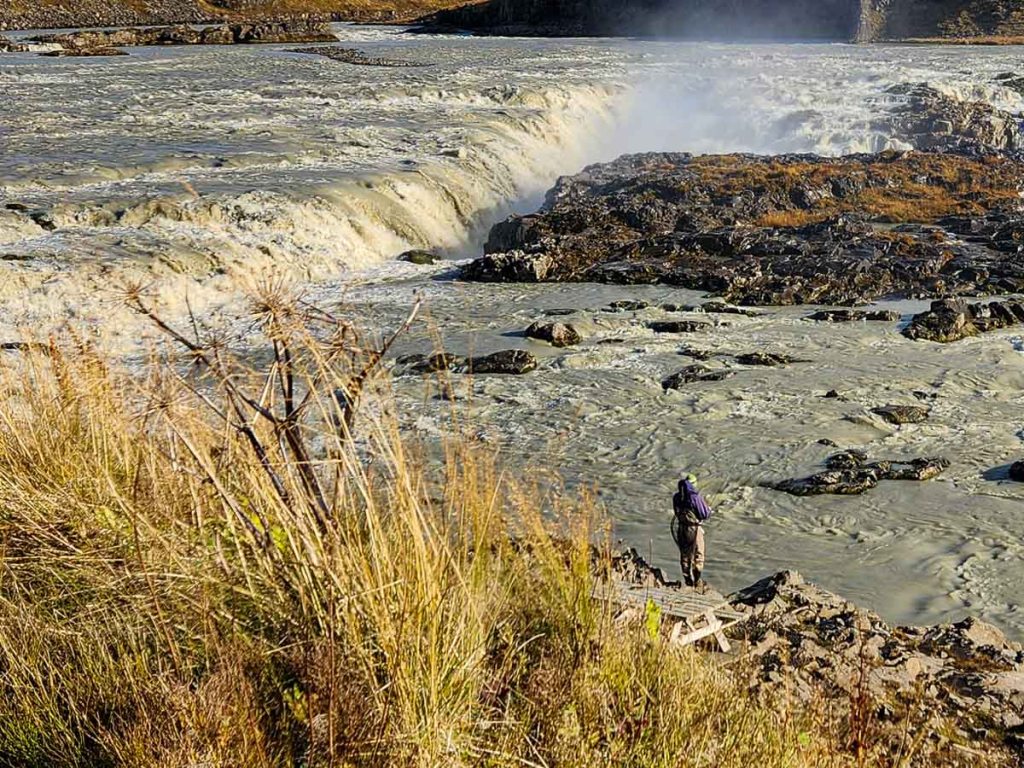
Fishing below Urriðafoss 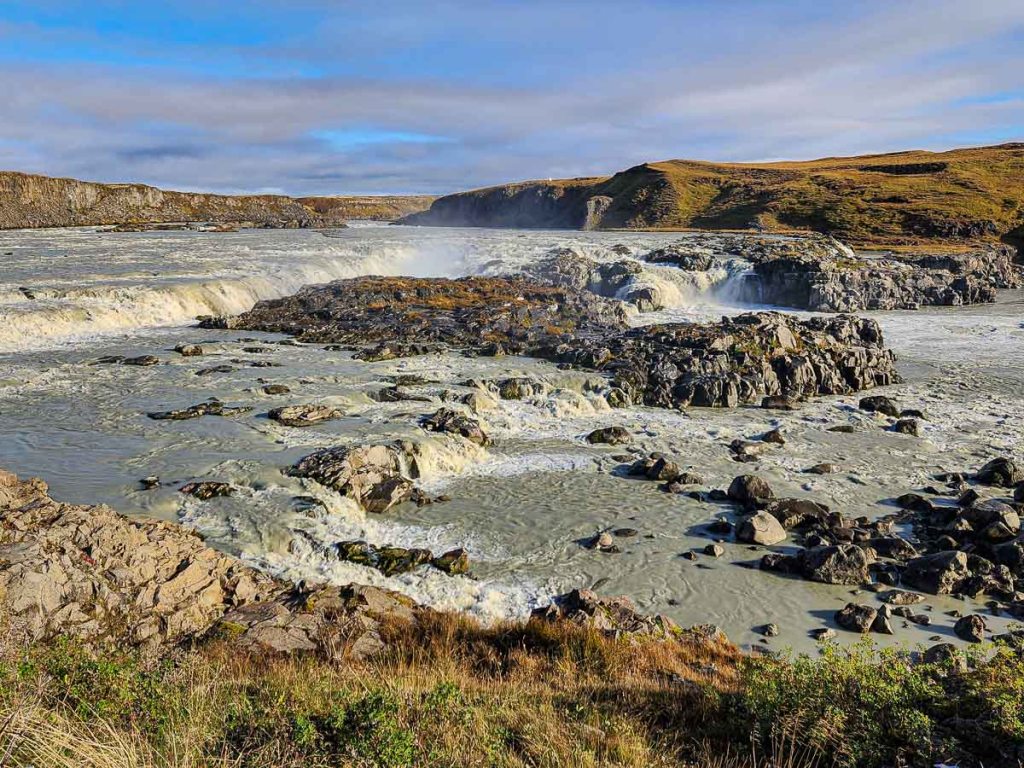
Urriðafoss
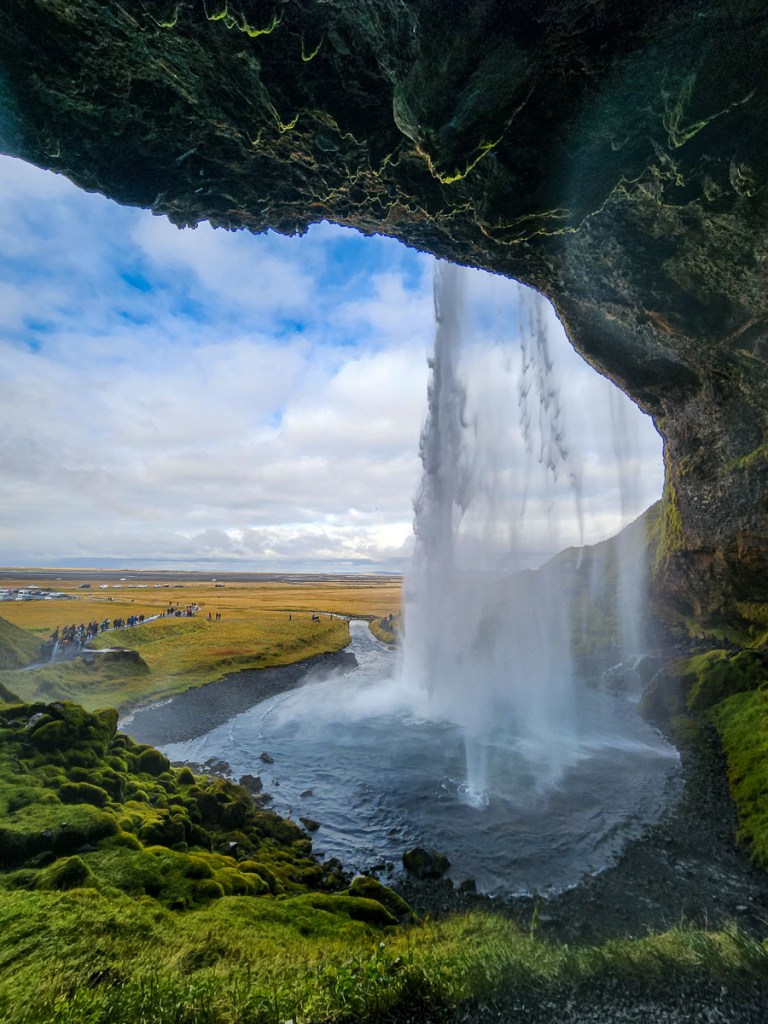
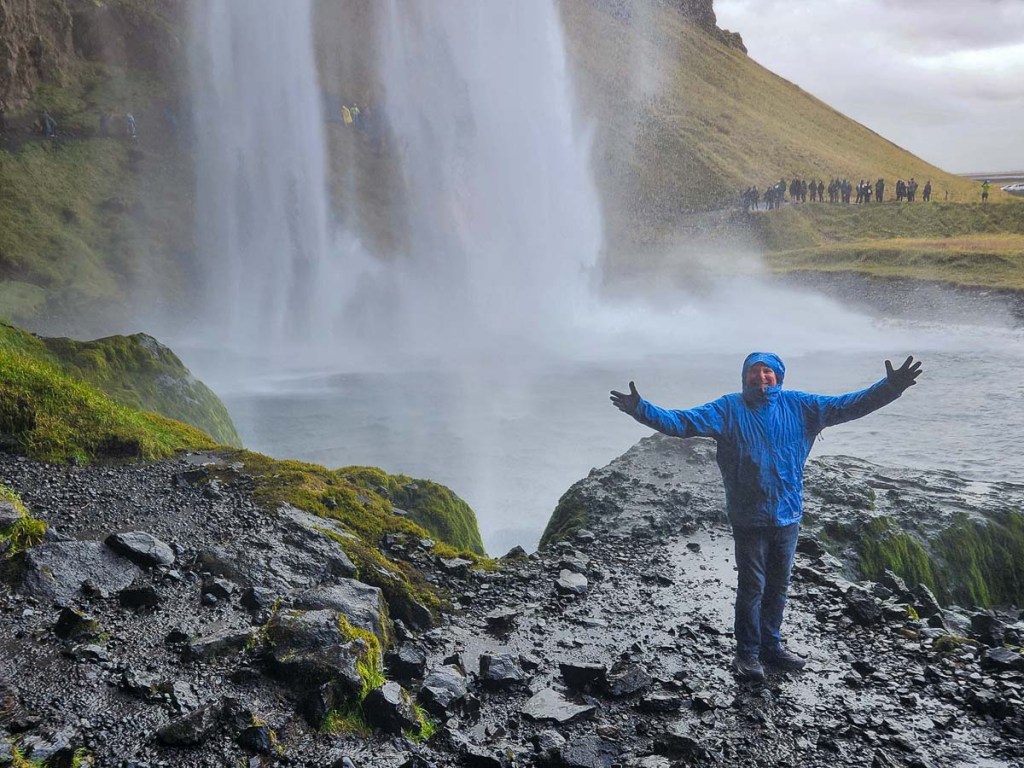
Seljalandsfoss
Seljalandsfoss is a spectacular waterfall but plan to get wet. We came prepared with raincoats, waterproof shoes and rain pants (well, the one of us who didn’t leave his back at the hotel) so we were happy to walk behind the magnificent thundering flow. From Seljalandsfoss we walked the trail below the cliffs to Gljufrabui, another waterfall hidden behind the cliffs. Some people walked up the river bed and through the crevasse to see it close up, but the line to do that was longer than our patience. Access to the waterfalls is free but there is a fee to park.

Seljalandsfoss 

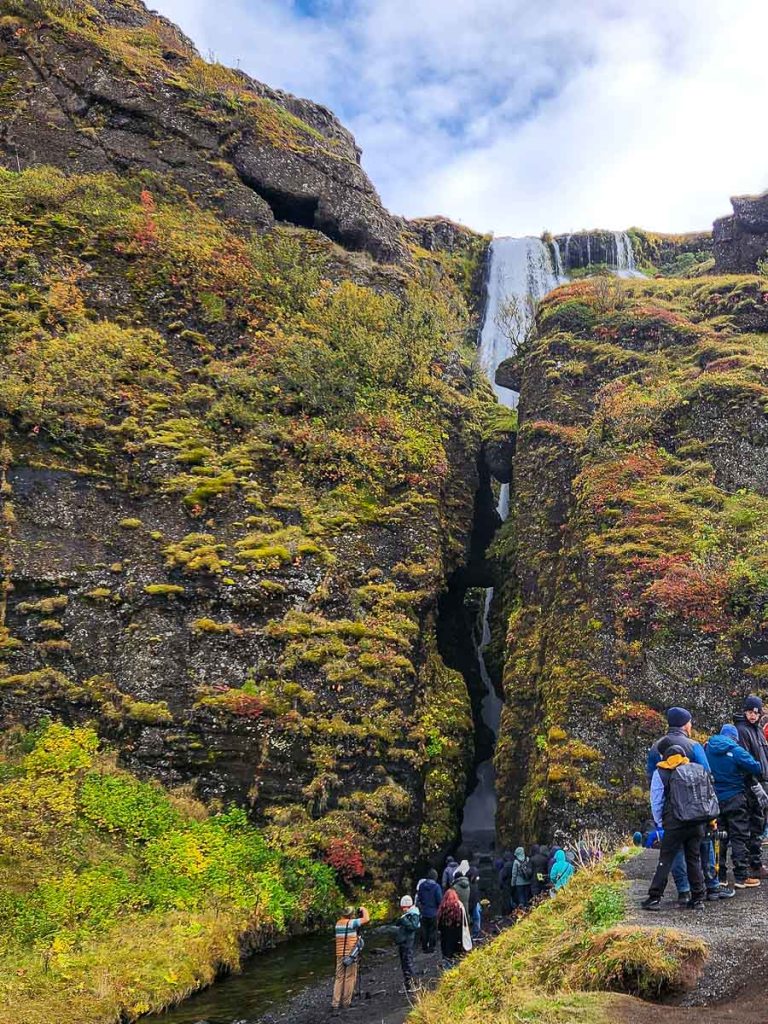
Gljufrabui
Onto Skógafoss
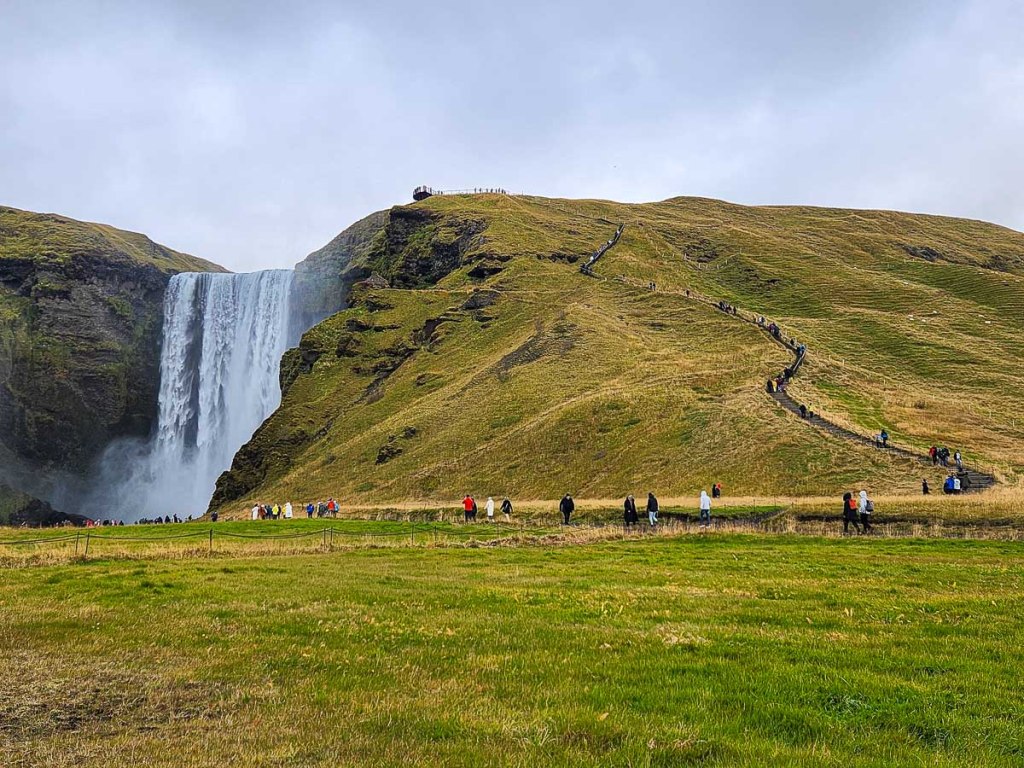
Along the road to Skógafoss we saw several other waterfalls that didn’t appear to be set up for public access, at least by road. At Skógafoss, we walked to the waterfall along the paths and riverbed. There is also a trail up to a viewing platform over the falls. The parking lot is free as is access to the falls.


Reykjavik Centre and Waterfront
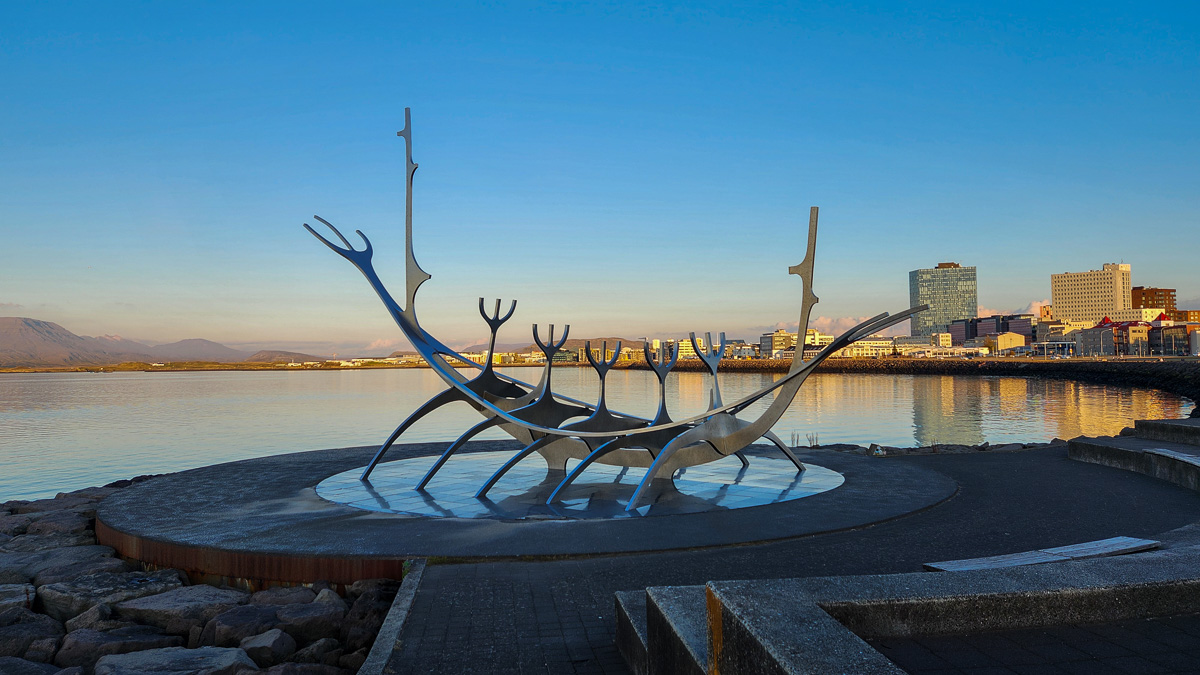
Back in town for the evening, we walked the few blocks from our hotel to the waterfront. The scultpures and architecture were especially lovely in the warm dusk light. The Harpa Concert Hall and Conference Centre, opened in 2011, rules its corner of the harbour. As we walked toward and around it, we took in its changing textures and angles. Himinglæva, or Wind Harp, is a stainless-steel sculpture that sits on the plaza outside of the concert hall. Beautiful to look at, but it sat silently for us in the still air.
Nearby, the walls of the new headquarters of Landsbankinn, Iceland’s largest bank, look like they are covered in naturally aged wooden slats but the open cladding of the facade is made of heavy volcanic basalt stone.
Across the street from Landsbankinn we found Iceland’s largest mosaic mural, a harbour scene by Gerður Helgadóttir.

Sun Voyager sculpture 
Harpa Concert Hall and Conference Centre from the waterfront pathway 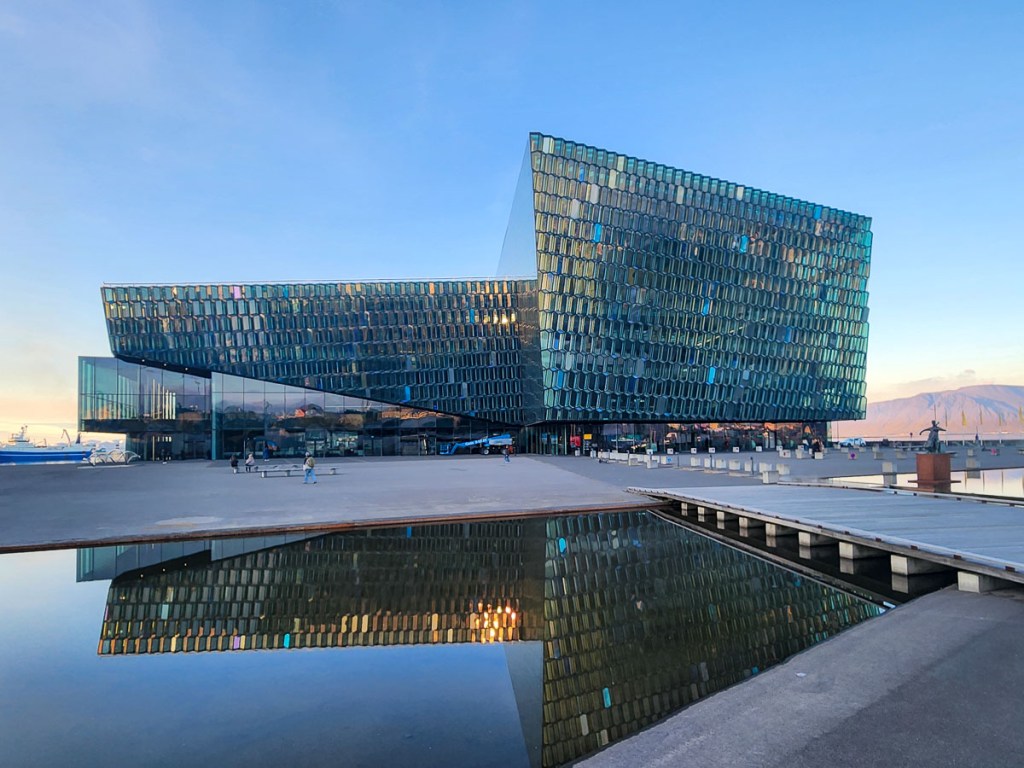
Ponds and plaza behind the Harpa Concert Hall 
Wind Harp, sculpture outside of the Harpa Concert Hall 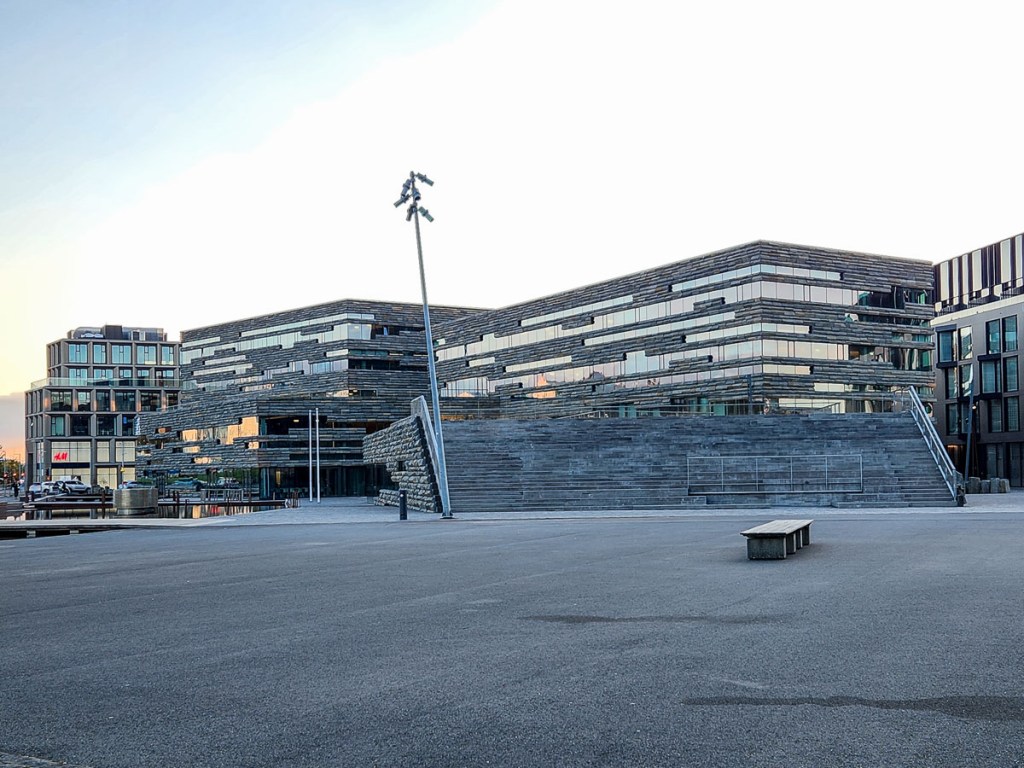
Landsbankinn Headquarters 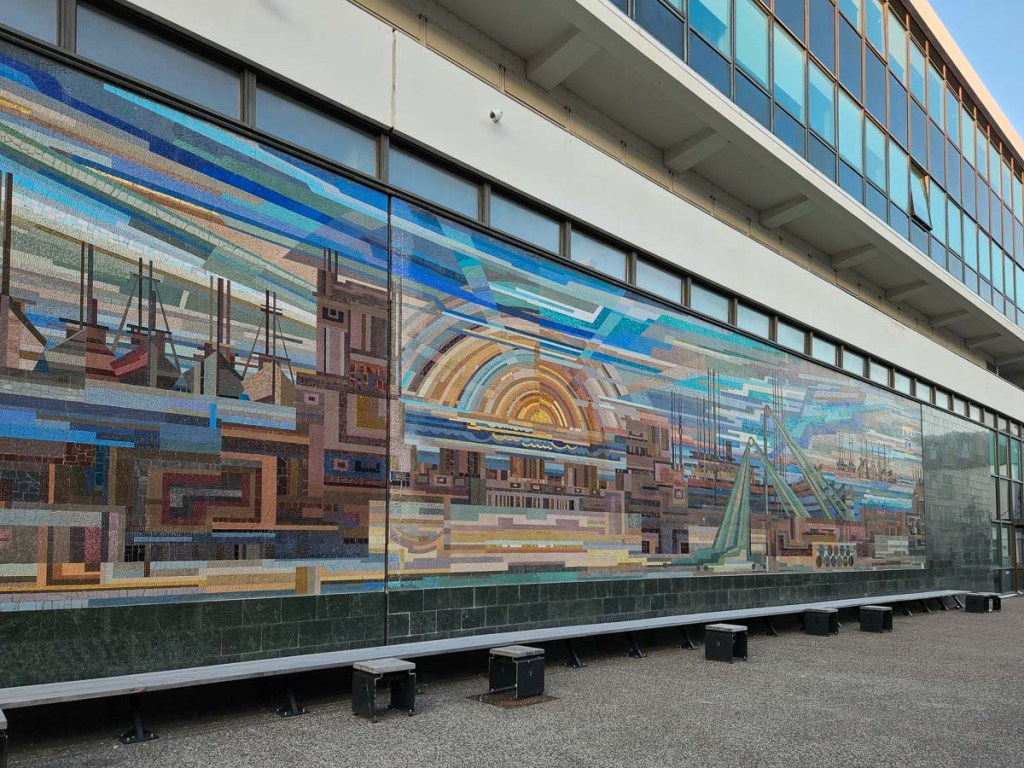
Largest mosaic in Iceland 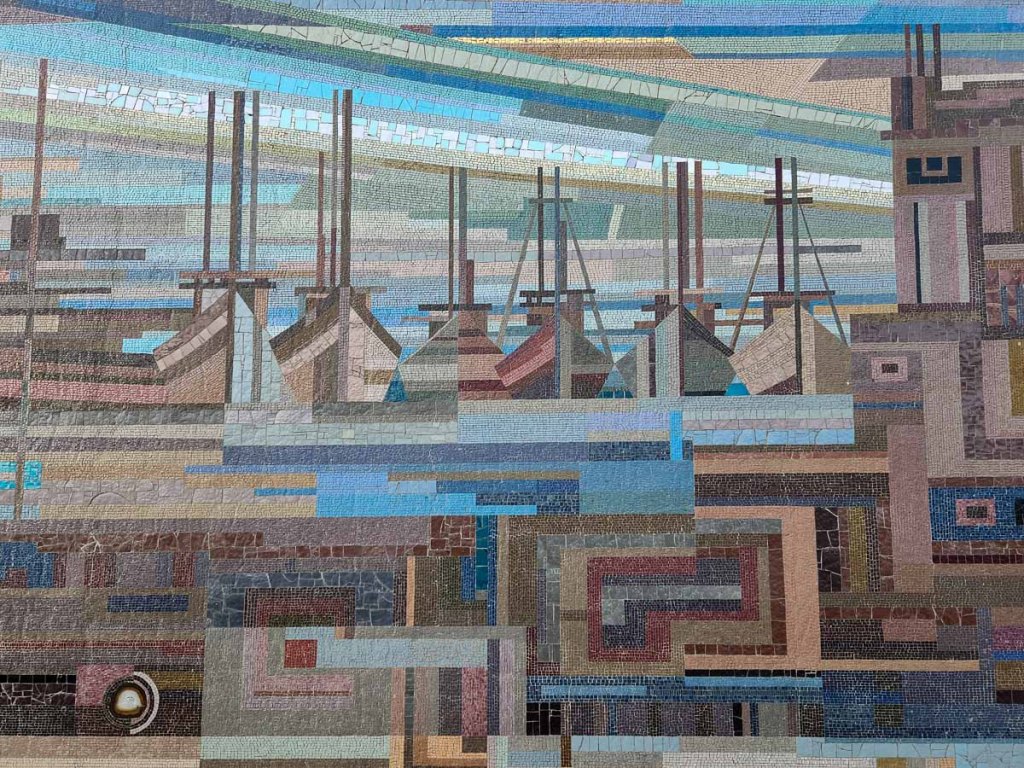
Harbour scene, section of the mosaic 
Pósthús Food Hall 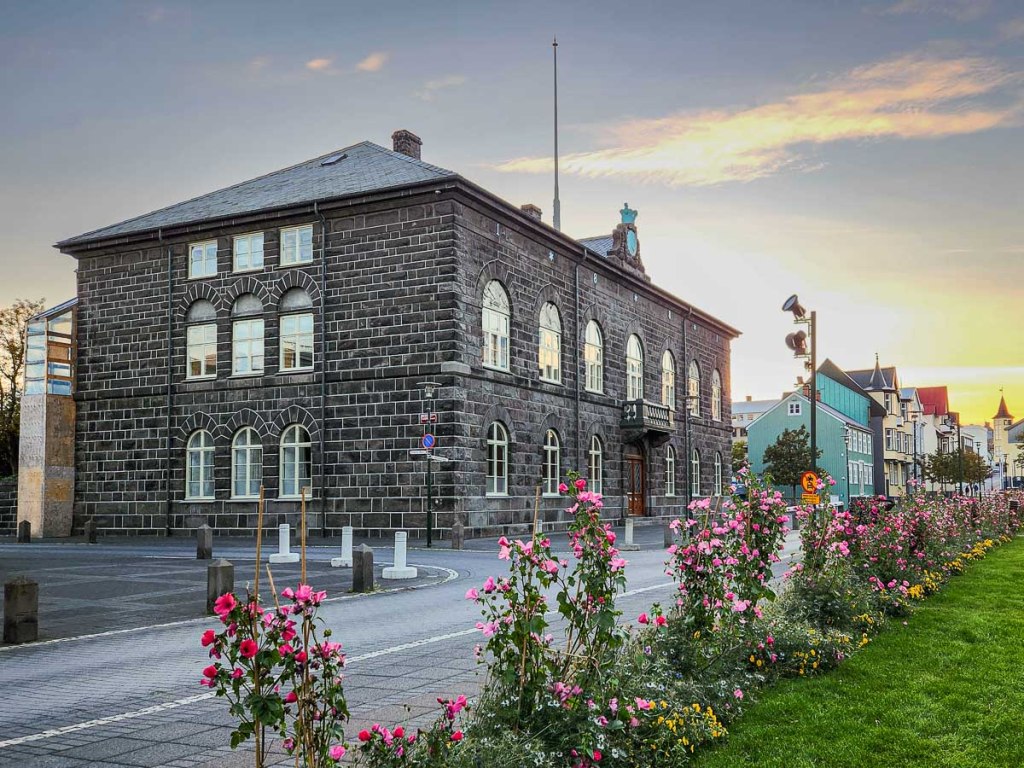
Alþingishúsið (Parliament House)
Road Trip Day 2: The Golden Circle/Arc/Triangle
Though we had planned to explore the town on our second day, we’d managed to walk enough of it on the previous evening that we chose to head back out on another road trip with plans to walk more of the town that evening.
We started out on the Golden Circle route, but since we only drove a section of it, perhaps we’ll name our version the Golden Arc. Or maybe the Golden Triangle, since that’s the shape of the route we drove. We headed up toward Thingvellir National Park, then turned down toward Selfoss, retracing the previous day’s path back to the hotel.

Þingvellir National Park
Instead of steep cliffs and waterfalls, rocky swells sported autumn colours. Thingvellir (Þingvellir) National Park is huge with many great areas to explore. We stopped first at the Visitor Centre where we paid 1000ISK (about $10CAD) to park. It wasn’t clear to us, but this fee covers parking in all lots throughout the park if you keep your ticket. With more time, we would have loved to wander down some of the many hiking trails, but we did take the time to drive to different parts of the park and walk around. At one spot, we were surprised to see divers walking back to the car park and others heading out to the lake–one of the many activities you can book in the park.
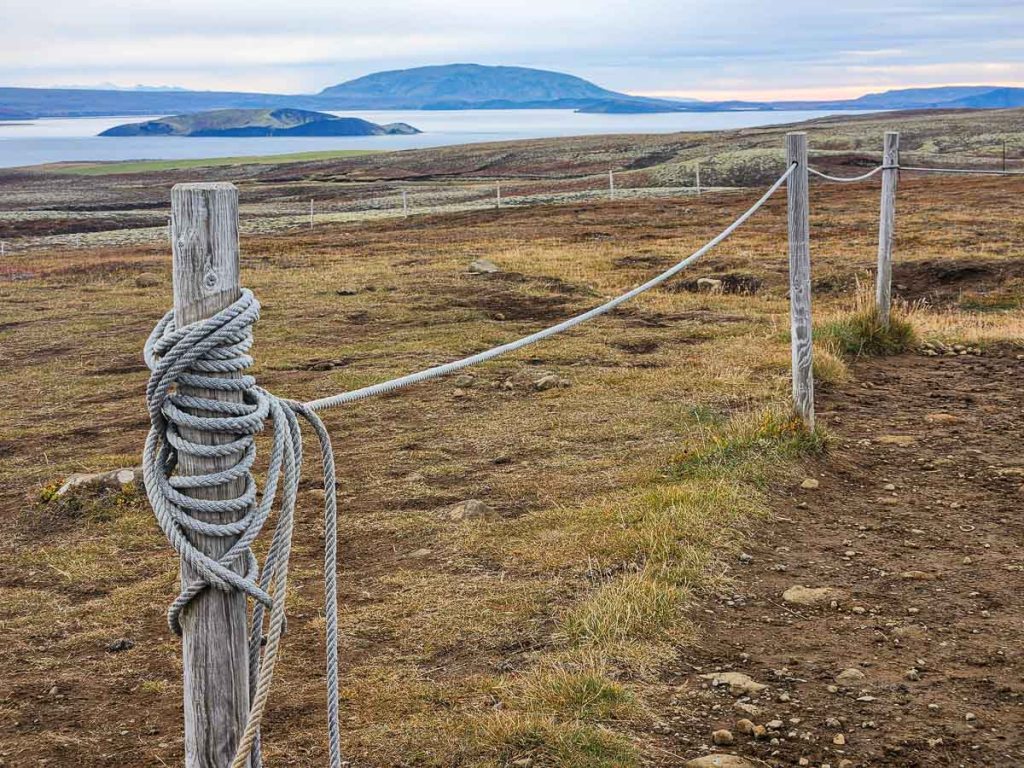
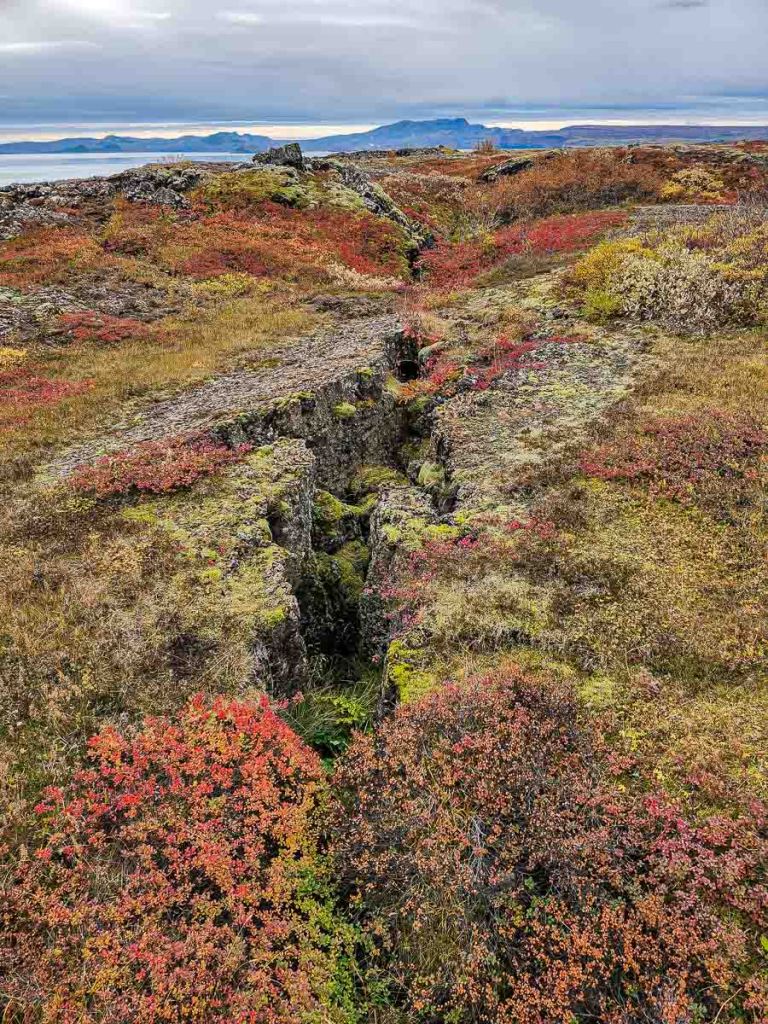
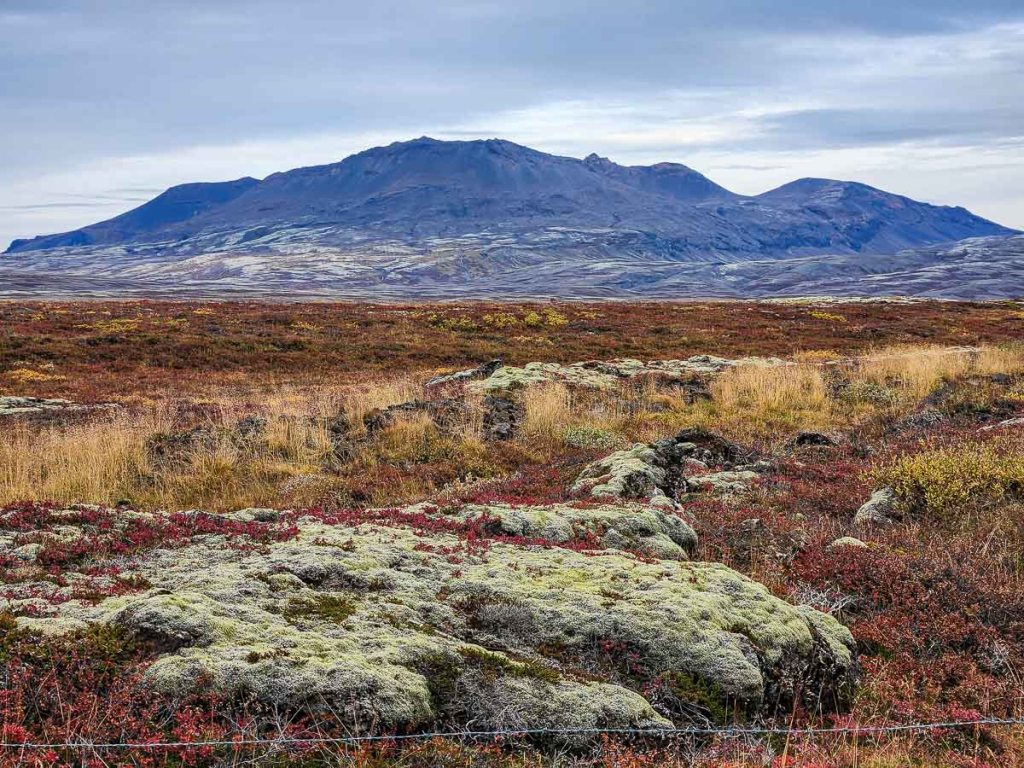

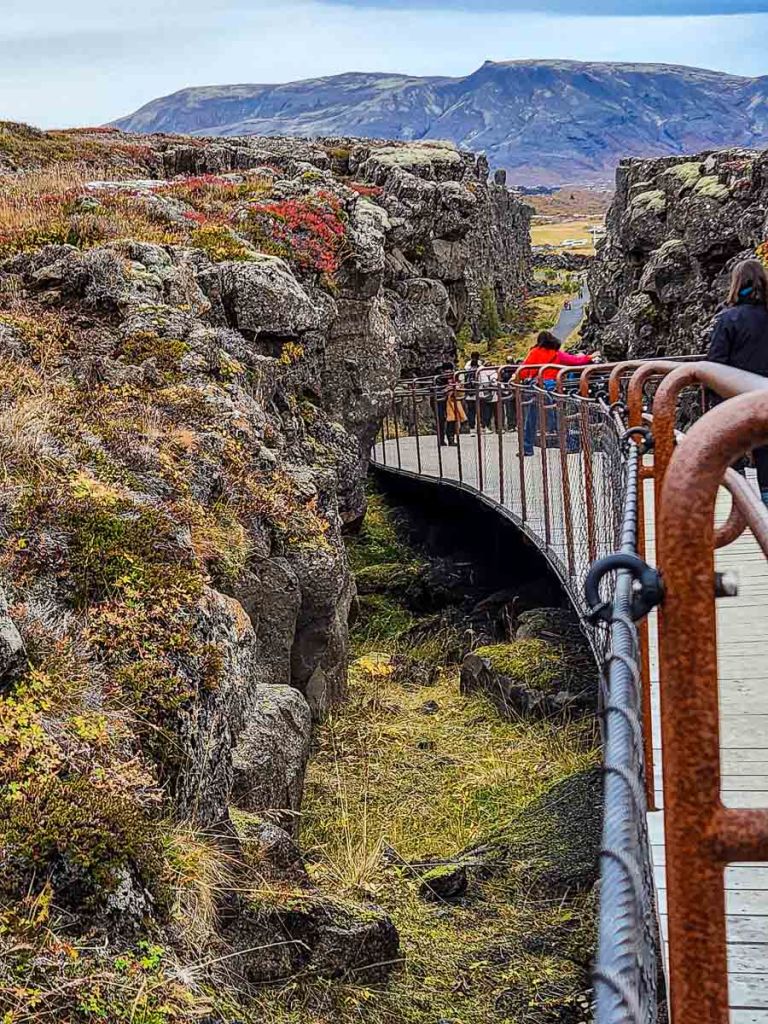
Near the Visitor Centre, a walkway allows visitors to walk down through a crevasse 

One of many crevasses in the rocks 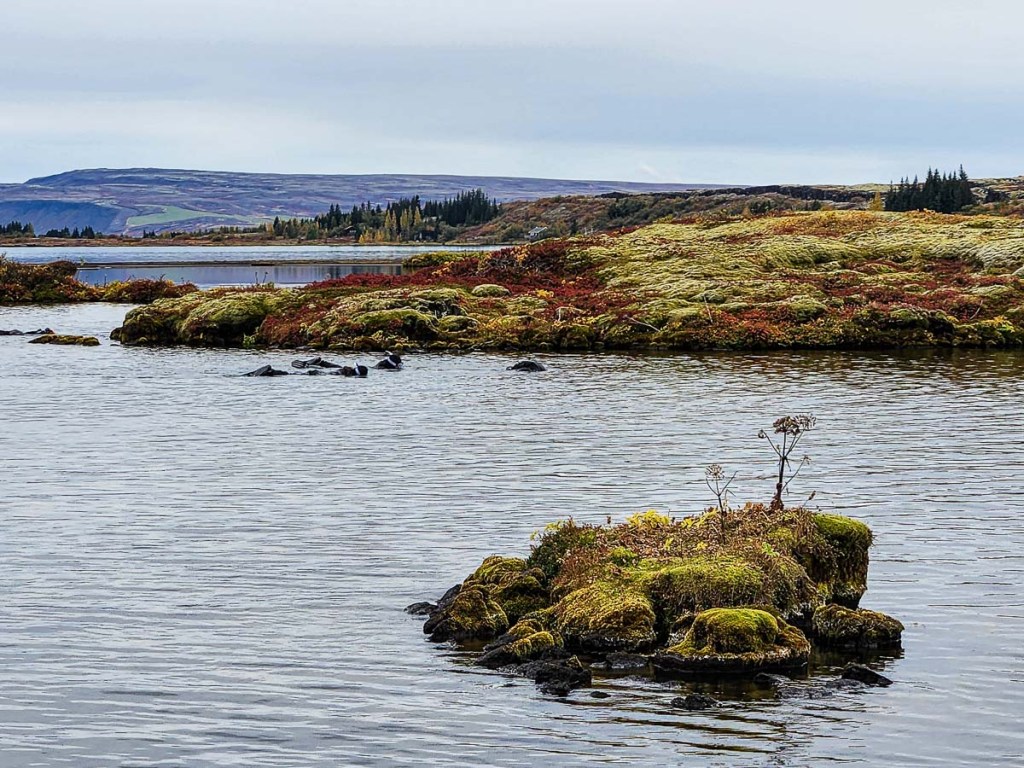
Divers in the lake 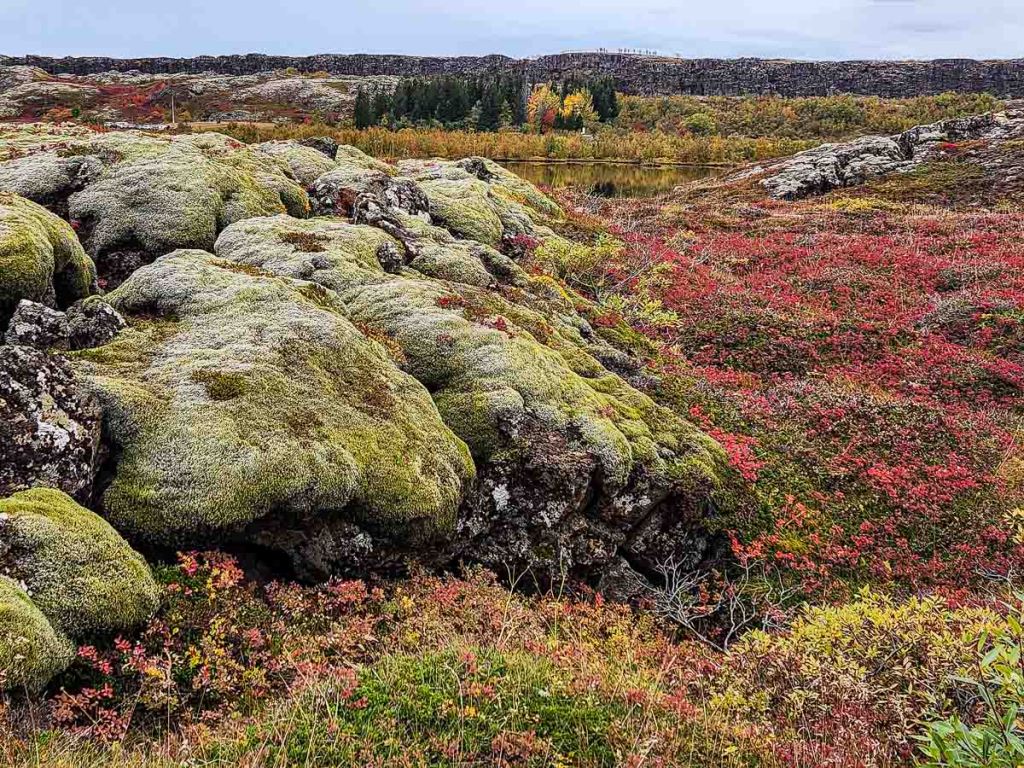
Kerið Crater
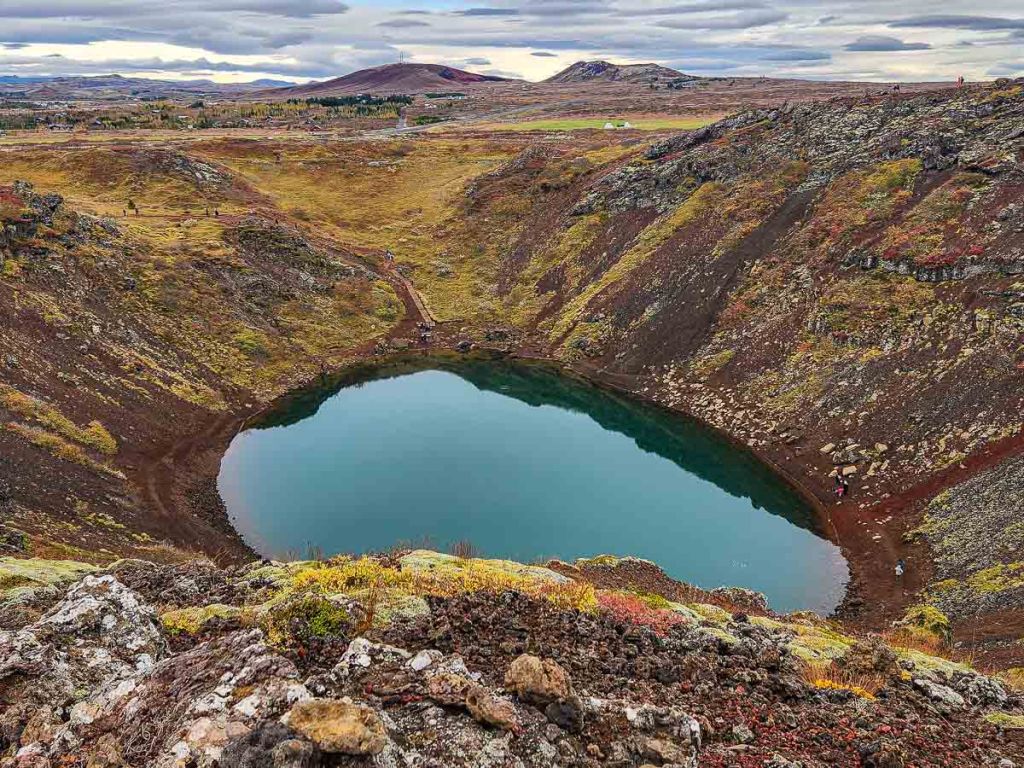
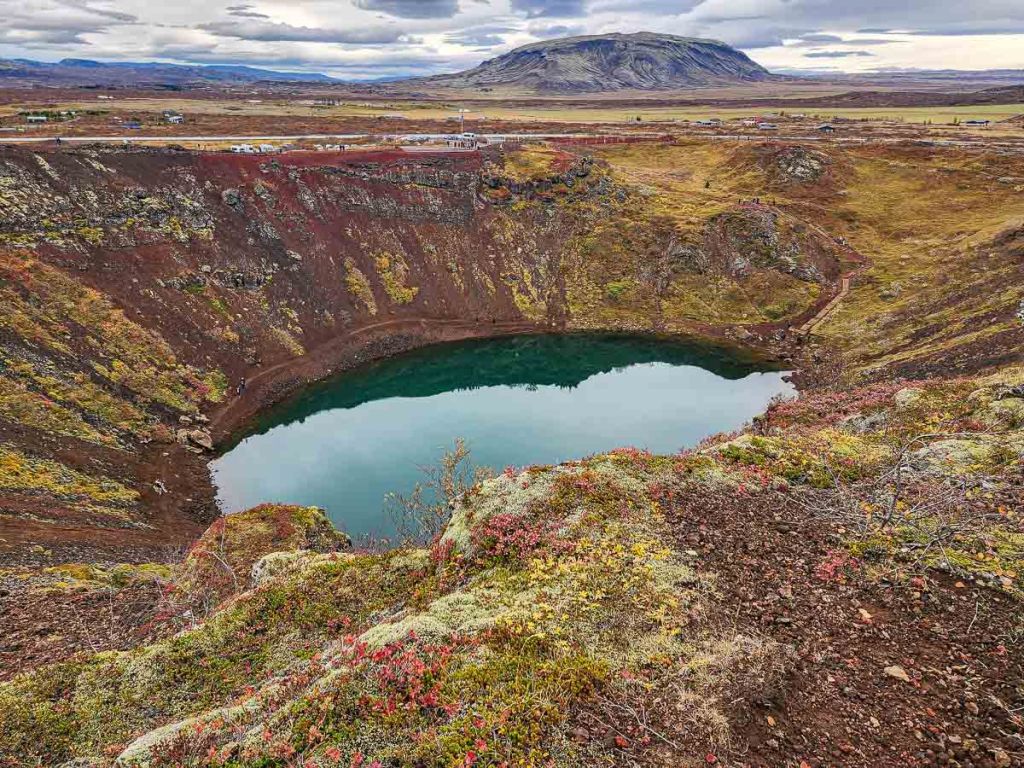
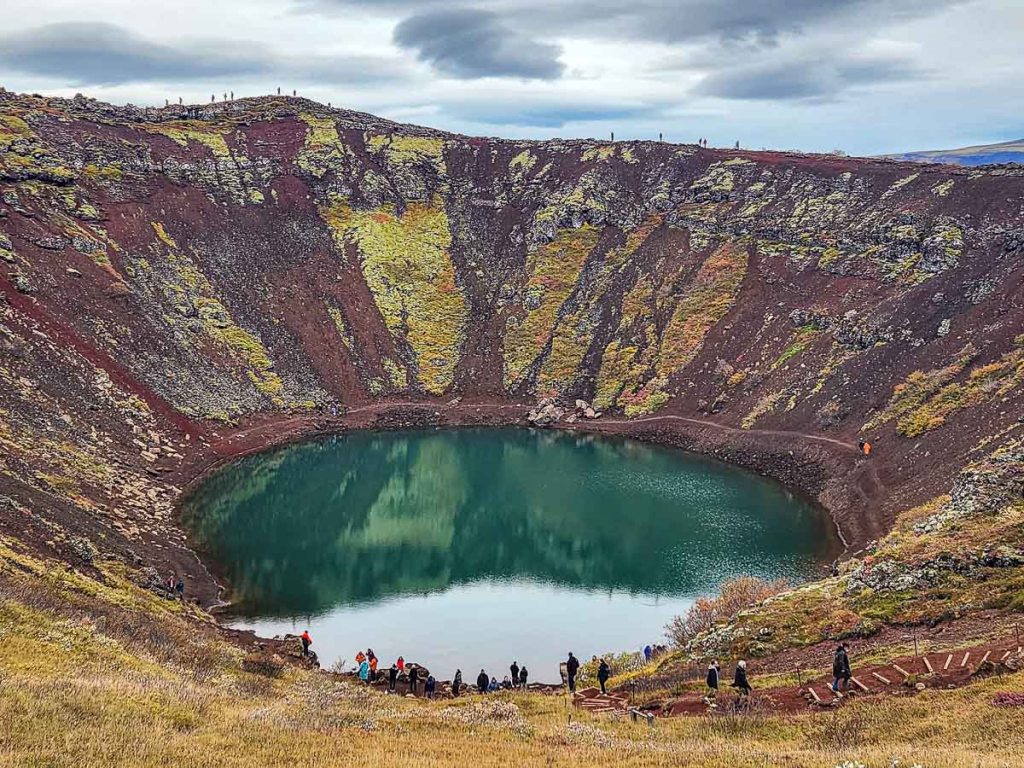
The 6,500-year-old Kerid (Kerið) Crater is worth a stop. The aqua lake is set off beautifully by the green moss and red lava rock that surround it. We walked the path along the rim and enjoyed the views of the lake and mountains beyond from every angle. Open during daylight hours, there is a fee of 600ISK (about $6CAD) to visit.

Downtown Reykjavik
For our last evening, we walked around the downtown neighbourhood of Reykjavik. Downtown is a bit of a misnomer since it’s up the hill from the waterfront. It borders a lovely big lake with parkland all around it and the Reykjavik city hall perched at one corner. There are plenty of shops, restaurants, murals, and a colourful rainbow street contributing to a lively city centre.

The modern Hallgrimskirkja (1986 church) 

House of Collections cultural history museum 
Reykjavik Junior College 
City hall on Tjörnin Lake 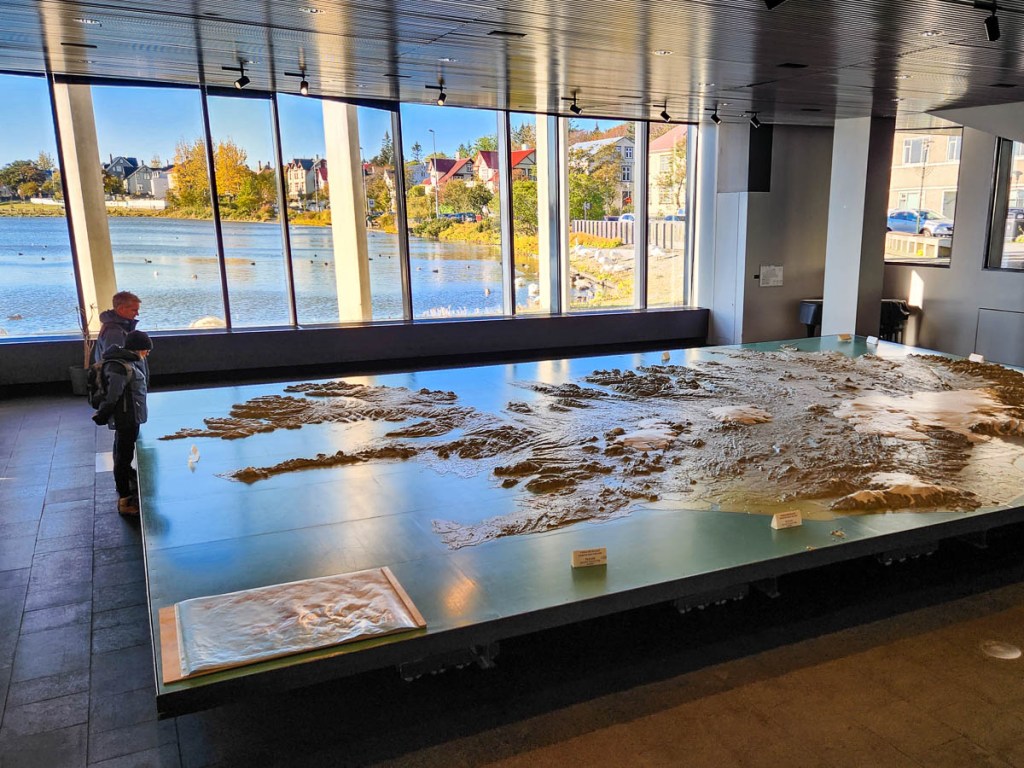
Relief map of Iceland in the city hall 
Tjörnin Lake 
Skolavordustigur (AKA Rainbow Street) leading up to Hallgrimskirkja 
TripBits
Parking: Parking garages are OK for short stops but they charge for every hour. An overnight park in the one near our hotel was about 2300ISK ($23CAD). Parking in the P3 zone is more expensive per paid hour but they don’t charge from 6:00pm to 9:00am. P2 is similar, but stops charging later, at 9:00pm. These spots are harder to come by but more budget friendly. Download the Parka app to locate.

 Life: Phase Next
Please drop us a note!