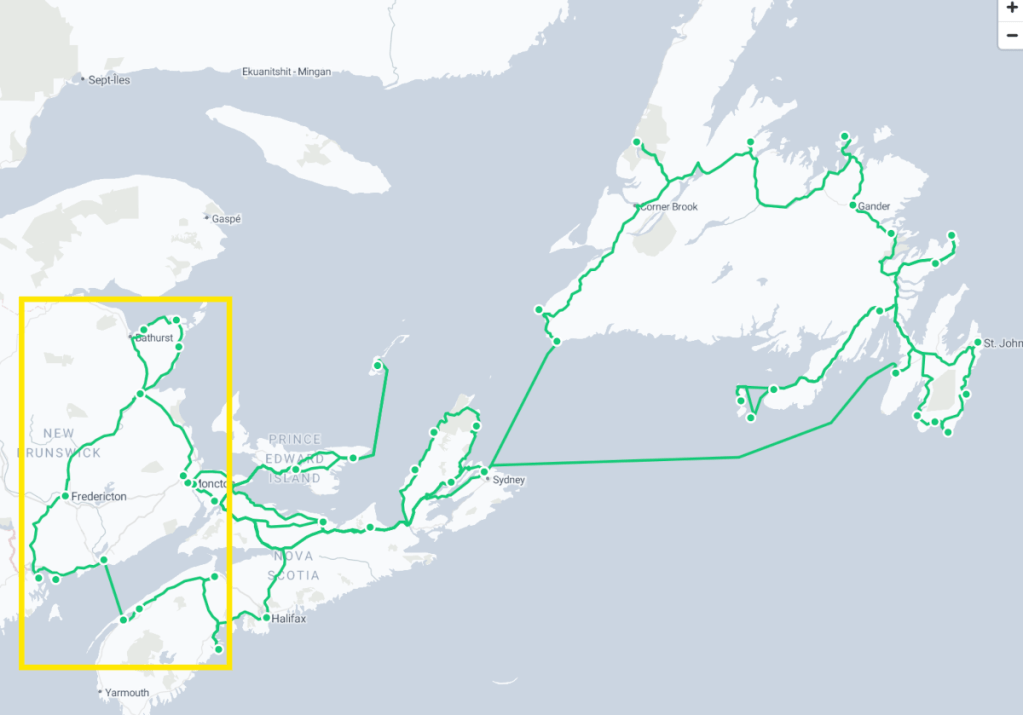
We chose Moncton as our starting point for two reasons: one, we would finish our trip almost four months later with a housesit in Moncton and two, we found a great deal for a rental car through Turo for the entire trip. Unfortunately, within a day or two of booking our flights, the Turo deal fell through, leaving us scrambling to patch together three rental contracts with two companies to cover our time in the Atlantic Provinces (rental cars were scarce through the summer months). That sorted, we put together an itinerary to cover the 10 days between arriving in Moncton and starting a housesit near Lunenburg on the south shore of Nova Scotia at the end of June.
Moncton
We only stayed three nights in Moncton since we knew we would be coming back to the area to housesit a few months later.
One of Moncton’s attractions is the tidal bore. When the tide changes in the Bay of Fundy, sea water is pushed up the Petitcodiac River in a single wave. The city has provided an amphitheatre in Bore Park right in the downtown area and estimated tidal bore arrival times are posted on its website. We found a seat and stared at a muddy river bed until, yes, there it was. The water arrived in a small, anticlimactic wave turning the muddy canal into an equally muddy river (understandably nicknamed the Chocolate River).

The tidal bore arrives 
Lining up for BBQ
While wandering along the river pathway, we found ourselves blocked by fencing, behind which was the type of activity that suggested an upcoming event. When we discovered that a Rotary BBQ festival would happen before we left Moncton, we made plans to attend. As well as enjoying some delicious BBQ, we were overwhelmed by the generosity of the volunteers who insisted (and I mean insisted–including waiting in the lineup in the rain) on buying a replacement for the piece of chicken they saw me drop when the cardboard takeaway container failed as we were leaving the grounds.
Acadian Peninsula
On our way out of Moncton, we visited our autumn housesit hosts, and then drove north to the Acadian Peninsula. So many lighthouses. So much red, white, and blue (Acadian colours). And so much French. We had noticed quite a lot of French in Moncton, both in bilingual signage and francophone conversation. On the southeastern shore of the Acadian Peninsula, though, we were completely immersed in the Acadian culture. It probably shouldn’t have caught us unaware, but it was a delightful surprise. This was also the beginning of the ubiquitous lighthouse–functional or decommissioned, real or ornamental, at the water’s edge or gracing the entry to a mall, full size or trinket. The Atlantic Provinces love their lighthouses.
We stayed for a couple of nights part-way up the peninsula’s southeastern coast in Tracadie-Sheila and explored from there, driving across several bridges to the Miscou Lighthouse at the very tip. We stopped for a quick visit in Sainte-Cecilia to see the Sainte-Cecilia Catholic Church (understandably dubbed the Candy Church), which was repainted in 1968-69 from a dreary brown to a surprising pastel kalaidescope. We stopped in Miscou Harbour at La Terrasse à Steve for lunch, and then found ourselves entertained by the fishing boats dancing in the bay as they waited their turn to unload crates of lobster.
In the parking lot at Plage de Grande-Anse, another visitor recommended a lobster market in Caraquet, a town we were heading toward. We picked up a bag of fresh lobster meat and filled our bellies in our dry car while watching stormy seas at a nearby park.
We drove south across the base of the peninsula to Miramichi, where we stayed the night before heading southwest toward Fredericton.
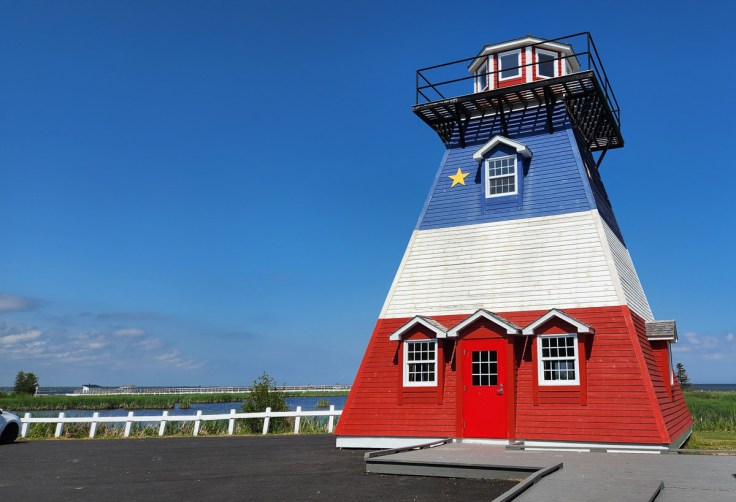
Phare de l’Ile aux foins 
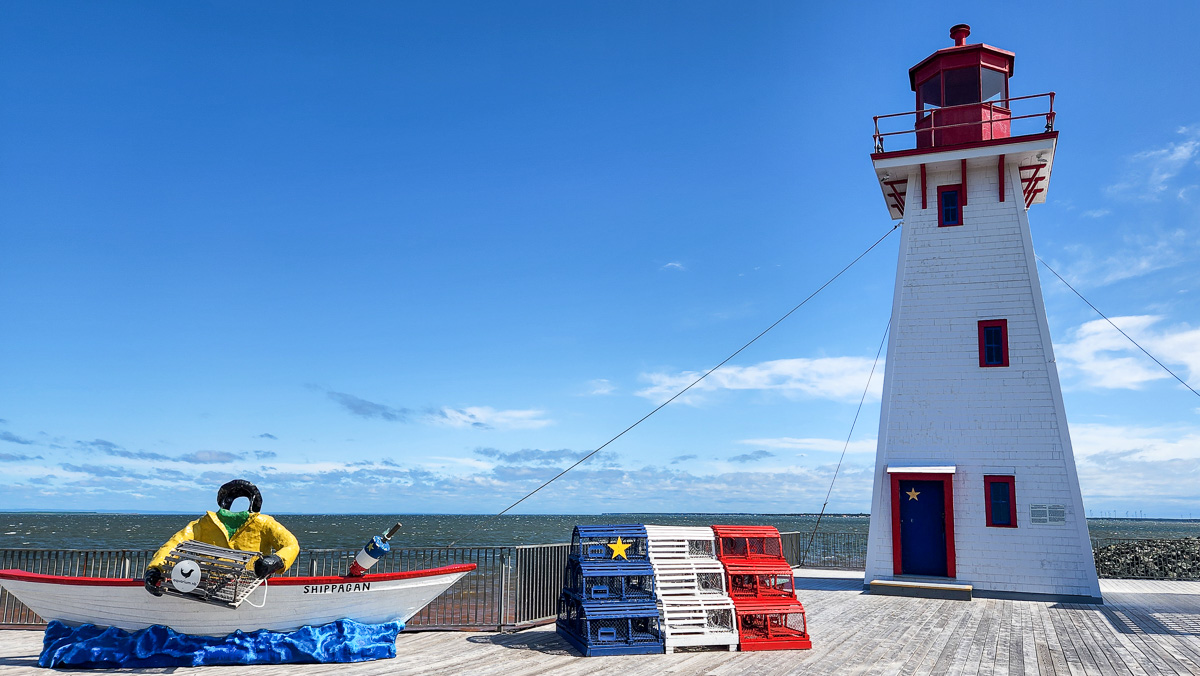
Shippagan lighthouse 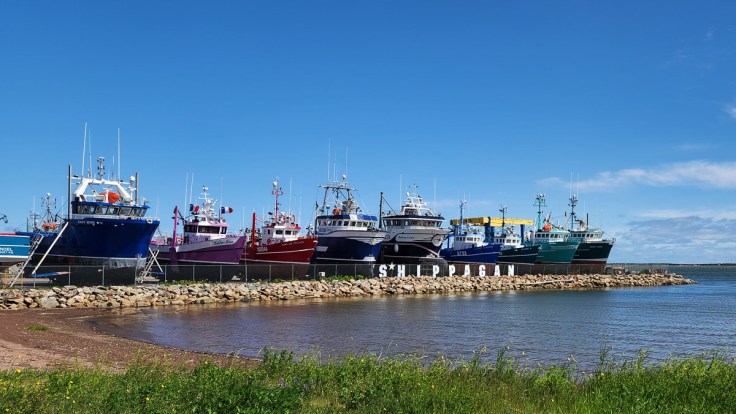
Drydocked fishing boats in Shippigan 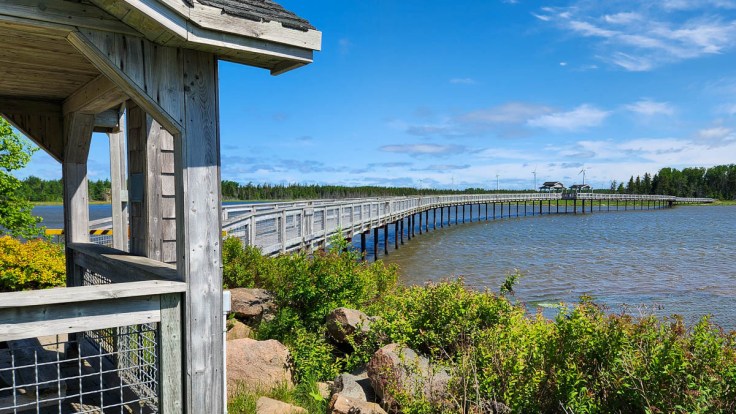
Ecological Park of the Acadian Peninsula (blocked off to pedestrians) 
Sainte-Cecilia Catholic Church (Candy Church) 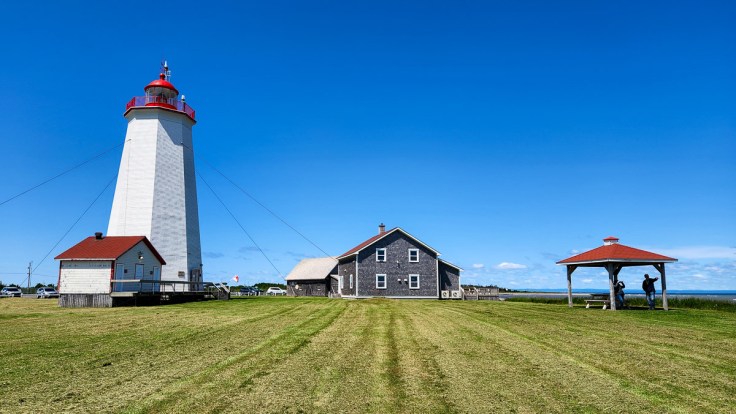
Miscou Lighthouse at the peninsula’s tip
Fredericton
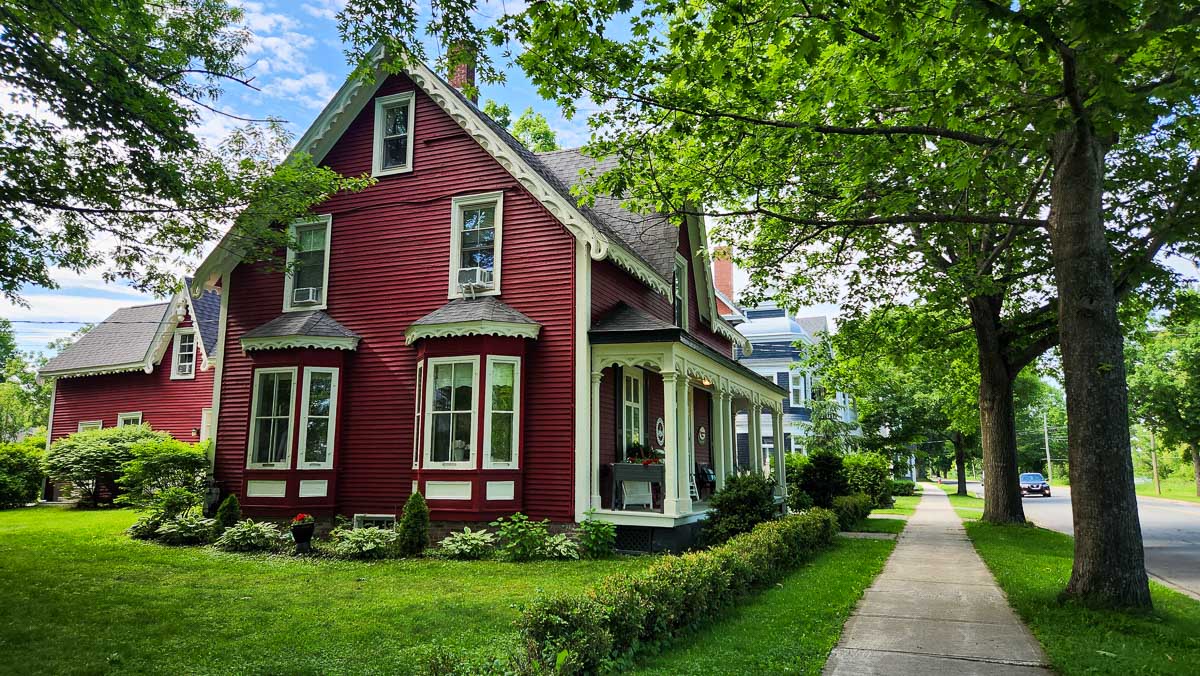
Fredericton was just a one-night stop for us. We stayed in the historic riverfront Quartermain House B&B and then walked from there along the river into town. When we were hungry for dinner, we headed to O’Hickey’s Irish Pub, only to discover that they didn’t offer food. Oh well, bottoms up and then off to The Social House for a delicious meal before walking back to our home for the night.
Saint Andrews
We were so glad we had included Saint Andrews in our route. A one-time fishing village on the tip of a peninsula that juts into Passamaquoddy Bay, this national historic site became a summer resort for the wealthy in the 1890s with trains bringing holidayers from Montreal and Boston. From here, you can look across the water (and international border) to the state of Maine in the USA. We enjoyed the colourful shops and cafes along the main street, walking into town from our B&B a few blocks away. Though touristry, the village of just over 2,000 felt cheerful and friendly rather than being kitschy.
Minister’s Island, also a national historic site of Canada, is a 500-acre island that can only be reached from the mainland at low tide. We watched as the tide dropped and people began to drive over, but didn’t make the trek ourselves with our rental car. There are historic buildings to view and hiking trails to wander as well as special events throughout the summer season.
On our way to Saint John, we stopped at Black’s Harbour where you can catch a ferry to Grand Manan. We had decided against a day trip to the island, but were happy we stopped at this picturesque little harbour.
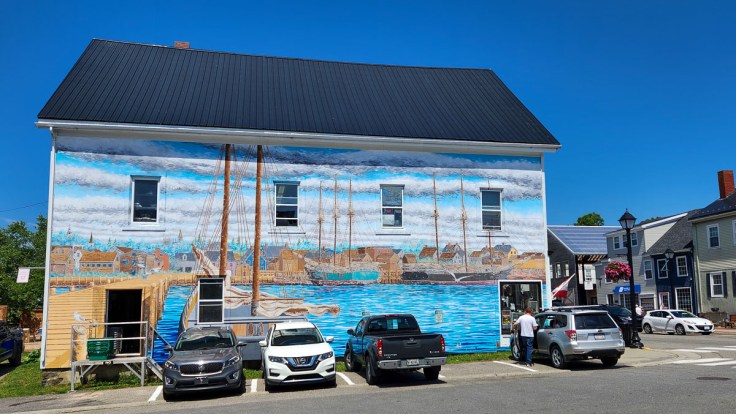
A mural in town 
Saint Andrews Blockhouse 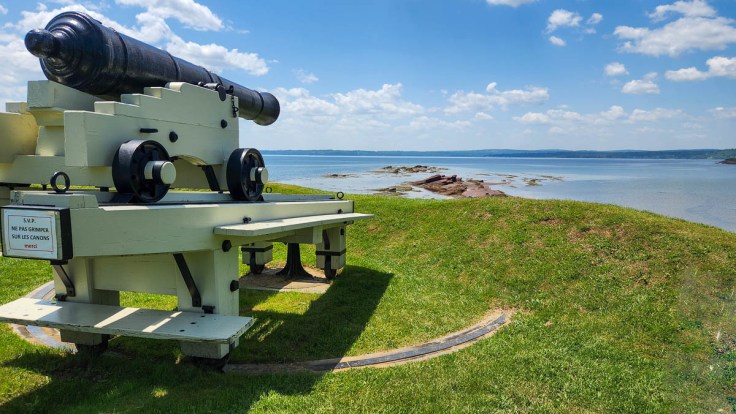
Canon at the Saint Andrews Blockhouse National Historic Site 
The road to Minister’s Island at low tide (you can see a red car partway across at the left) 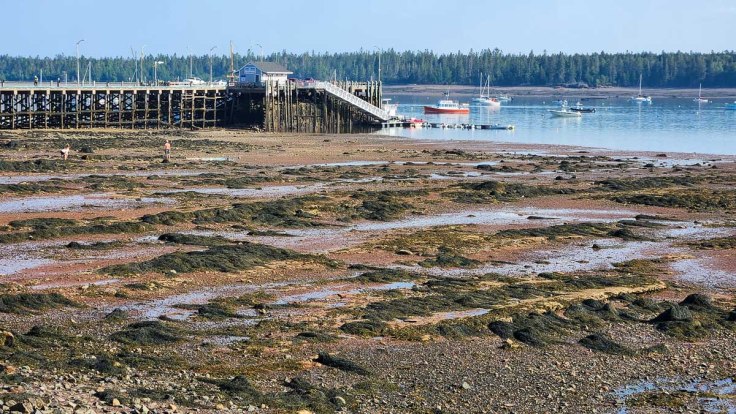
Market Wharf 
Pendlebury Lighthouse 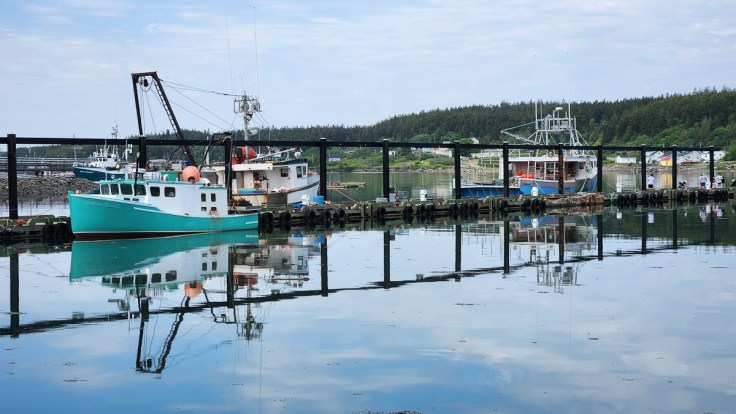
Boats in Black’s Harbour
Saint John
Saint John is a hilly town densely filled with historic brick buildings and stately homes. The city wraps around a working port, so we could view freighters, cruise ships and naval vessels from many vantage points. Saint John has done a lot of infrastruture work to build a more pedestrian friendly waterfront with boardwalks, parks, restaurants and gathering spaces along the water’s edge. You can walk on pathways from town all the way to the Reversing Falls, where the Bay of Fundy and the Saint John River meet.
Despite visiting at the end of June, we didn’t see the vibrancy that we would have expected around these revitalized areas.
We were able to catch the ferry to Digby, Nova Scotia, right in town and made our way across the Bay of Fundy.
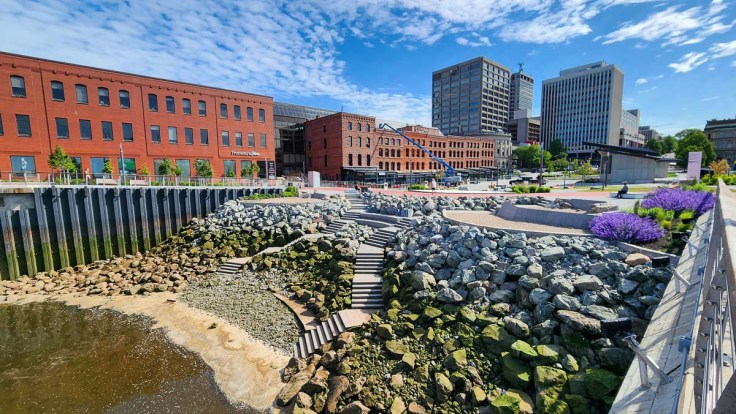
The Gathering Space and Tidal Steps 
Library inside Market Square 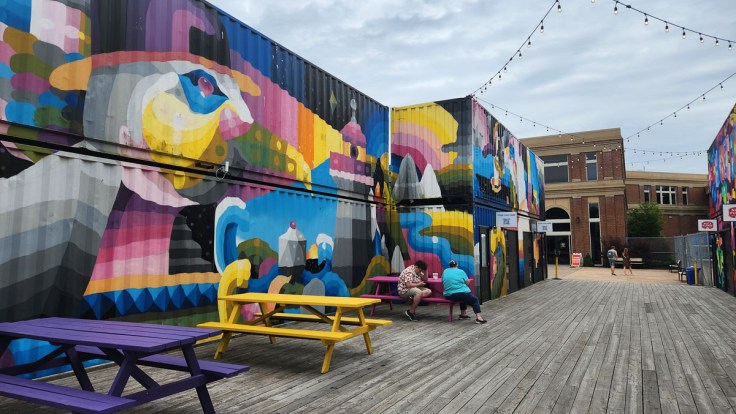
Area 506 Waterfront Container Village 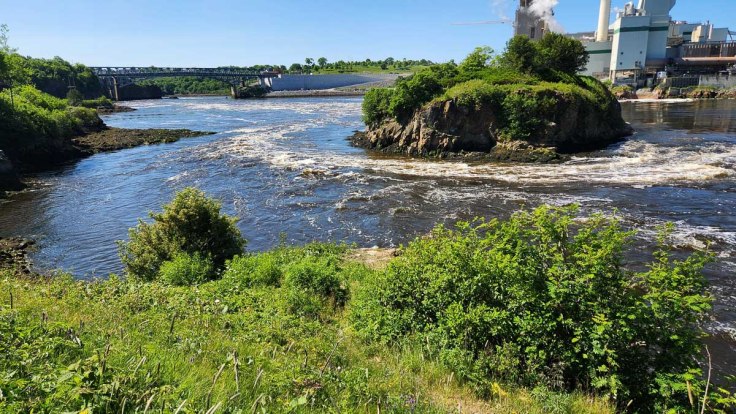
Reversing Falls
Annapolis Royal
Though the ferry from Saint John arrives in Digby, our stop for the night was Annapolis Royal, about 15 minutes east. We stayed in the lovely old Blackwood’s Bread and Roses Inn. As we headed out to find a dinner spot, our host mentioned an outdoor concert in the park. What a delightful introduction to this quaint village–music in the evening sun with a pretty water view.
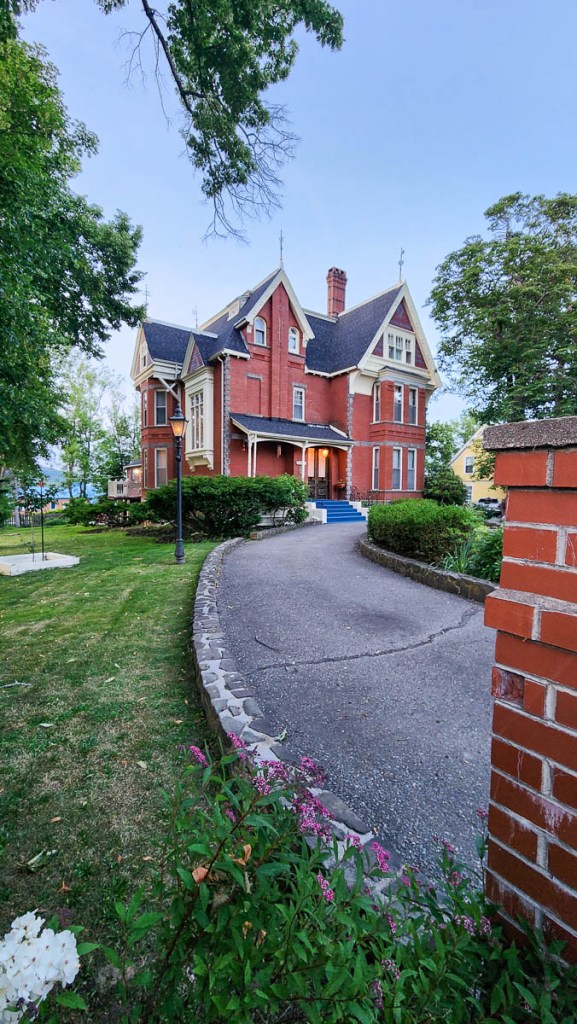
Blackwood’s Bread and Roses Inn 
Concert at the Annapolis Royal Harbour Lookout
Wolfville
We had planned to visit Wolfville from our housesit on Nova Scotia’s southern shore, but our host recommended an overnight stay, which we were glad to do and happy we did. Wolfville is both a university town (Acadia University is prominently positioned in the town center) and the center to a growing wine industry with many vineyards and wineries nearby.
We stayed at the historic Blomidon Inn, where we had prebooked a delicious dinner. We walked the towns pathways and parks, enjoyed the views, and lunched at Luckett Vineyards. Some years back, we met up with the proprietor of Luckett Vineyards on a bus into town from an airport. I can’t for the life of me remember what country this was, but we both clearly remember that conversation with Pete Luckett and I had kept a mental note to be sure to visit his winery when we made it to Nova Scotia again. Pete has moved onto other pursuits in Portugal, but family members continue his legacy in Canada.
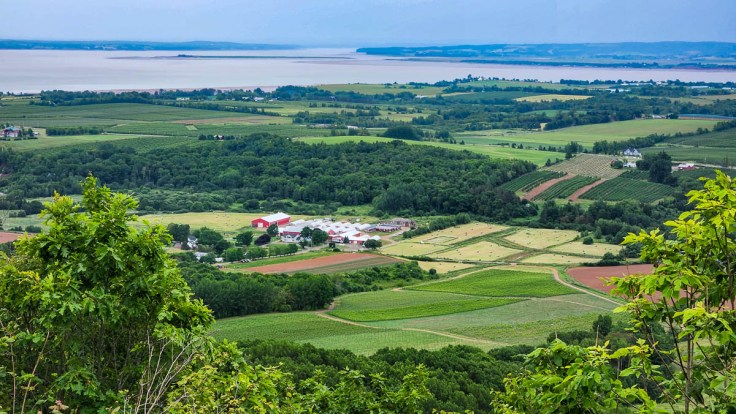
View from Luckett Vineyards 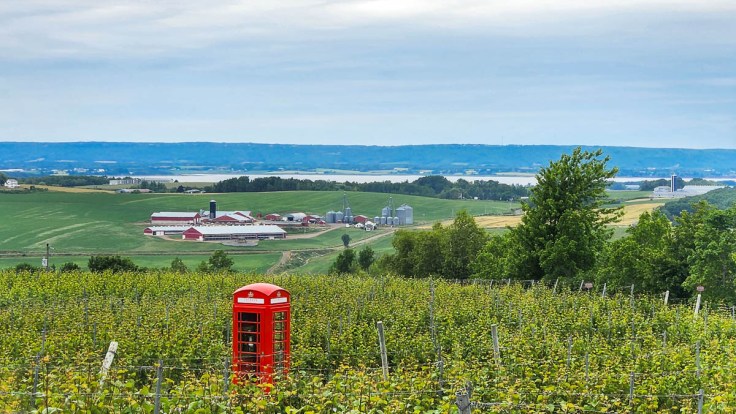
View from Luckett Vineyards 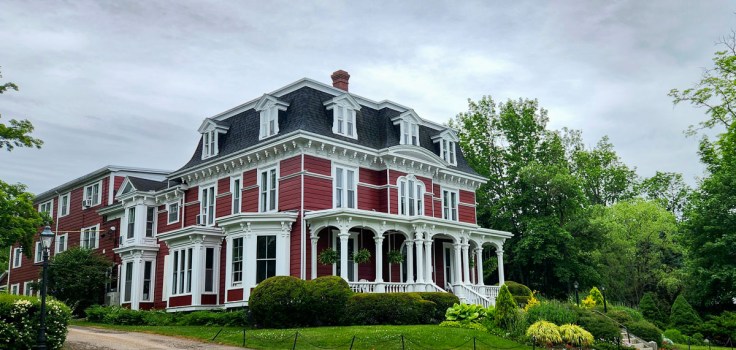
Blomidon Inn 
Wolfville Waterfront Park
TripBits
- Ferry from St. John, NB, to Digby, NS: Book through Bay Ferries (we had no trouble booking about five weeks ahead). Crossing time is about 2 1/2 hours and our cost for a vehicle and two seniors was $224 CAD.

 Life: Phase Next
Please drop us a note!