We had visited the northern part of South America some years back, but Argentina and Chile were still on our list of places we wanted to go (very creatively referred to as The List). Lately we’d been tiring of our style of months-long slow travel (long-ish stays in each location, public transportation and lots of walking, and all the planning that goes along with that) as life threw us challenges. We thought we’d try something different and visit these two countries by ship.
Our itinerary
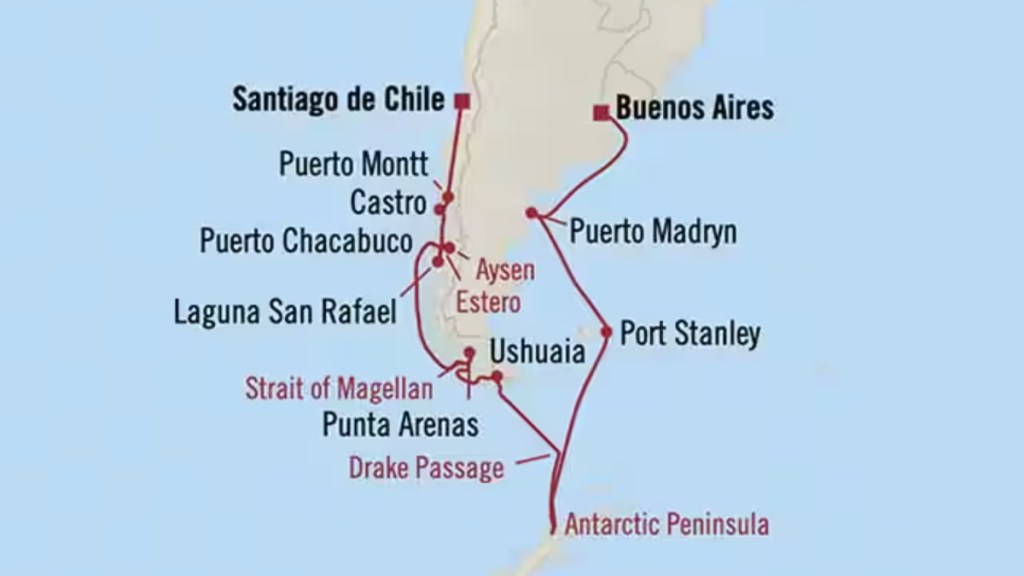
We chose the Oceania Marina and its 20-night itinerary from Santiago de Chile to Buenos Aires in Argentina.
On board
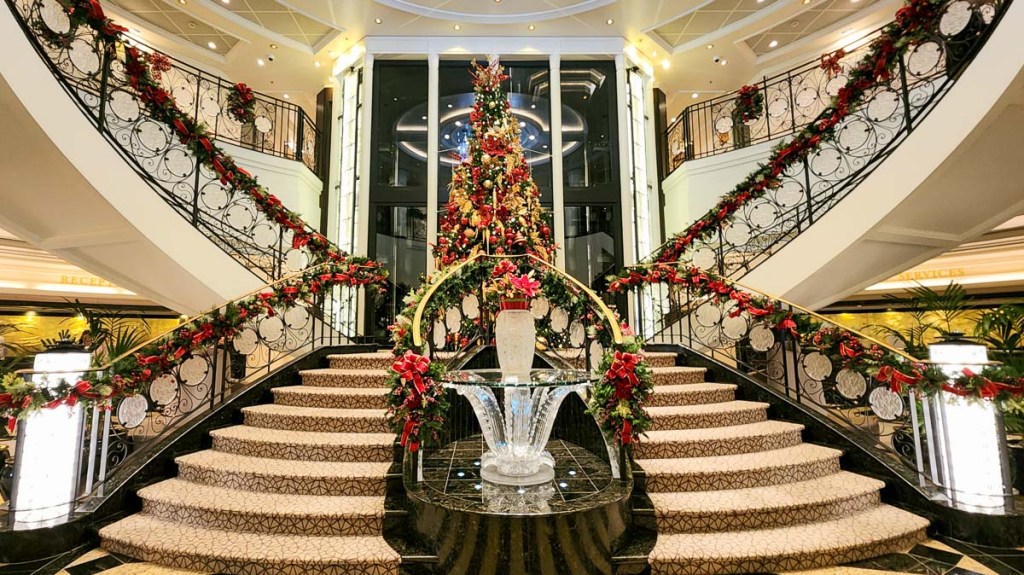
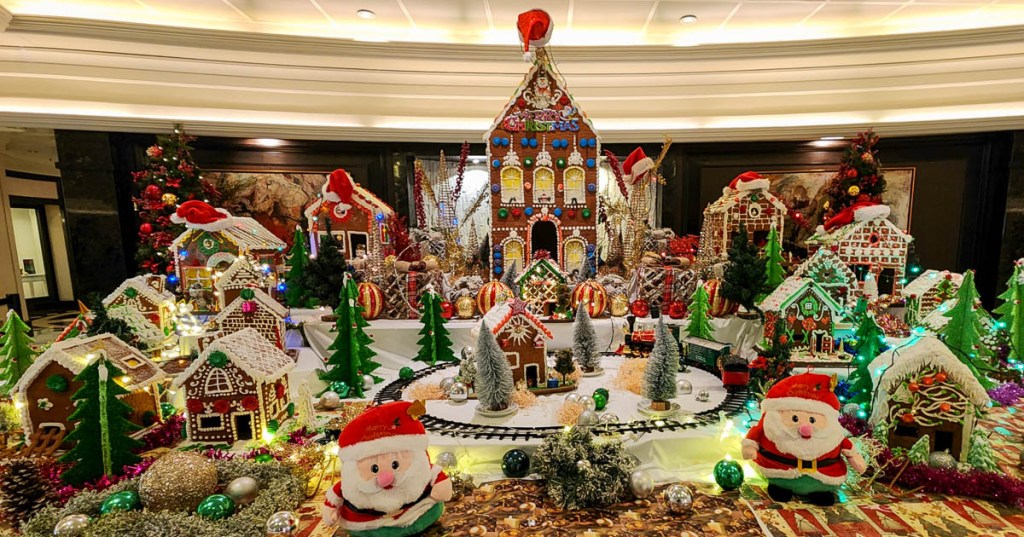
We boarded on December 21 and, not surprisingly, found the ship fully decorated for Christmas. Selfie-takers frequently posed in front of the double staircase. The gingerbread house display became the festive backdrop for an array of Christmas sweets every afternoon.
Puerto Montt, Chile
Puerto Montt was the only port for which we had booked an excursion. Of the seven ports we stopped at before disembarking in Buenos Aires, five (including Puerto Montt) required passengers to be tendered to the port–an experience that we found to be slow and cumbersome, with plenty of waiting around for prioritized groups to be called. We avoided much of the pain by heading into subsequent ports after most of the excursion folks were scheduled to leave.
Our booked excursion took us to the lakeside town of Puerto Varas for a very short stop. Next was a long drive to and up a switchback road to the top of Volcán Osorno (volcano), and then back down the mountain to Parque Saltos del Rio Petrohue, where we walked the trails to waterfalls and to view Osorno from below.
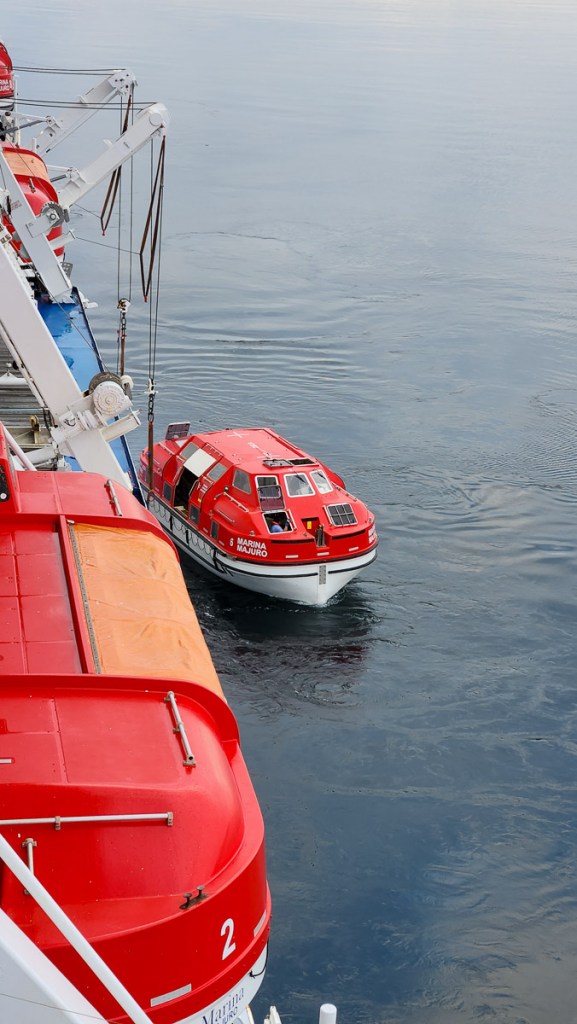
Watching the tender being prepared from our balcony 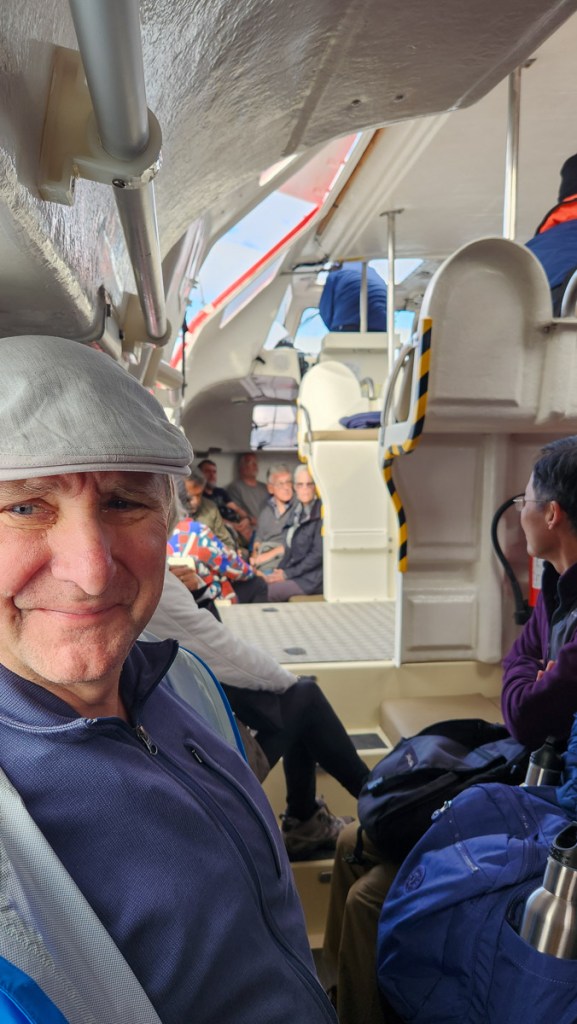
On our first tender into port 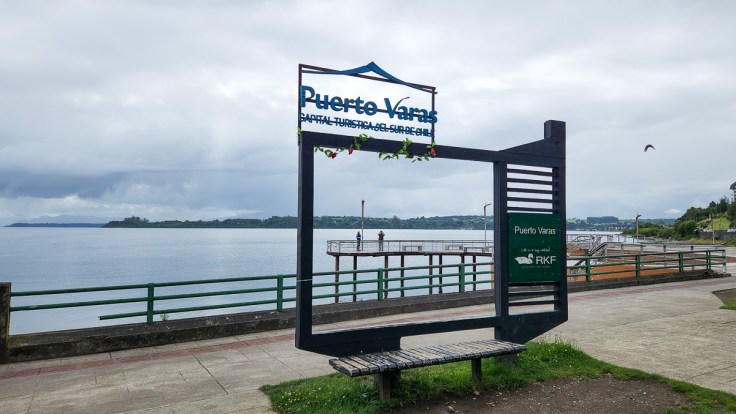
At the shore of Lago Llanquihue 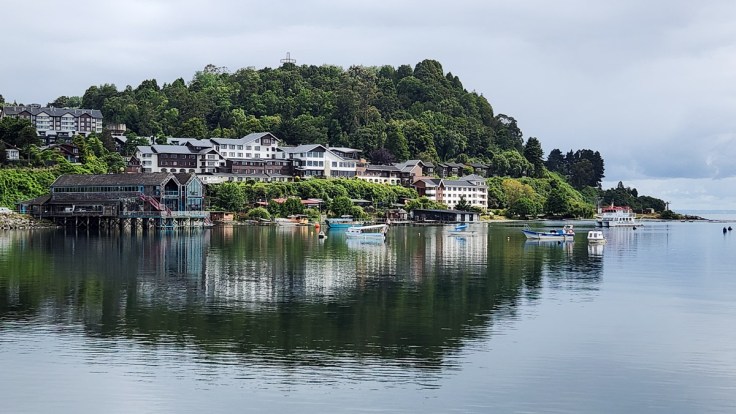
Across a bay from town 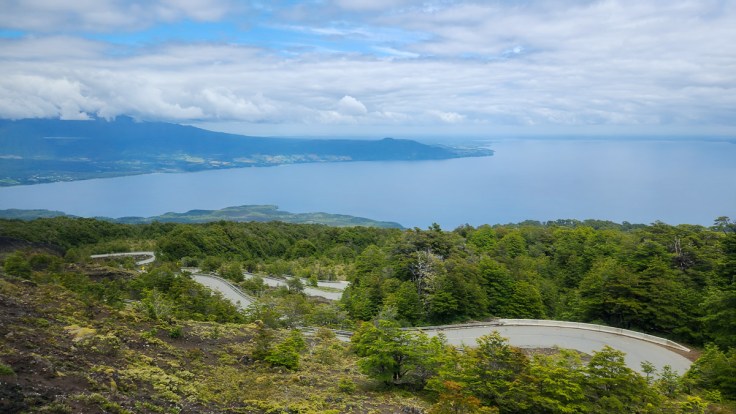
Switchback road up to the volcano 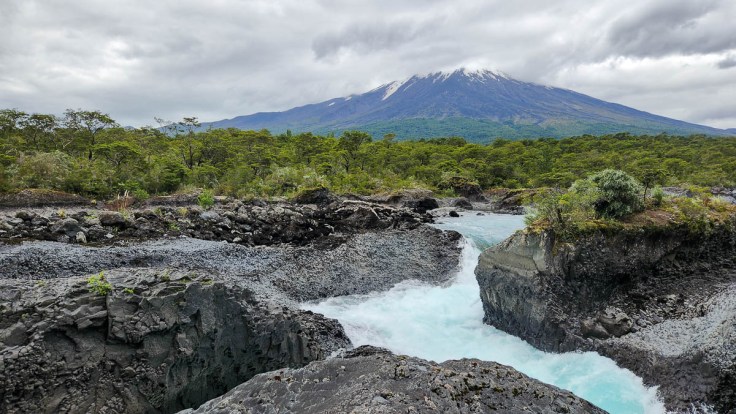
Falls in the park with Orsono in the background 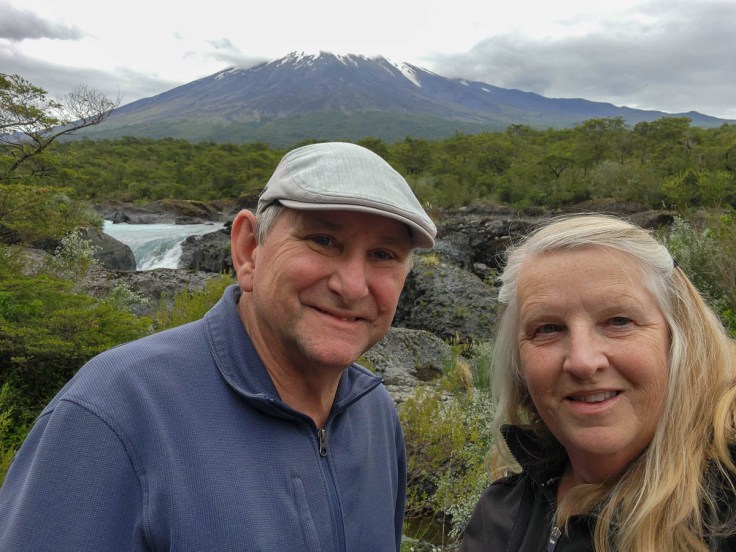
Castro
Not far from Puerto Montt, Castro is nestled between two rivers on the Chiloé archipelago. The ship provided a shuttle to take us from the tender pier up the hill into town to the Plaza de Armas, making our exploration a stroll instead of a hike.
We walked around the edge of the town to the mouth of the Rio Gamboa to view the colourful stilt houses known as palafitos. These wooden structures were built in the latter half of the 19th century on public shores so fishermen had tidal access to their homes without the need to purchase land. Many of the palafitos are now refurbished or reconstructed, and are used as boutique hotels, B&Bs, or restaurants.
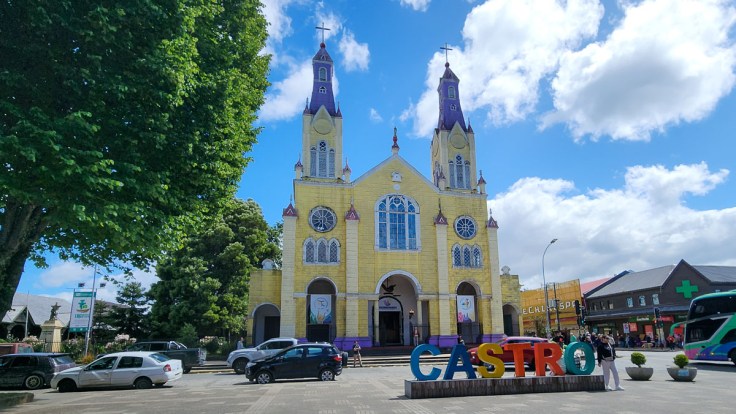
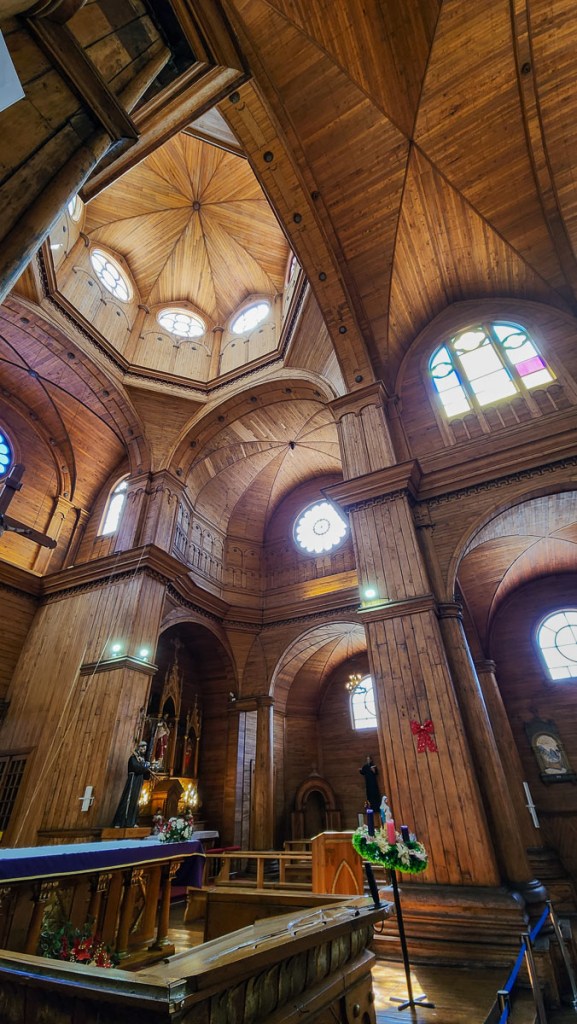
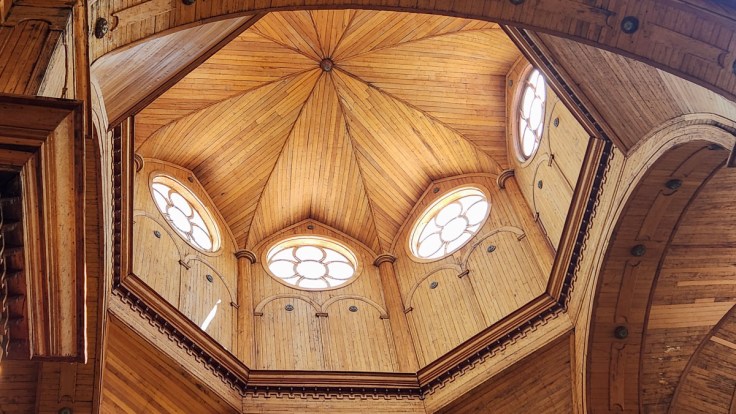
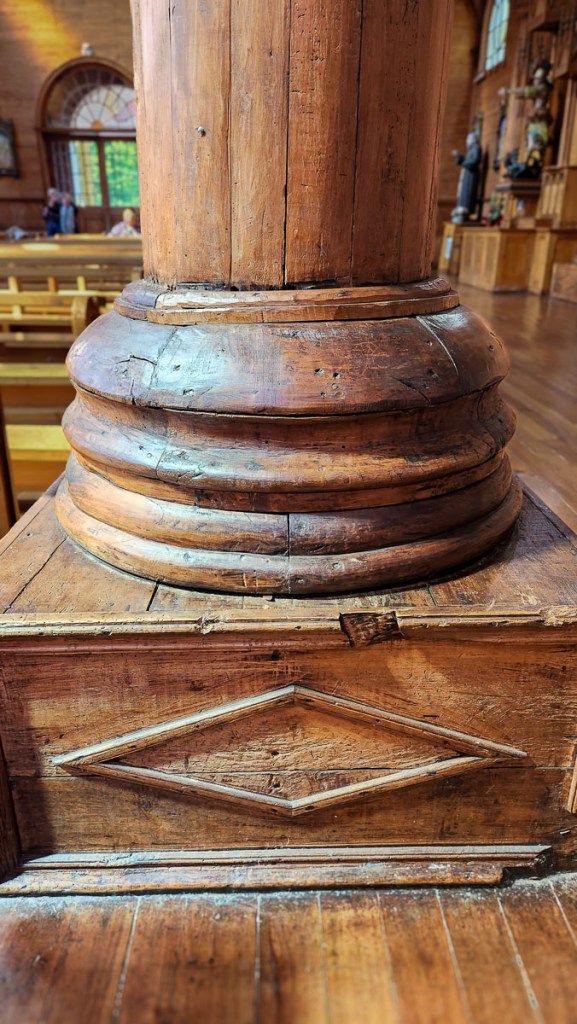
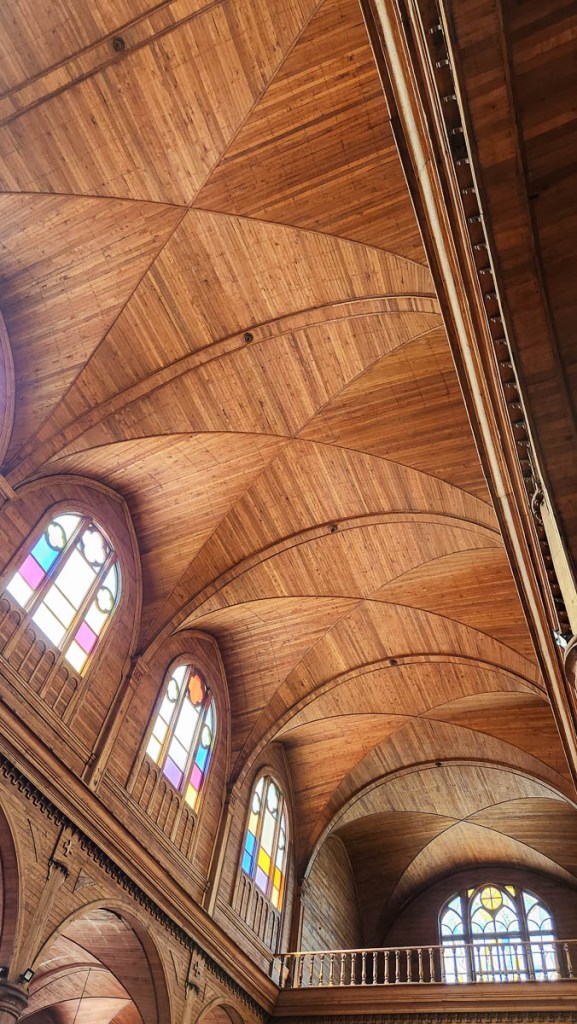
We often skip entering churches, but we are glad we checked out the interior of the yellow and purple Iglesia de San Francisco, one of 16 wooden churches of Chiloé designated as a UNESCO World Heritage Site. Constructed with native hardwoods by shipwrights using dowels instead of nails, the wooden ship-like interior combines with the bright, simple stained glass windows to offer a warmth that isn’t often found in stone and marble structures.
Rather than catching the shuttle back down the hill to the ship, we opted to walk, taking in the views and learning about the sculptures of the Paseo Mitológico (Mythological Walk). The carved wooden sculptures depict several creatures in the folklore of the Chiloé archipelago where Castro is located.
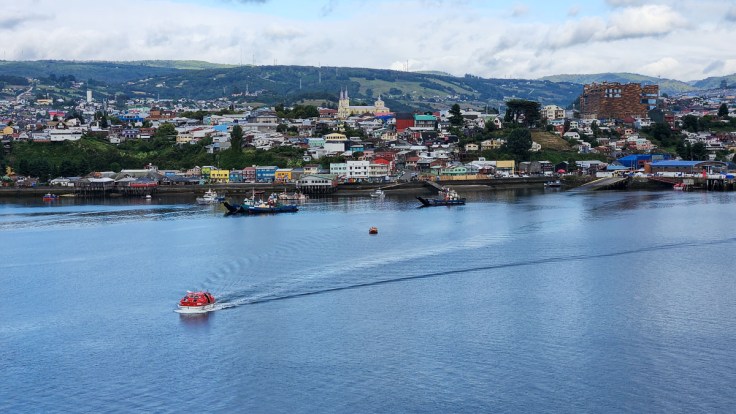
Tender on its way back to the ship 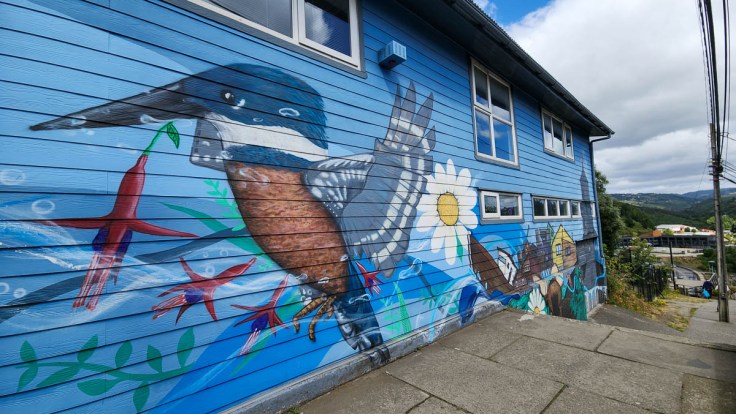
Mural on the way to the palafitos viewpoint 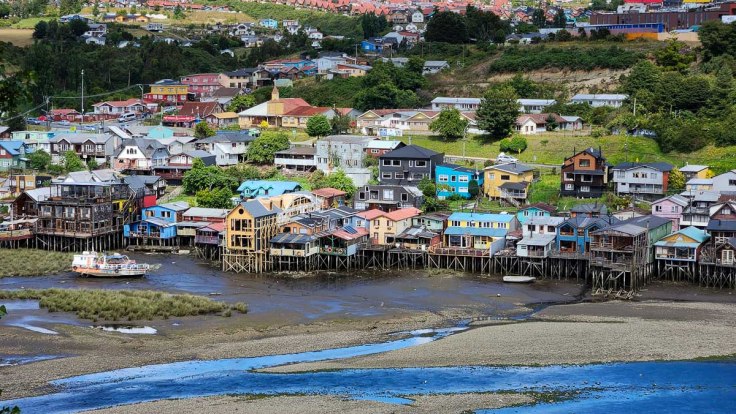
Palafitos 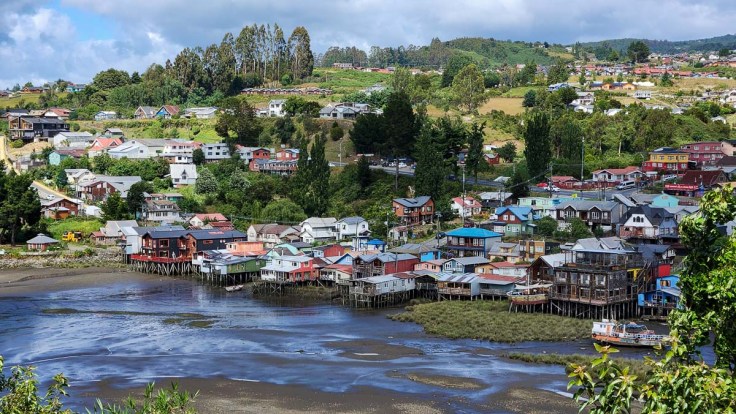
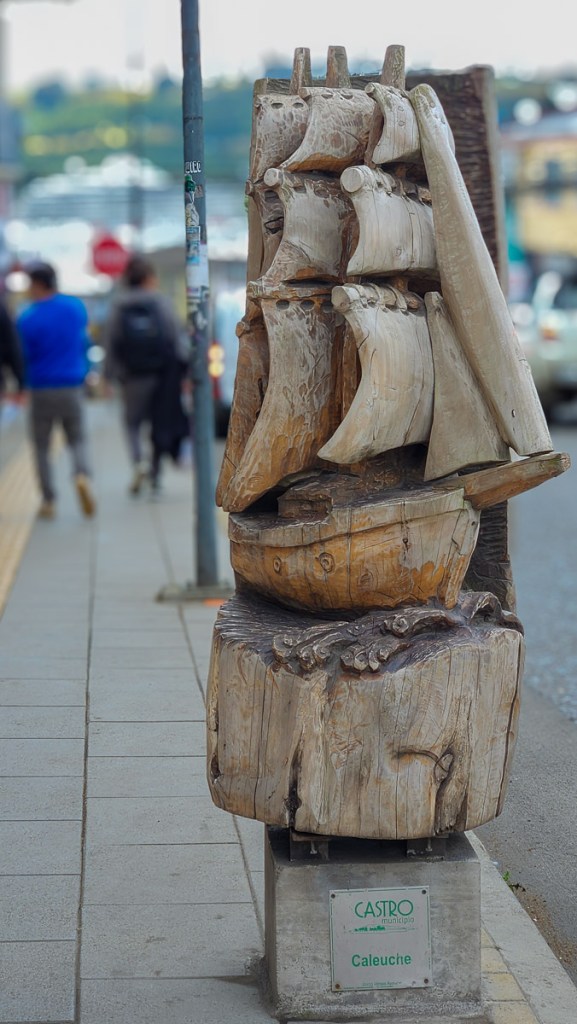
El Caleuche (ghost ship) sails the archipelago at night, accompanied by the sounds of a grand party and festive music 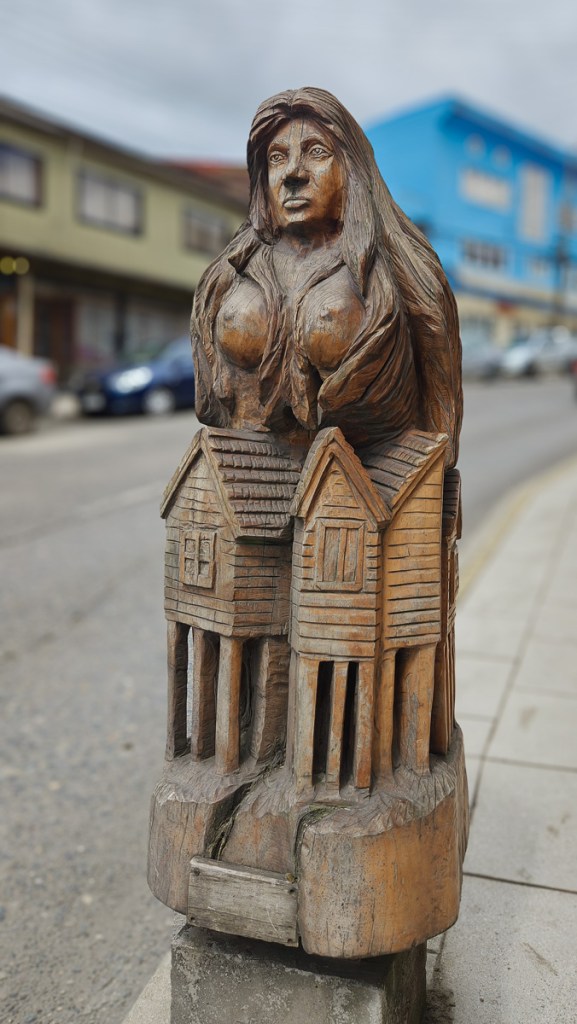
The charming La Fiura, who uses her breath to “twist” the limbs or necks of people who look at her or cross her path 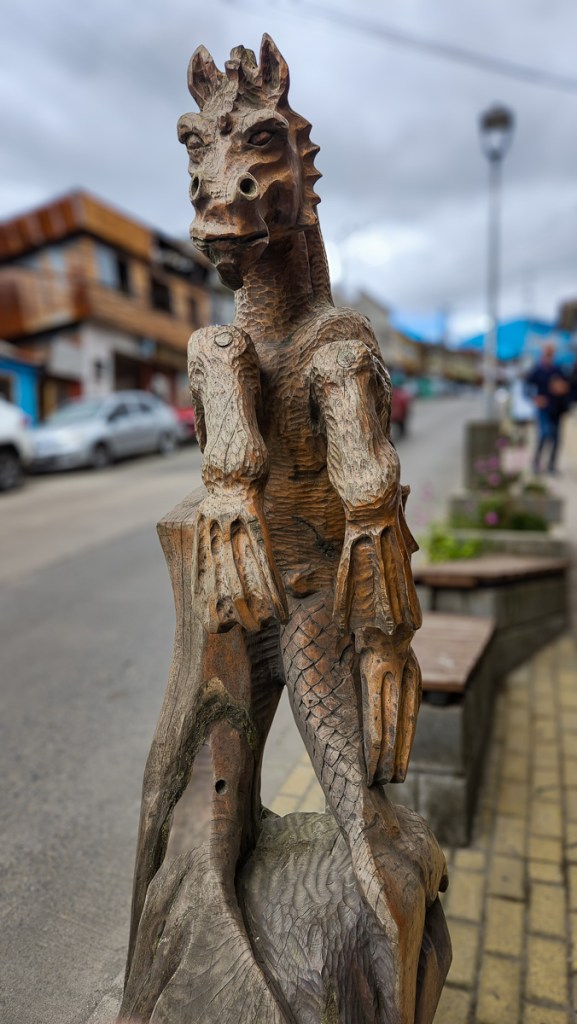
Caballo Marino Chilote (sea horse), invisible to most humans, is used by warlocks to travel quickly from the islands to El Caleuche, the ghost ship 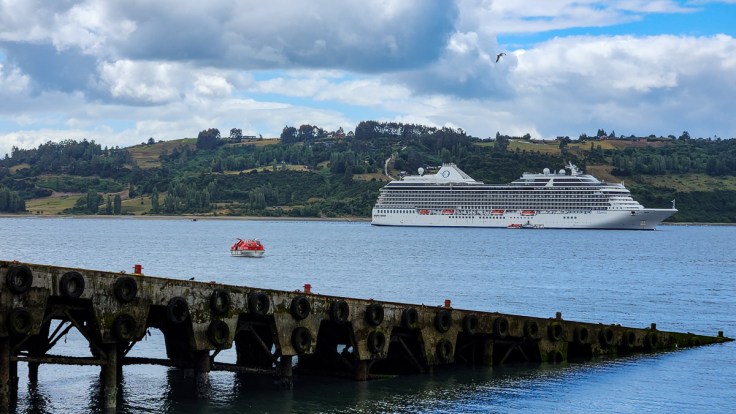
Our ship at anchor
Chilean Fjords
There were two more stops before the fjords. On Christmas Day, we arrived in Puerto Chacabuco, a small town where almost all things to do and see require transport elsewhere. We hadn’t booked anything and were happy to stay on board. On Boxing Day, we arrived in Laguna San Rafael, a port where only those who had booked a ship’s excursion to the glacier (we had not) were permitted to disembark.
We had to navigate the open ocean along the Chilean coast before ducking in among the islands and fjords and the seas were pretty rough. Though many were suffering and seeking remedies for motion sickness, I was already in bed ill from who knows what and didn’t really notice the ship’s movements. Ken’s stomach wasn’t affected, but found walking through the hallways to be very challenging.
Once we were back in protected waters, we enjoyed the rugged scenery.
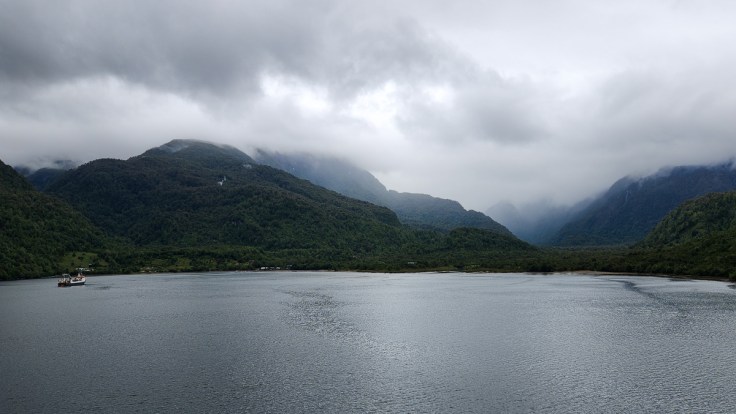
Puerto Chacabuco 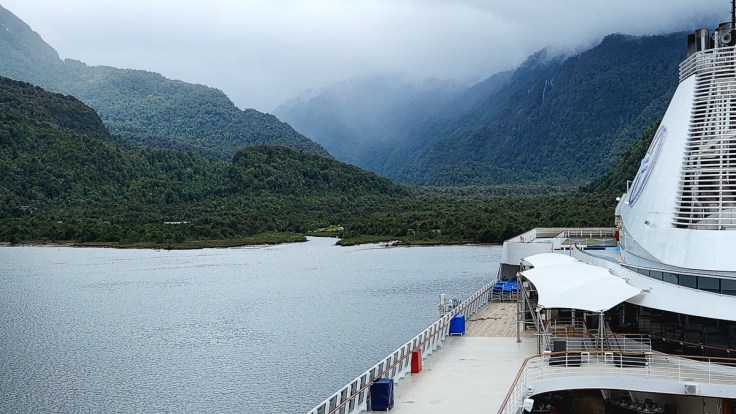
Puerto Chacabuco 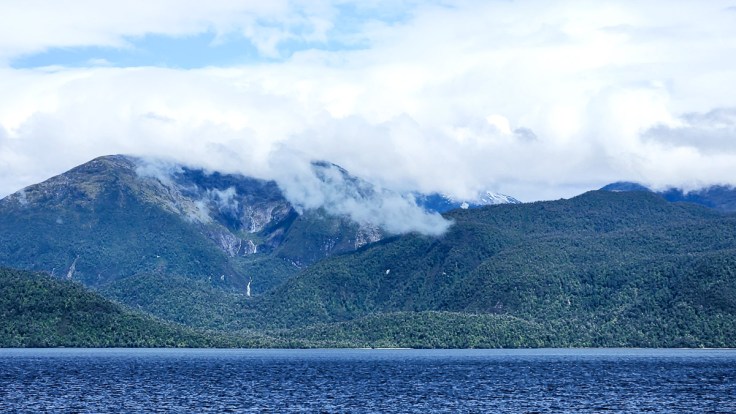
Laguna San Rafael 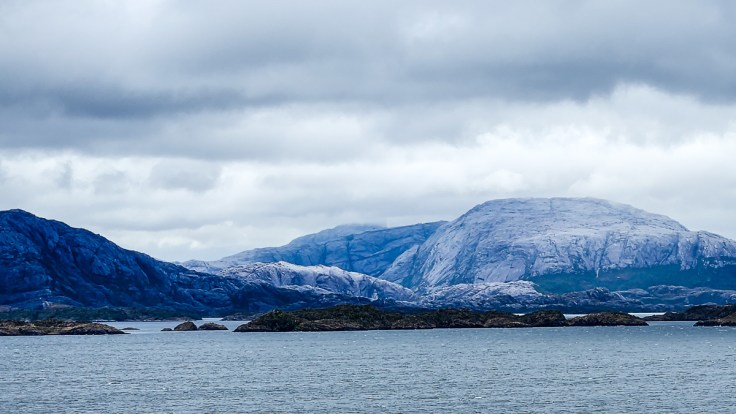
Chilean fjords 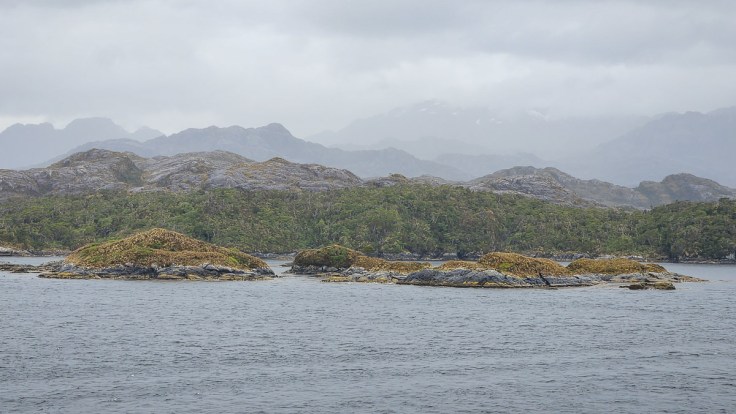
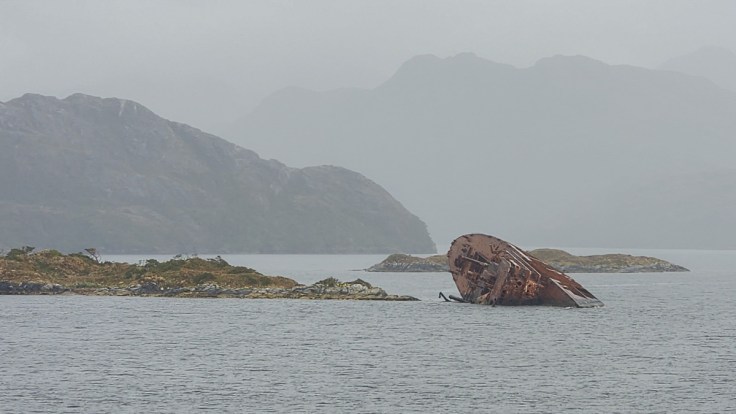
Shipwreck in the fjords
Punta Arenas
Punta Arenas is the capital of Chile’s southernmost region. It grew from a 19th‑century penal colony into a bustling port, built on maritime trade, sheep‑farming wealth, and European immigration. Its fortunes shifted again when the Panama Canal opened and most ships abandoned the long route through the strait.
We spent a few hours wandering the city, from the Plaza de Armas, up through the streets and stairways to a viewpoint high above the city, and then back down and along the waterfront. From the lookout, the harbour and Strait of Magellan stretched out below us. The plaza is surrounded by buildings that reflect different chapters of the city’s past, while the waterfront is dotted with sculptures, rusted machinery, and the skeletons of old wharves, each hinting at a different moment in Punta Arenas’ story.
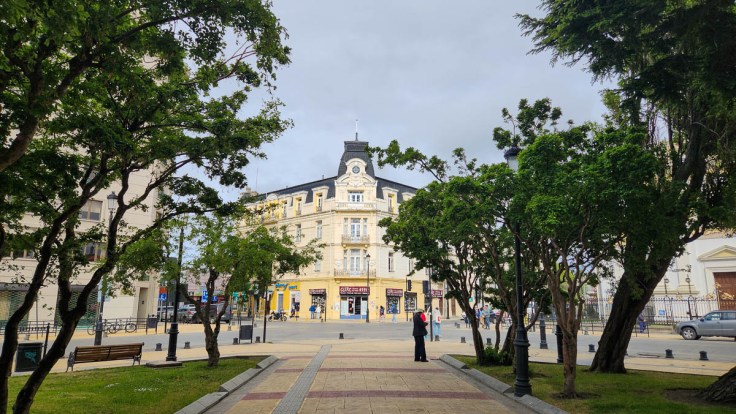
A graceful old commercial building from Punta Arenas’ wool‑boom era 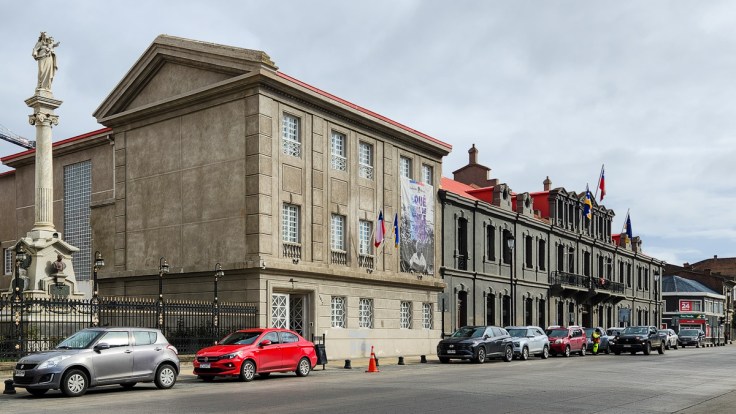
The former Braun‑Menéndez mansion, now the Regional Museum of Magallanes, anchoring the plaza’s historic civic row 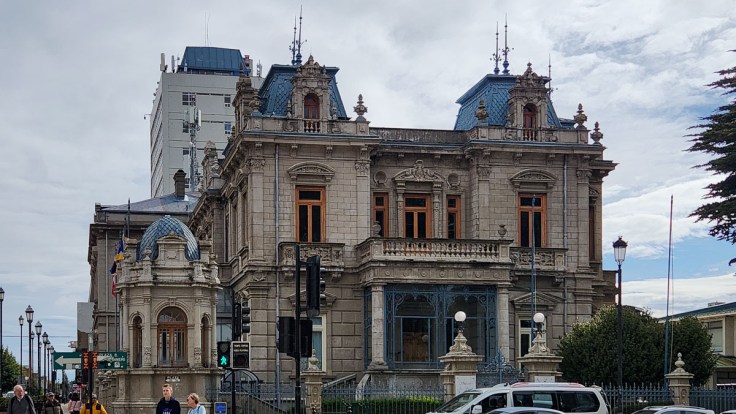
One of the plaza’s stately heritage mansions, a reminder of Punta Arenas’ early‑1900s prosperity 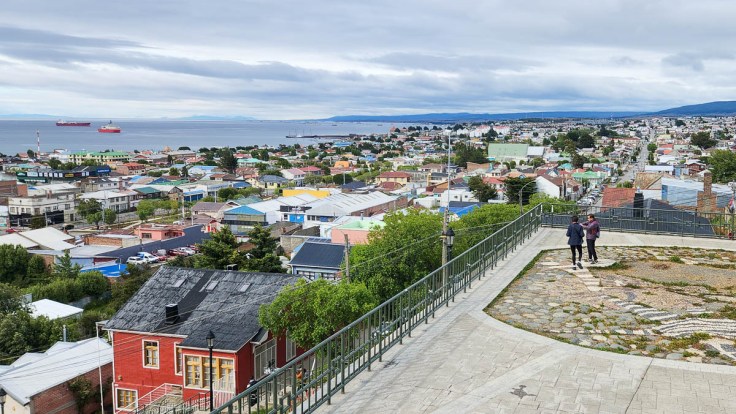
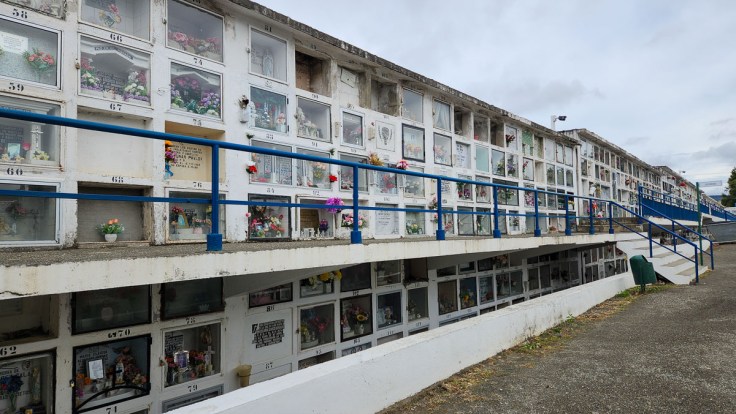
In a cemetery, there were many of these blocks, like little apartments for the dead 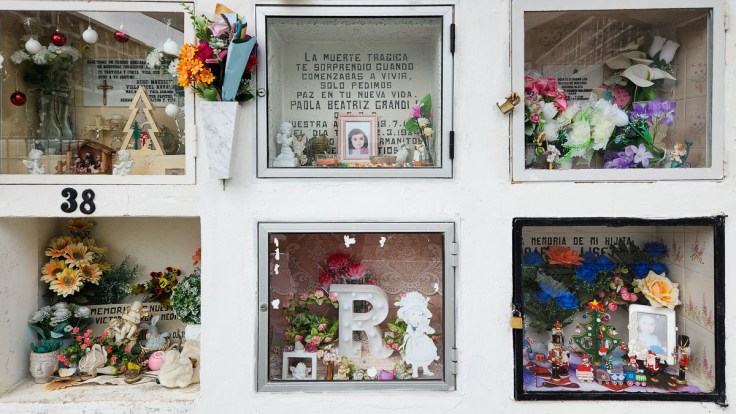
Most of the niches were decorated with photos, flowers, toys, and tiny personal treasures 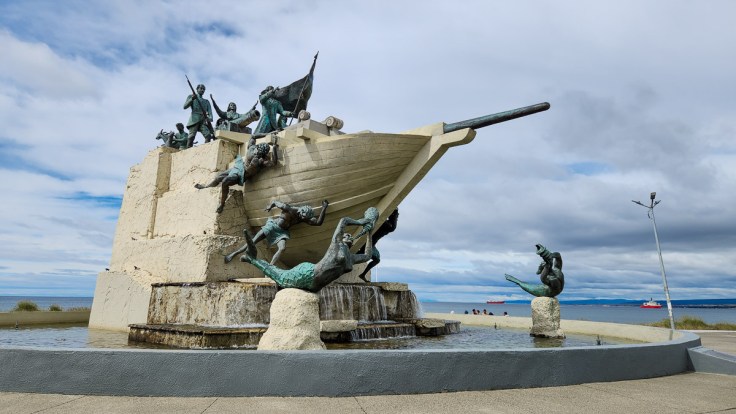
A burst of motion honouring the early sailors who braved the strait 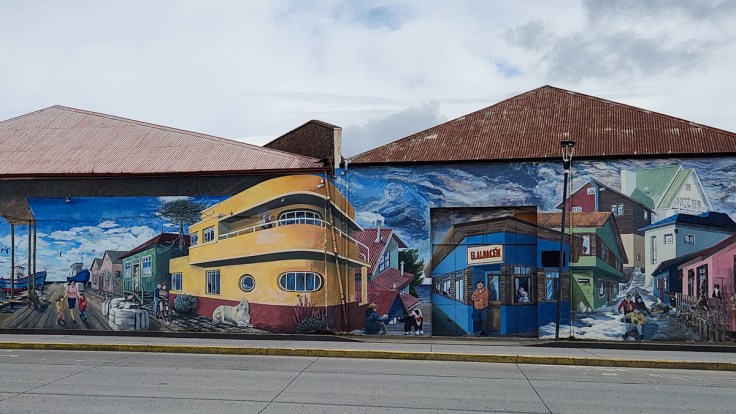
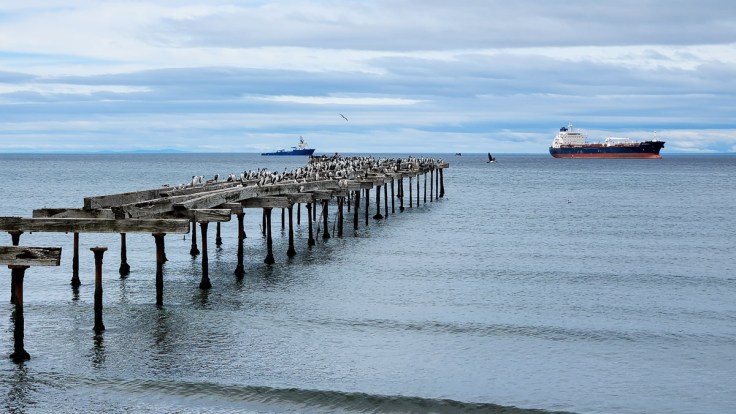
An old pier long abandoned, now claimed by seabirds and the tides 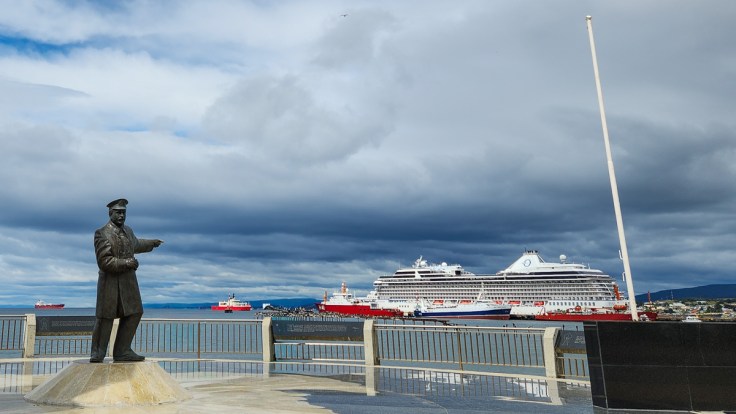
A tribute to the navigators who shaped Punta Arenas’ maritime history 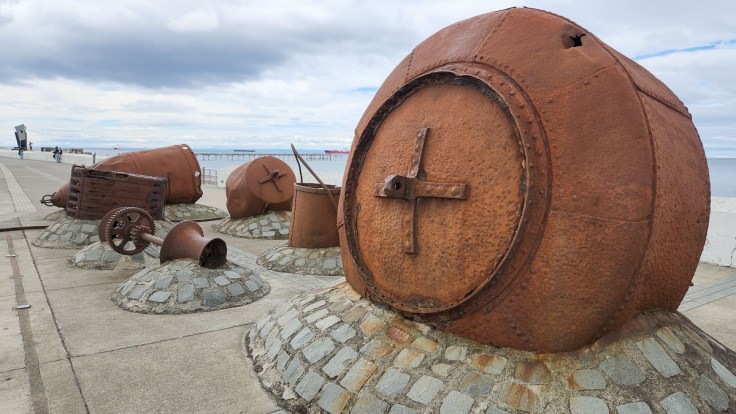
Remnants of the city’s working waterfront, weathered by decades of wind and salt 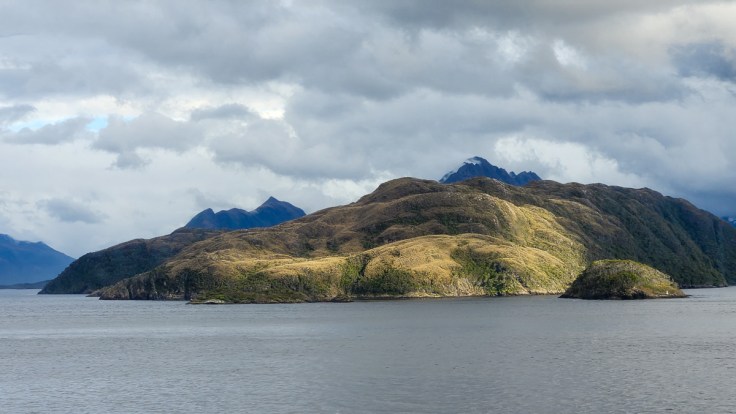
Heading away from Punta Arenas
Ushuaia
Perched between the Beagle Channel and the Martial Mountains–where the Andes taper into the sea at the far south of Argentina–Ushuaia climbs sharply up the hillside. The mountains sit so close to the water that, from a distance, it feels as if they’re still rising, pushing higher and threatening to topple everything into the channel.
Most visitors head out to Tierra del Fuego National Park for its forests, lakes, and end‑of‑the‑road vistas. We thought we’d have plenty to take in just wandering through town and along the Costanera, Ushuaia’s waterfront promenade, and maybe even hire a taxi for a quieter trip into the park without the more tourist‑heavy touches like the End of the World Train. But by the time we walked to the end of the pier and along a short stretch of the sea wall, we were both spent–my cold fully set in, and Ken just beginning to feel it.
We plodded back to the ship, but we were still able to take in the city from afar–the colourful hillside, the harbour, and the pale, glacially carved cliffs slipping past as we began our journey toward the Drake Passage.
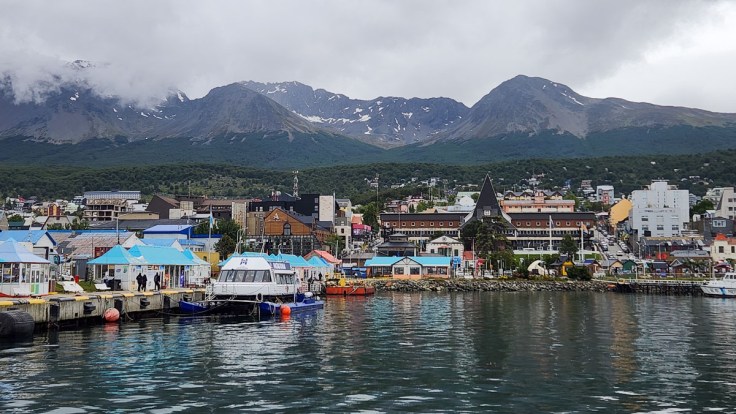
Ushuaia’s harbour tucked beneath the first (or last) rise of the Andes 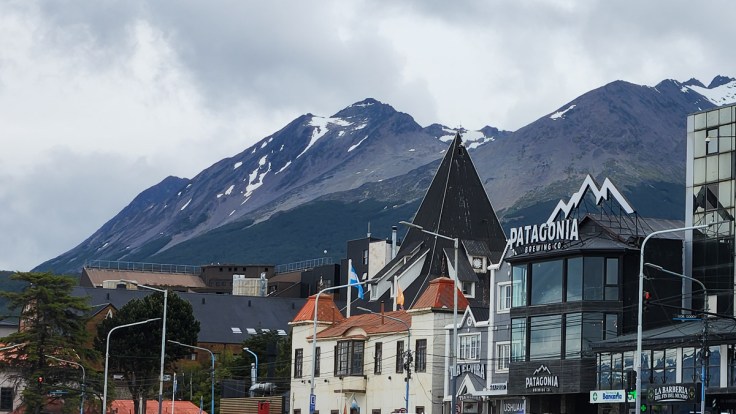
A brewery let us know exactly where we were 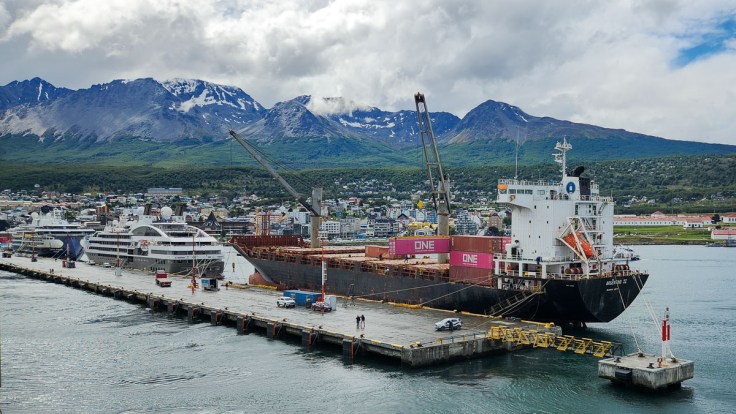
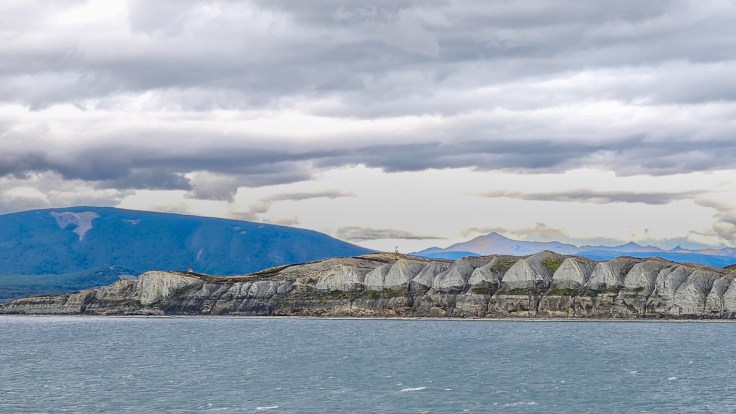
Glacially carved cliffs along the Beagle Channel as we sailed out
Antarctica
Crossing the Drake Passage takes about a day and a half or even two days. There is always a worry about the Drake Shake, when the seas are high and the crossing is rough. Everyone hopes for the Drake Lake, with calm seas and quiet winds. Our crossing was somewhere in between, more lake than shake according to the captain, which was especially good news for those celebrating New Year’s Eve out in the open ocean.
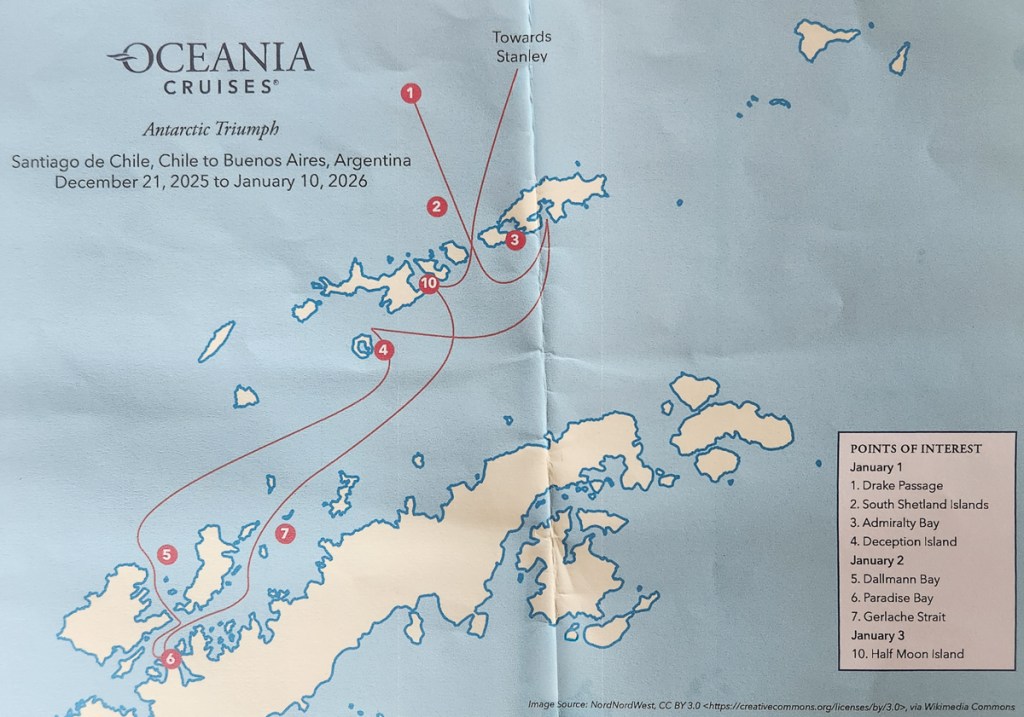
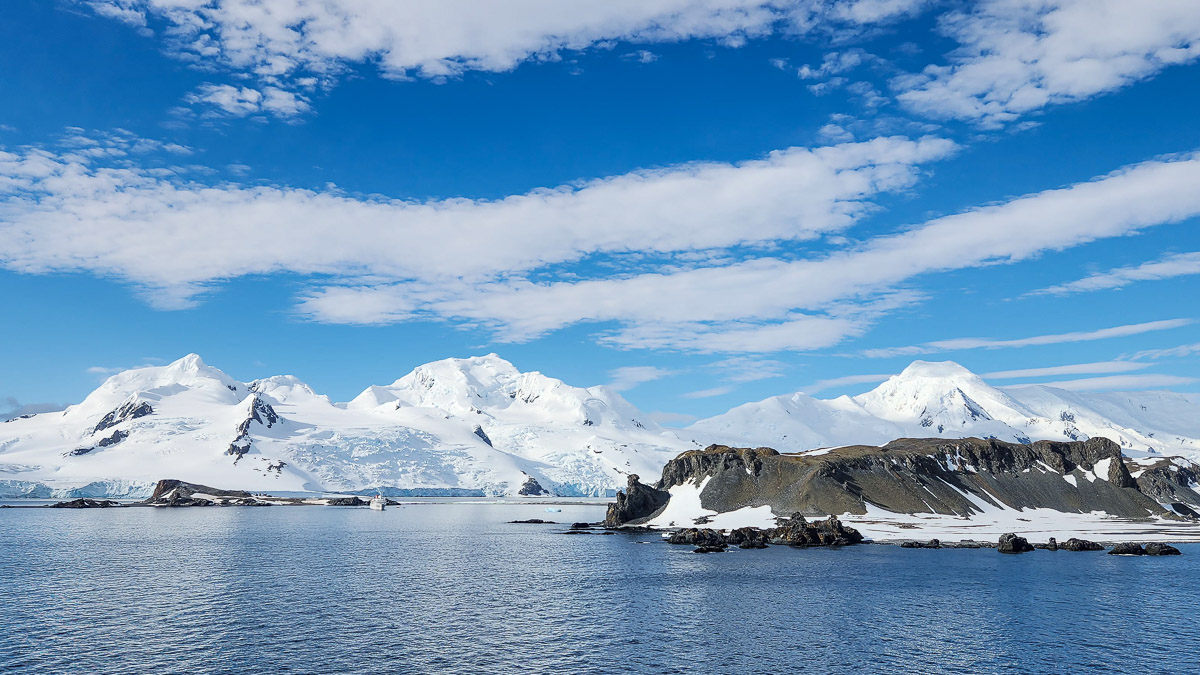
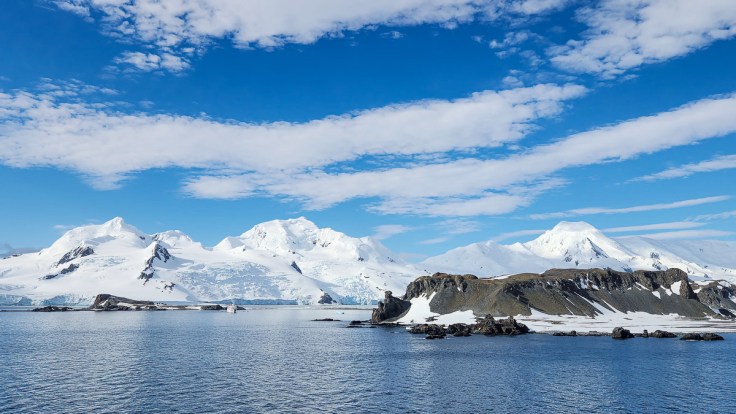
Once we arrived in Antarctica on January 1, we spent most of three days moving through the northern gateway to the Antarctic Peninsula, where the South Shetland Islands, the Bransfield Strait, and the Peninsula’s first fjords blend into one long, changing landscape. It began in a wash of grey mist, softening the volcanic shapes of the South Shetlands as we threaded our way past Admiralty Bay and Deception Island. As we continued south and then looped back around, the weather opened by degrees, until the last bays and straits on the journey appeared under a clear blue sky, the glaciers sharp and bright as we could possibly have hoped for.
Several expert scientists were on board, offering thoughtful lectures and steady observations as we moved through the region. Some had spent years working in Antarctica, others were seeing it for the first time, but all shared their knowledge and excitement as we meandered between glaciers and wildlife‑filled waters.
The peace and wonder of cruising through Antarctica was a trip highlight for both of us.
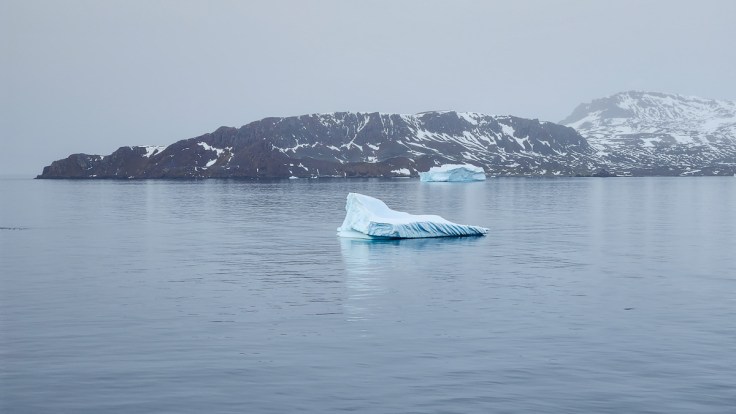
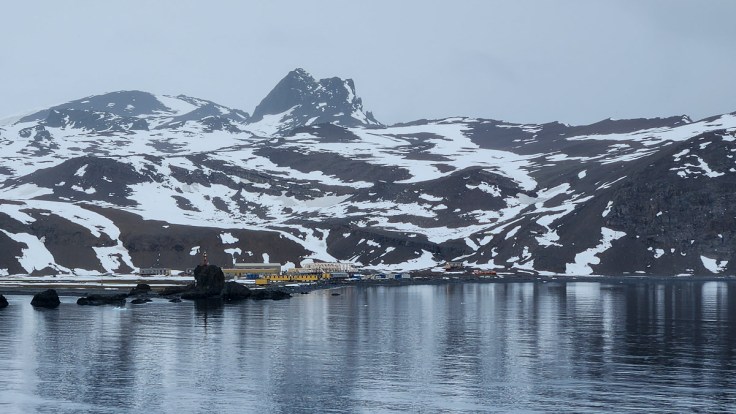
Henryk Arctowski Polish Antarctic Station backed by volcanic hills of King George Island 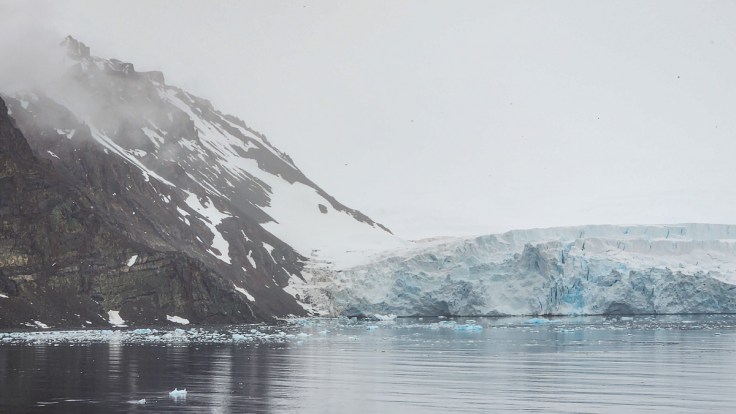
The edge of a glacier 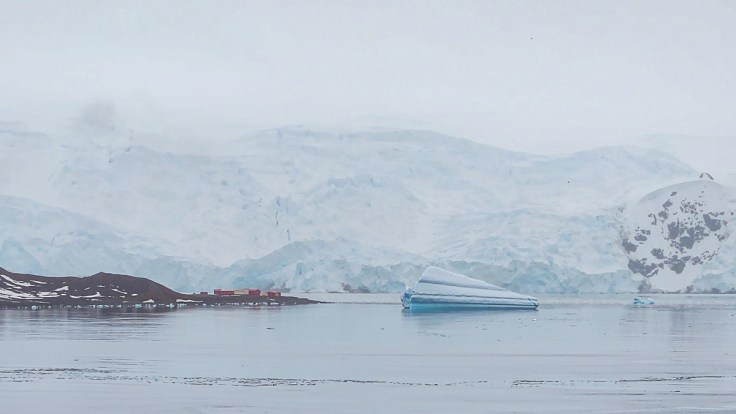
Machu Picchu Base, Peru, dwarfed by glaciers and an iceberg 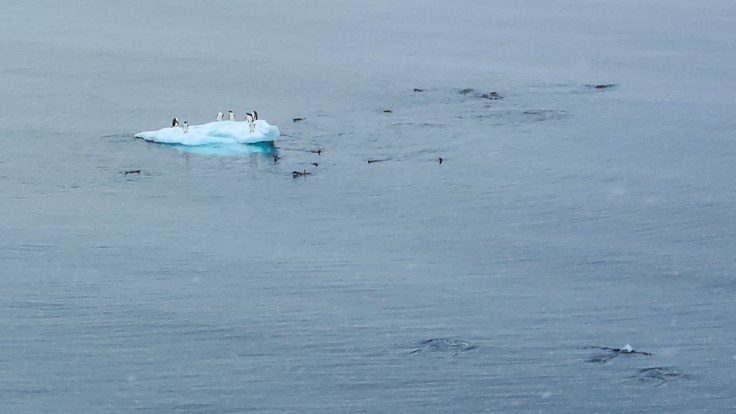
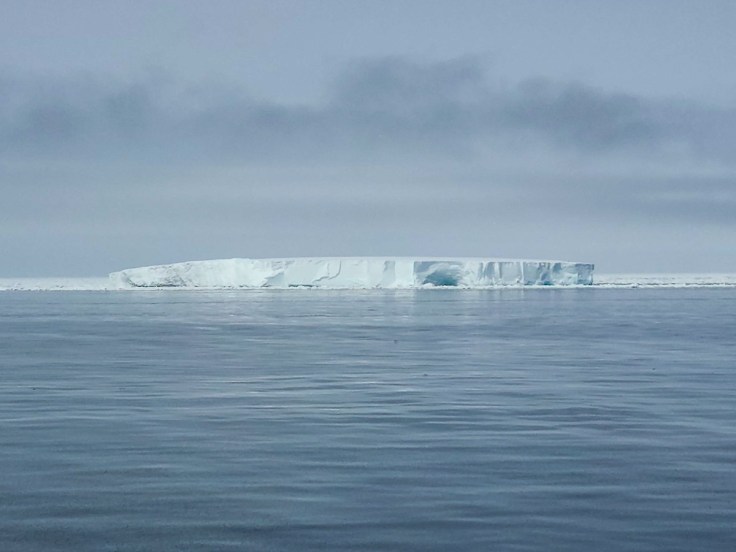
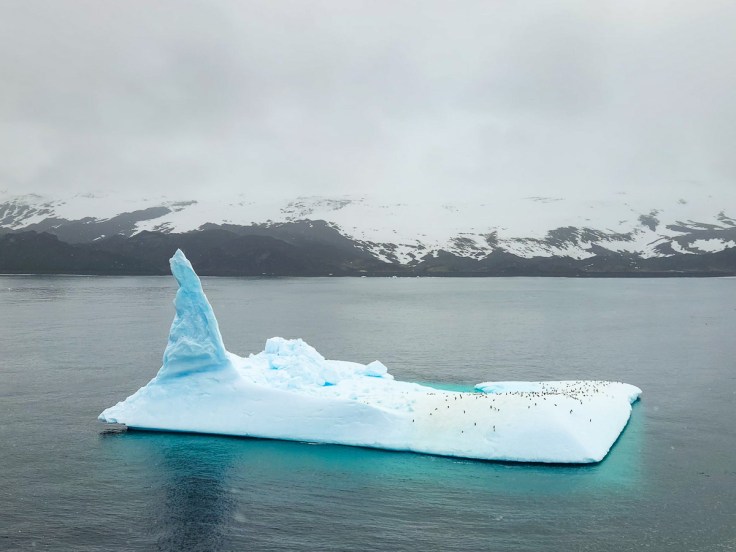
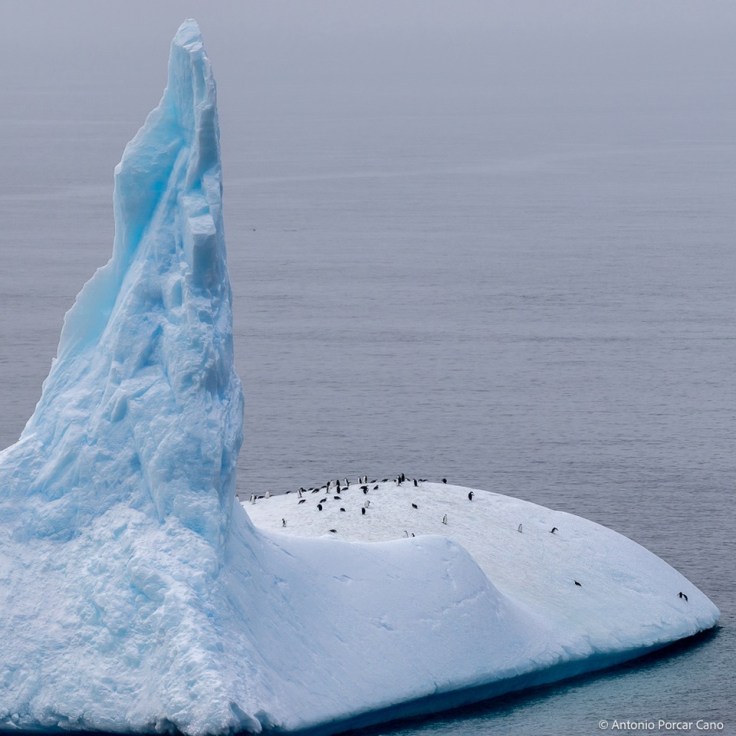
A tabular iceberg provides a great platform for penguins 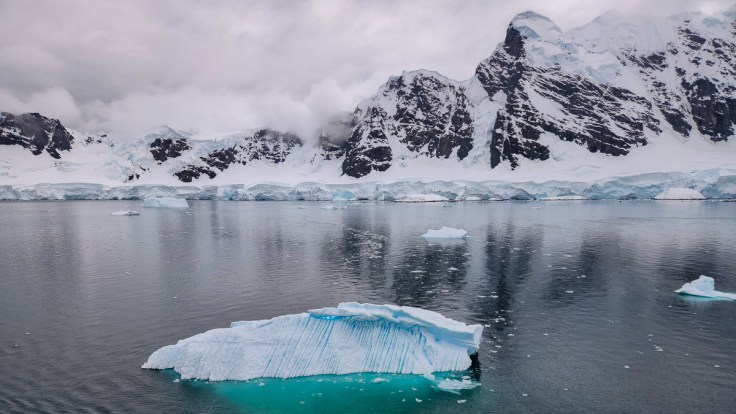
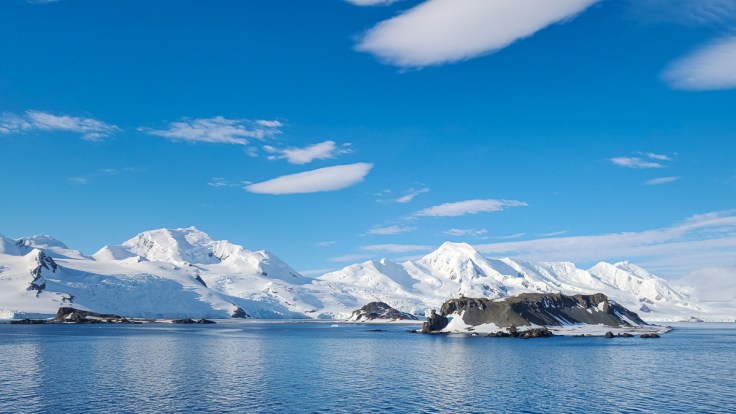
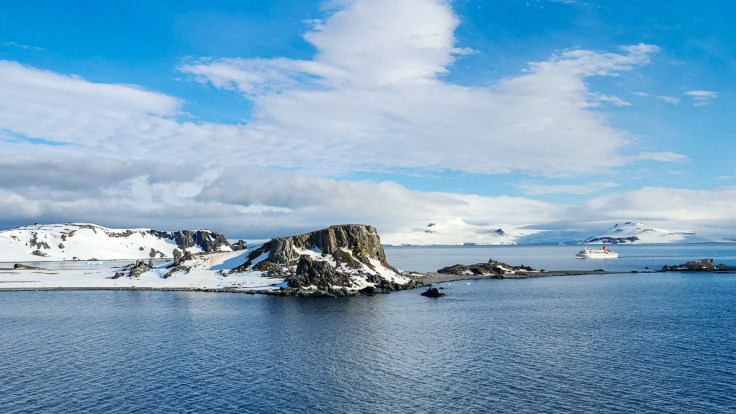
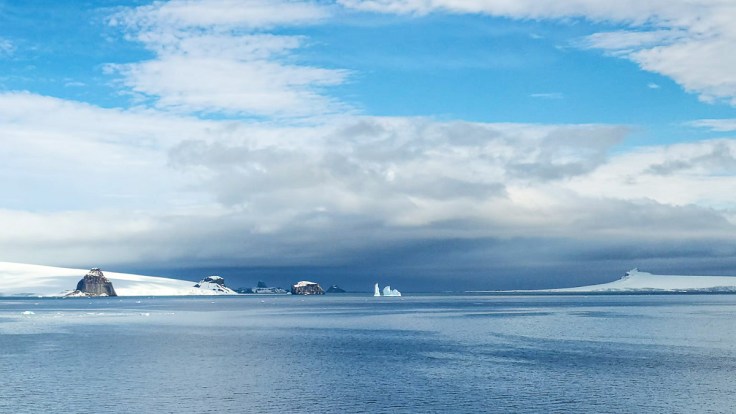
Antarctica photos from a good photographer with a decent camera
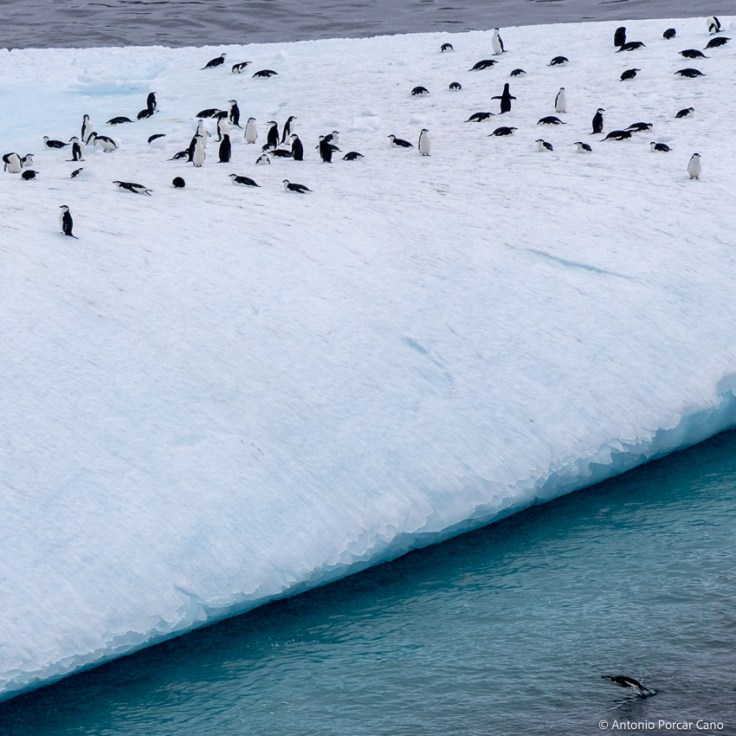
There have only been a few times that I have lamented the loss of my camera kit (it was stolen from our car last year), but during our time in Antarctica I really felt frustrated by my lack of tools for the kinds of photos I wanted to take. A fellow passenger who has shared his images with the cruise Facebook group kindly allowed me to post some of his photos here. I selected a few that illustrated what we saw, but far better than I was able to with just a phone camera. Photo credit for all images in the following set goes to Antonio Porcar Cano. (Antonio’s trip images include many wonderful wildlife photos, especially lovely shots of the variety of penguins that he saw on excursions that we didn’t participate in, so they aren’t included here.)
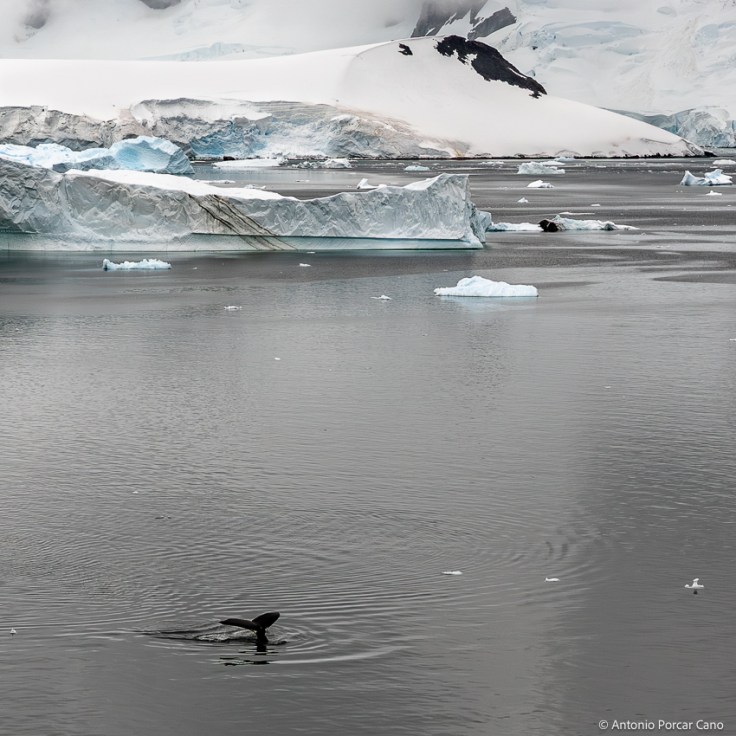
One of so many (and so many kinds of) whale sightings 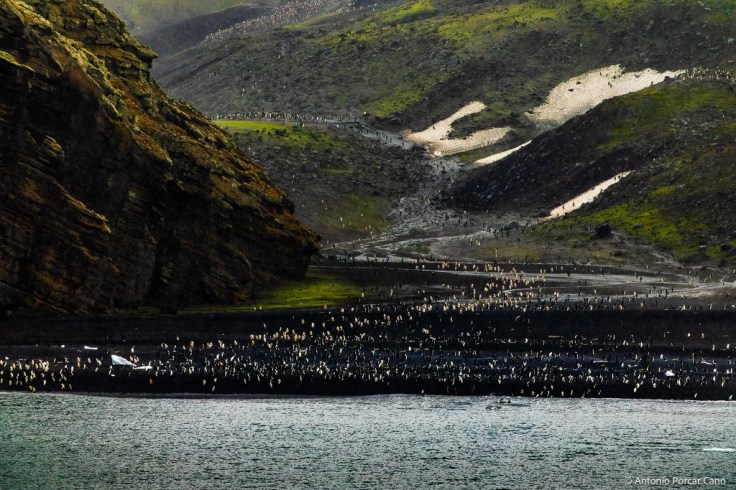
The entire beach and up into the valley covered with penguins 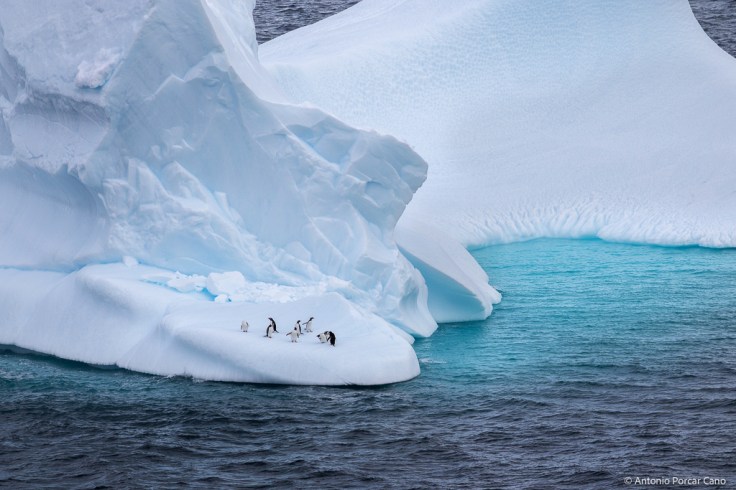
Stanley (Falklands) and Puerto Madryn (Argentina)
At the risk of sounding incredibly whiny, by the time we had crossed back over the Drake Passage and landed in Stanley on the Falkland Islands, all I wanted was some cough relief so we could both get some sleep. There wasn’t a pharmacy in town, but we were able to pick up a few items in the main grocery store.
Our next port, about two days away (and the only stop before we ended our cruise in Buenos Aires an additional three days later) was Puerto Madryn. By this point, my cough had become bronchial and getting help became our only goal. We tried a pharmacy, where a pharmacist recommended something but suggested I get to a doctor first. He directed us several blocks away to a clinic where they spoke some English. Unfortunately, in Argentina, it’s hard to get medical attention unless you have either Argentinian pesos or crisp US $100 bills, and it’s very difficult to draw more than a small amount from ATMs. We were turned away from the clinic once the receptionist confirmed that they wouldn’t take credit cards. We found a larger pharmacy where the pharmacist was incredibly helpful and spoke wonderful English so I didn’t have to rely on my broken Spanish to explain my symptoms and the situation. She recommended the same thing the first pharmacist had, and said that it is what their doctors would prescribe for my symptoms. With some hope, we walked back along the waterfront and caught the pier shuttle back to the ship.
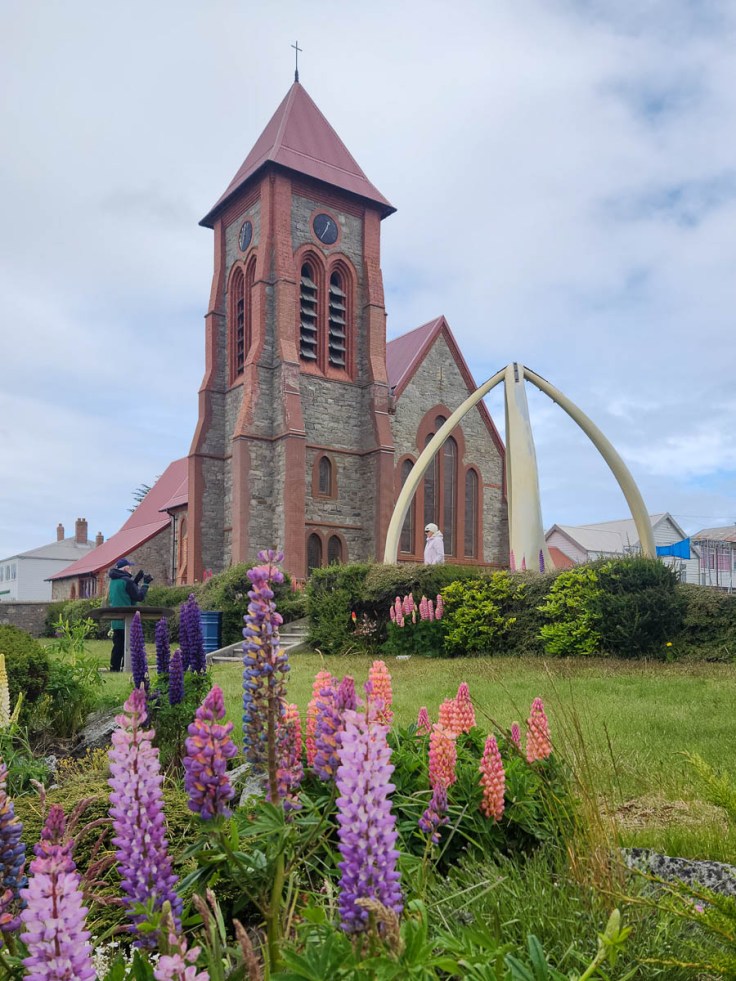
Christ Church Cathedral and its whale‑bone arch framed by summer lupines in Stanley 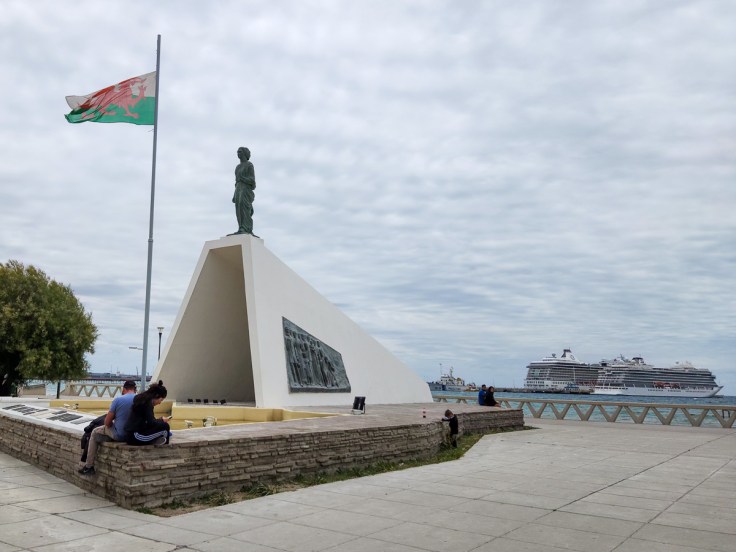
Monument to the Welsh Settlers on the Puerto Madryn waterfront, marked by the red dragon flag that recalls the region’s Welsh roots 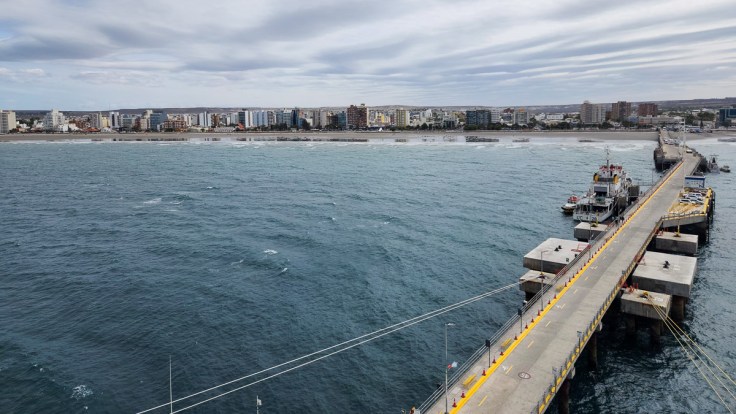
The long pier into Puerto Madryn
From Puerto Madryn, we were at sea until we arrived in Buenos Aires very early in the morning three days later. I’ll cover our time in that city and Iguazu Falls in the next post(s).
We did enjoy the cruise, even with the health challenges that shaped so many of our days. My being ill for most of the voyage and Ken managing the ebb and flow of his Parkinson’s symptoms inevitably influenced what we could do and how we experienced the journey, but they didn’t eclipse it. We found ourselves buoyed by the kindness of the people we met–small check‑ins, shared moments, and the quiet reassurance that others were looking out for us. Those connections softened the hard parts and became part of what we’ll remember most.

 Life: Phase Next
Please drop us a note!