We woke up in Buenos Aires in the middle of an active commercial port and then boarded a shuttle bus that took us around several roads defined by stacks of shipping containers and past massive cranes before dumping us out at the terminal. We picked up our luggage and took a short Uber ride to Palermo, a residential/retail neighbourhood tucked inside a city of more than three million people that is part of a metropolitan area stretching its population to over 16 million. The scale is immediate–broad avenues, long blocks, and the way the feel of the city shifts from one district to the next.
One constant during our time in Buenos Aires was the heat. We had expected it, but when combined with feeling less-than-100% healthy, we knew we had to take it easy and not try to see every little thing. A few days in, we decided to try the Hop-On-Hop-Off bus, something we rarely do. It did get us to some areas of the city we wouldn’t have reached otherwise, but we found that, while sitting inside to avoid the sun and heat on the open deck, we just didn’t see as much as we would have liked to.
Plaza de Mayo, San Telmo and Puerto Madero
We took an Uber (easy to get and very inexpensive) to Plaza de Mayo. Once in the plaza we found ourselves facing a long neoclassical façade that we didn’t immediately recognize as a cathedral. The Metropolitan Cathedral looks more like a civic building from the outside–twelve Corinthian columns, a broad pediment, and none of the towers or arches normally seen on a church. At the far end of the plaza, the pink‑ish Casa Rosada stood, quiety behind its closed gates. It’s the seat of the national government, though on a Sunday it felt more subdued than grand. We only saw it in passing, but its pale façade still anchored the edge of Plaza de Mayo.
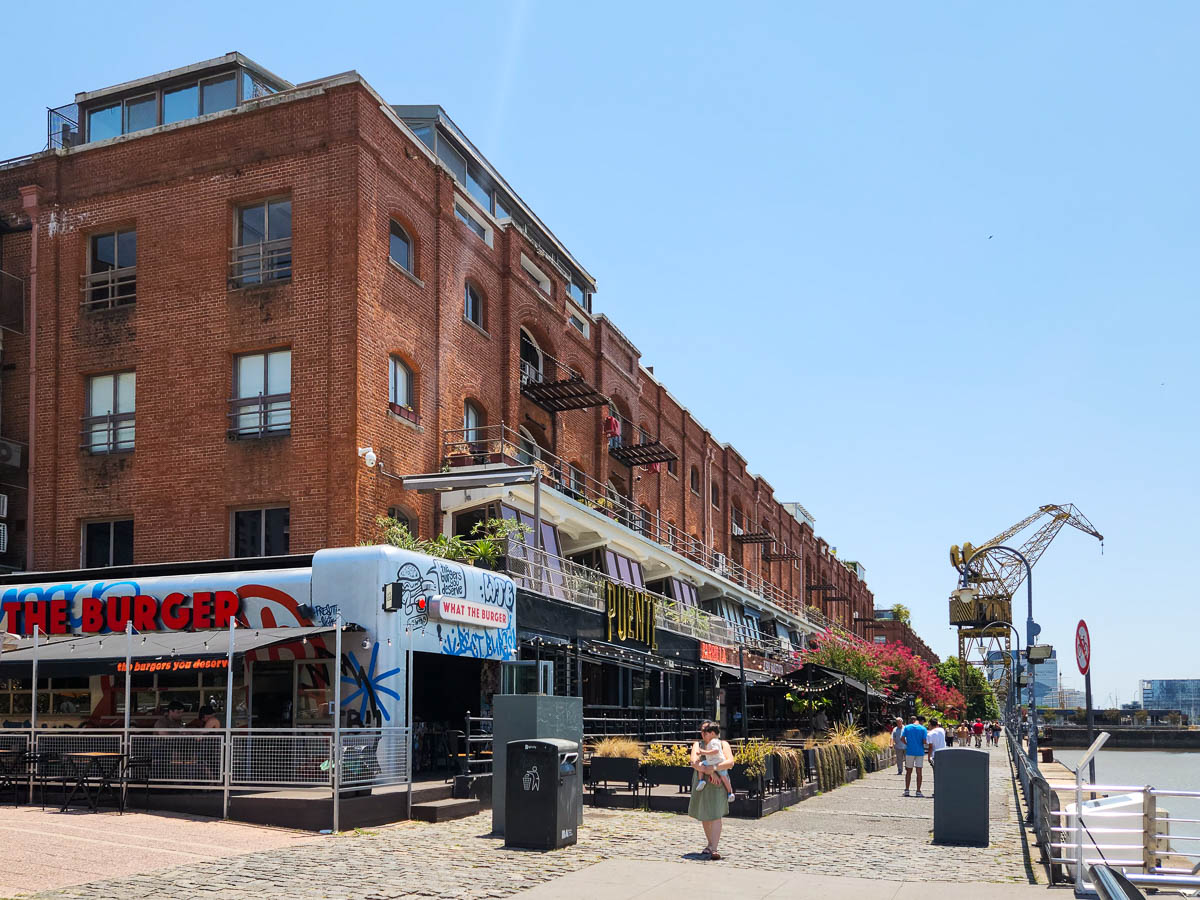
We left the plaza and followed Defensa, the route of the crowded Feria San Telmo, the neighbourhood’s sprawling Sunday market. It stretched for block after block, and at some point we slipped out at a cross street and headed toward the river. The change of pace was immediate: Puerto Madero’s long rows of brick warehouses–once part of the old port–have been converted into lofts, offices, restaurants, and shops, creating a lively waterfront district while still keeping traces of its past in the cranes that line the promenade.
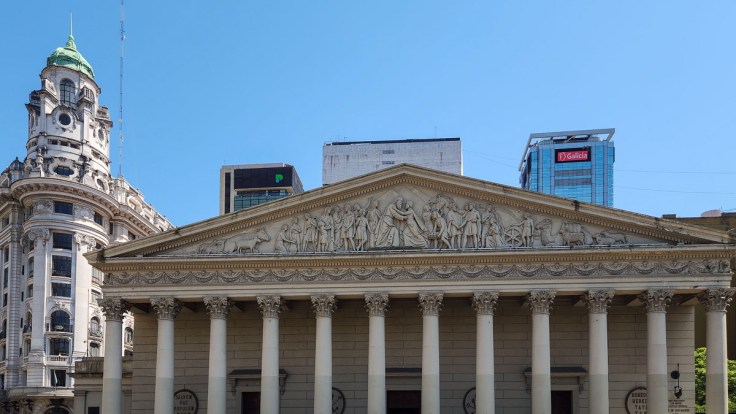
Catedral Metropolitana de Buenos Aires 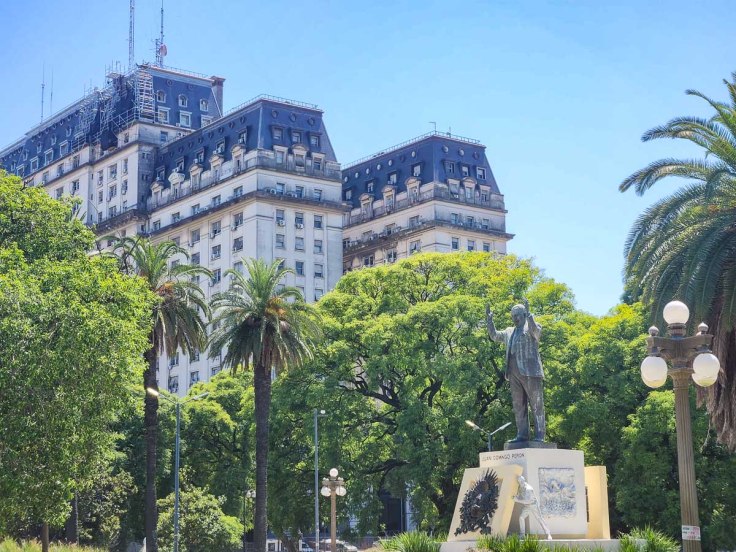
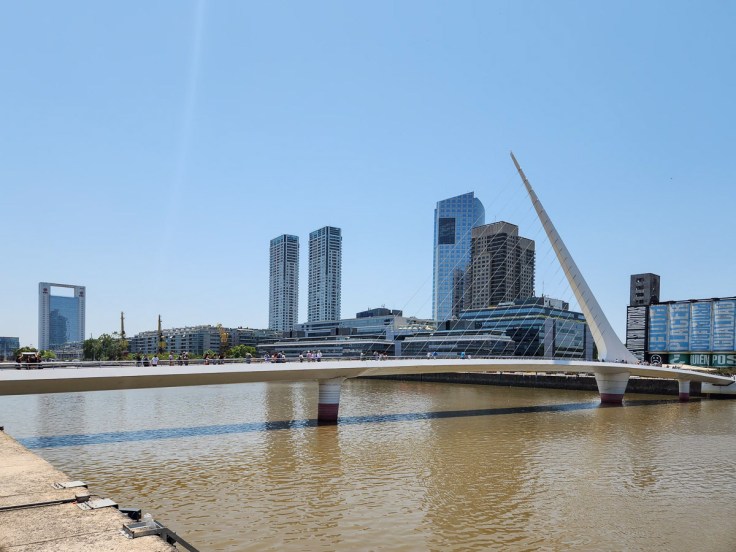
Puente de la Mujer 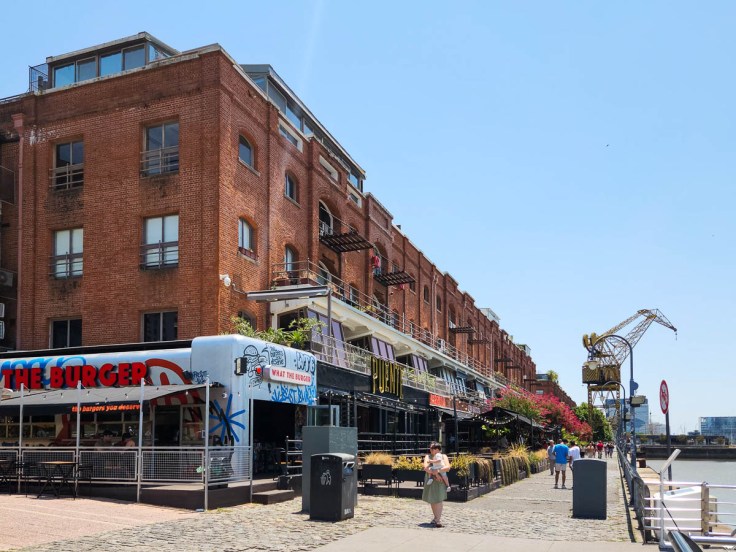
One of many converted warehouses
Recoleta Cemetery
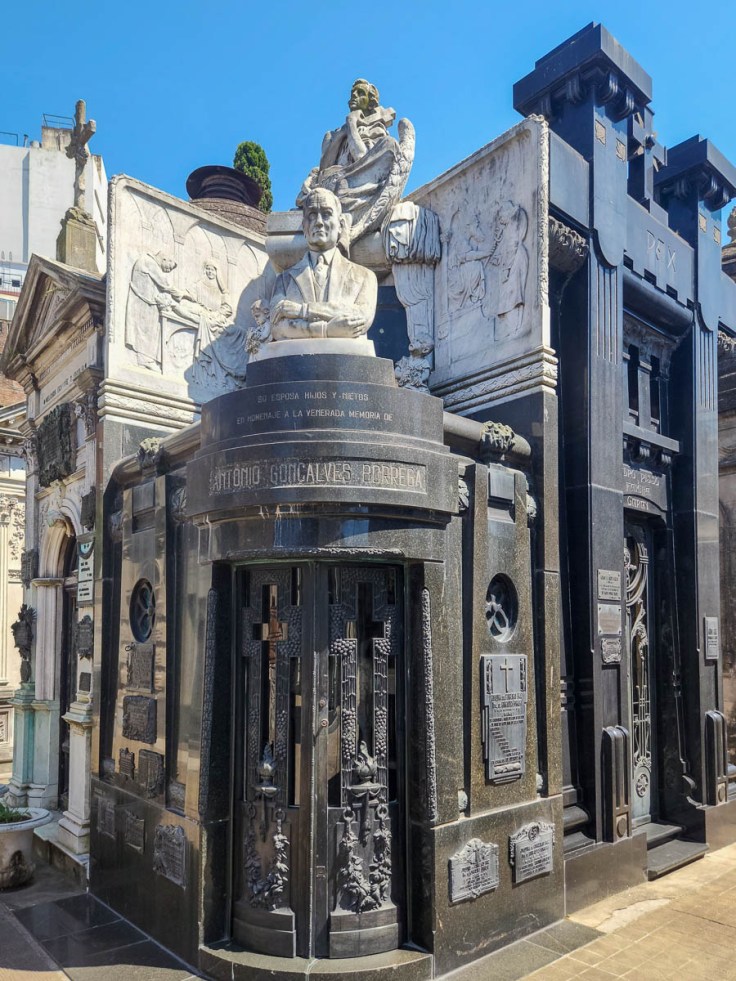
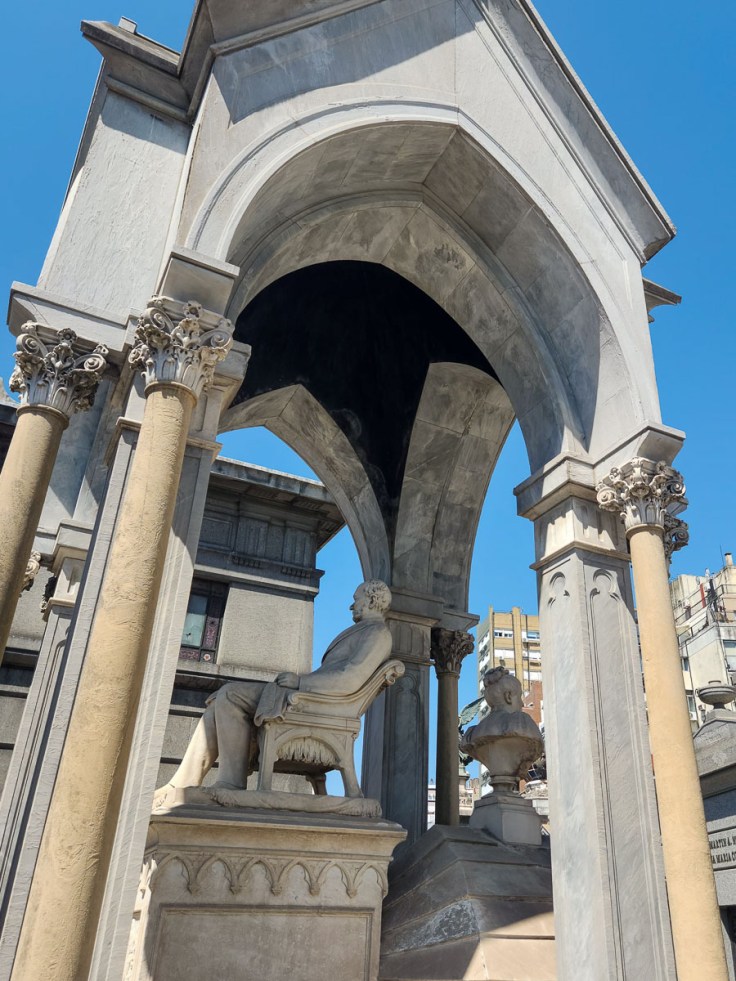
Recoleta Cemetery has long since outgrown its origins as a simple burial ground. Created in the early 1800s on the former grounds of a Franciscan convent, it became the resting place for many of Argentina’s most influential families during the country’s period of rapid growth later that century. The result is a compact city of mausoleums–some grand, some crumbling–that reflects more than a century of political, cultural, and architectural history. It was surprising to be charged to visit a cemetery, but with over 90 tombs designated as historical national monuments, all which need to be maintained and preserved, the fees are understandable.
Apparently this couple stopped talking in life, so the wife designed their mausoleum to continue that habit 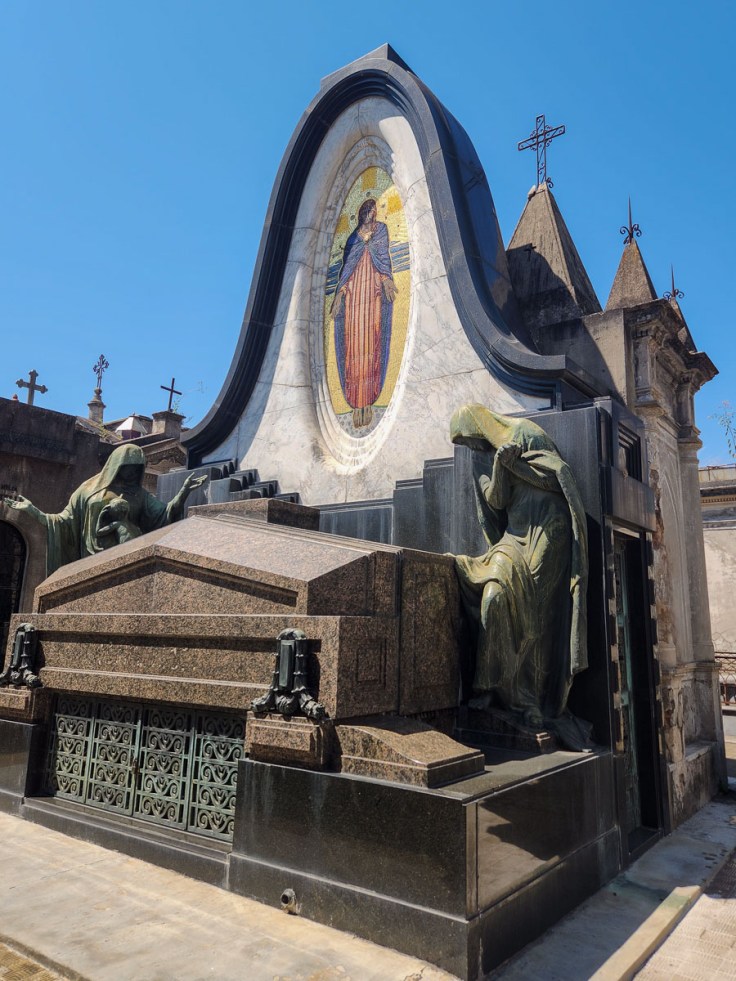
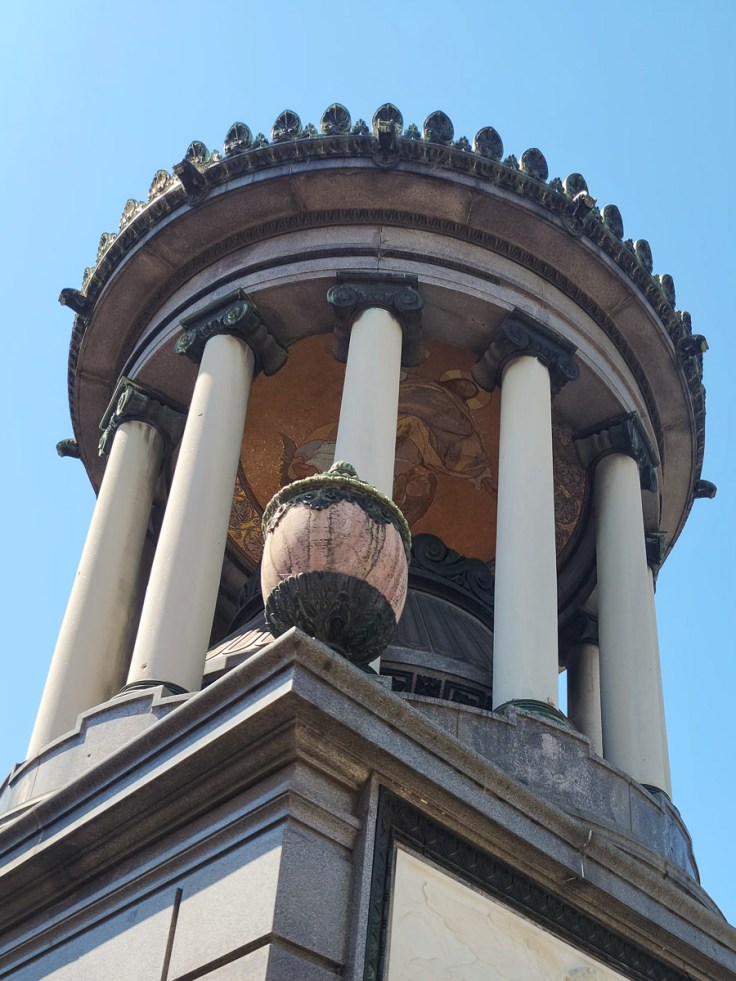
A temple-style mausoleum crown 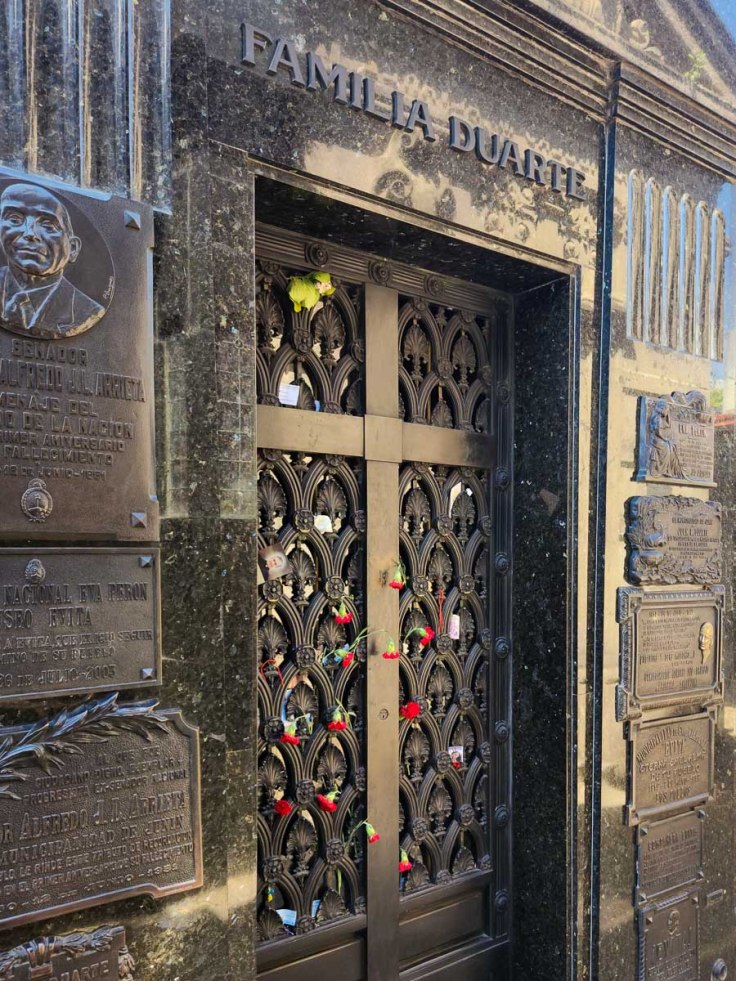
Eva Perón’s family mausoleum 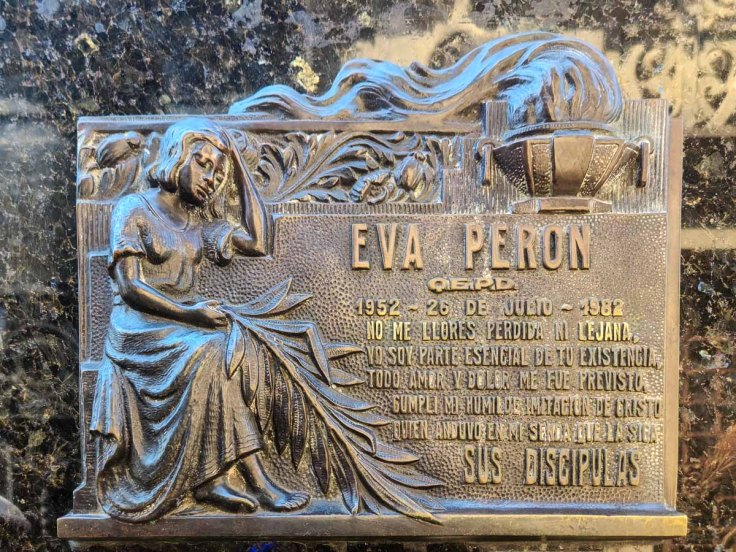
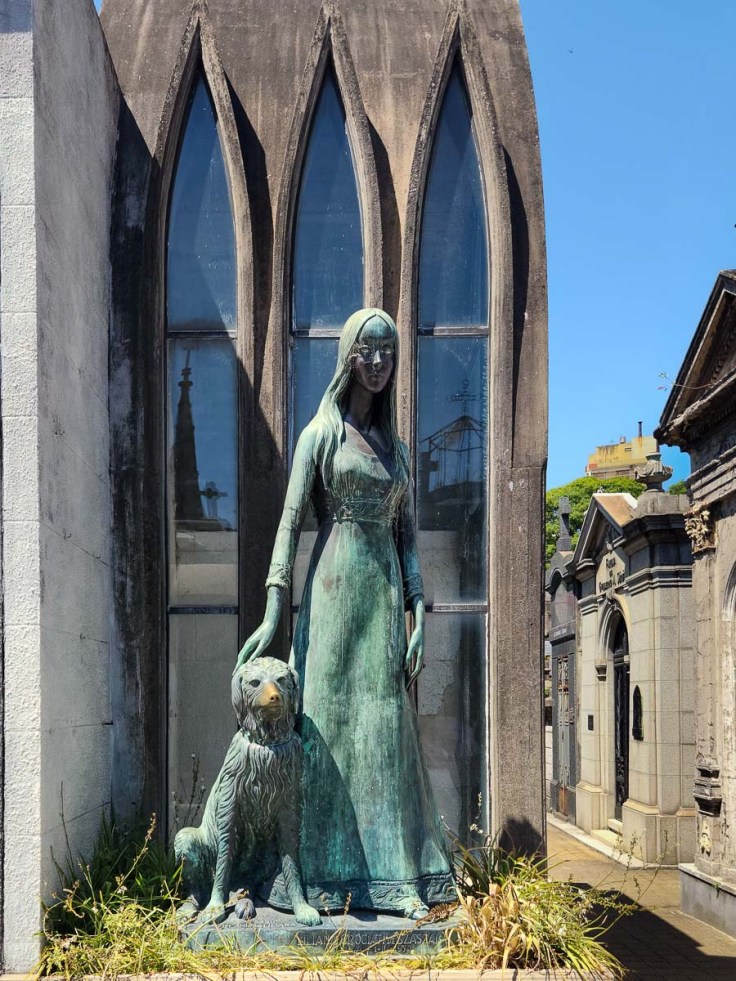
From 1970, this woman was on her honeymoon in Austria when her hotel was struck by an avalanche 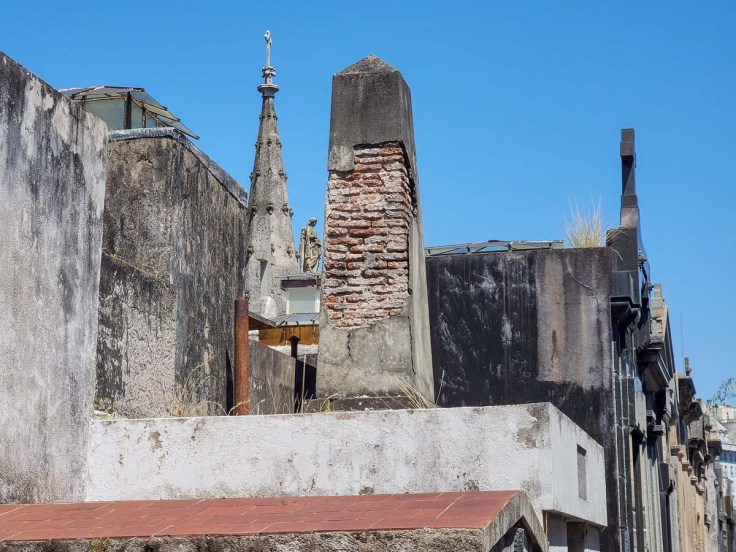
Not everything there is well-kept and grand
Outside of cemetery
Just outside the cemetery, we stopped beneath the enormous rubber tree whose sprawling, heavy limbs have been propped up for decades by a mix of metal supports and, more recently, a sculptural figure shaped like a modern Atlas. Beside the tree sits Café La Biela, a long‑established establishment where you are greeted by characters outside the door who represent the café’s history as a gathering place for those connected with car racing. The café’s name means connecting rod, an image you can see throughout the cafe, even as a cutout on every chair back. Seated at the first table inside the main door are sculptures of two of Argentina’s most famous writers, friends who met regularly at the café.
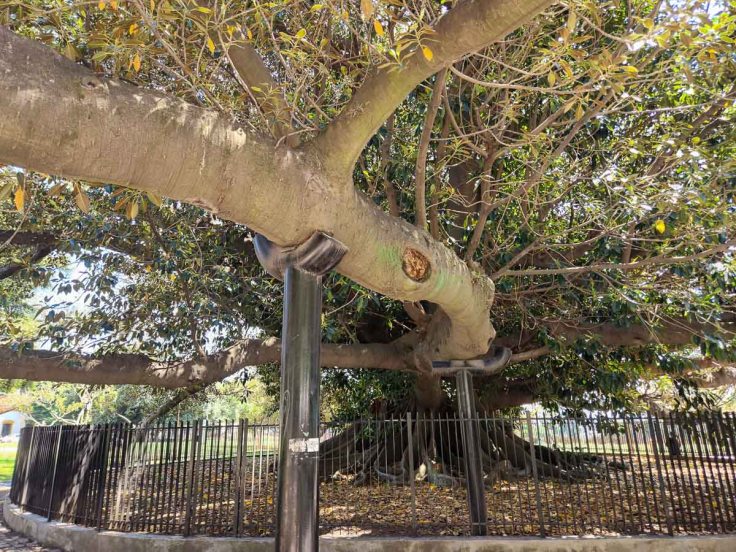
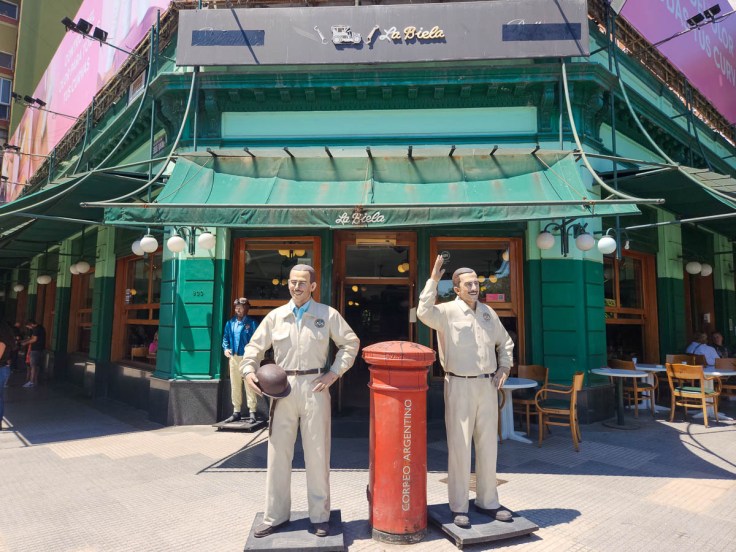
Welcome to Café La Biela 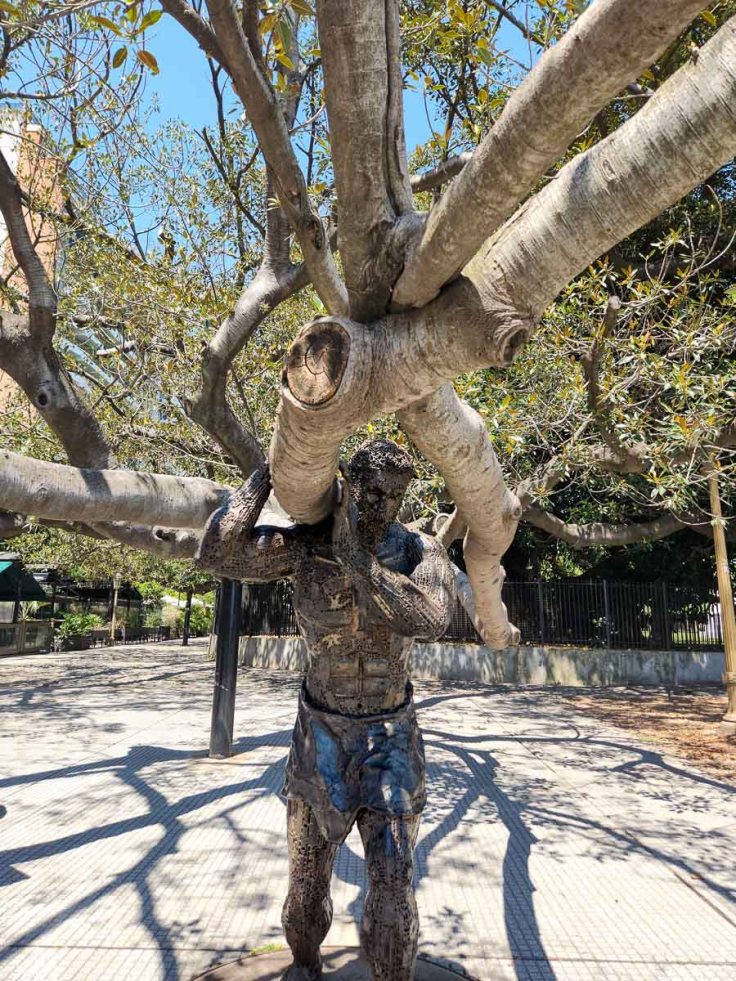
Atlas holding up a limb 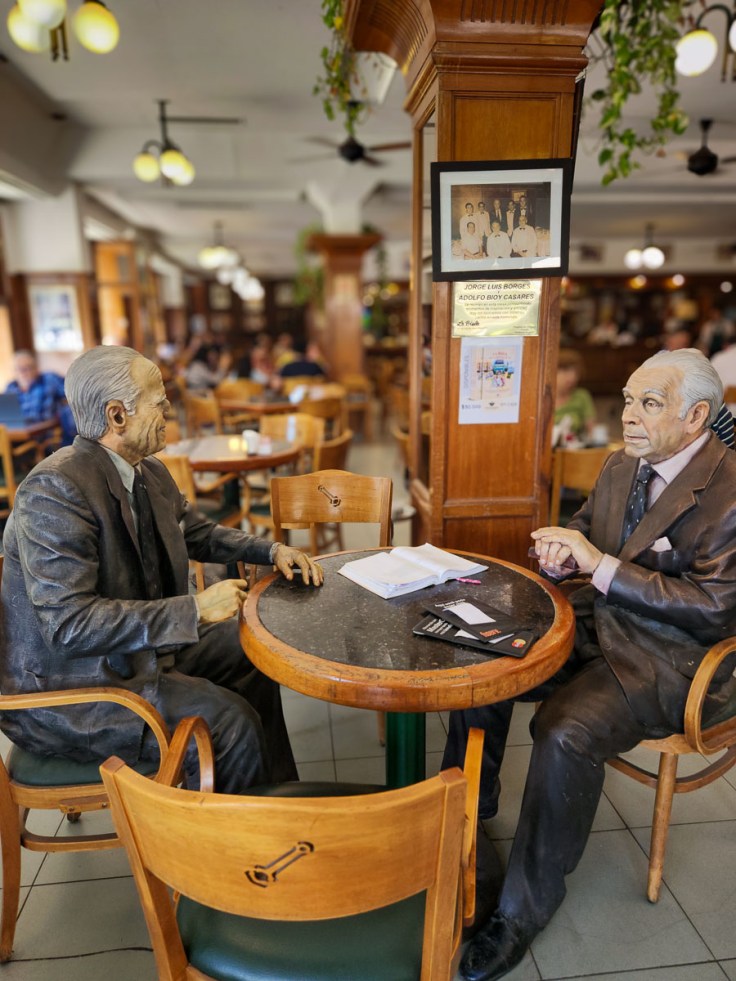
La Boca
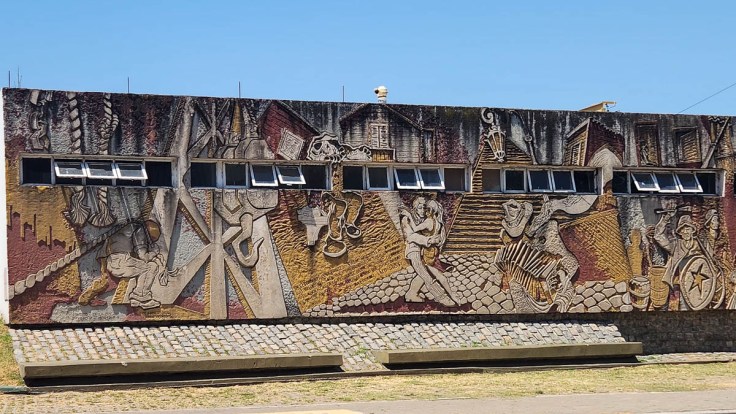
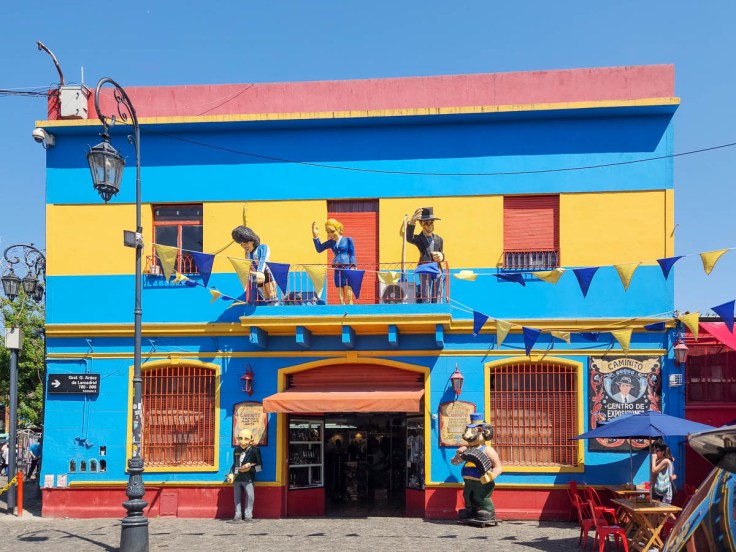
We took advantage of the Hop‑On‑Hop‑Off bus to drive through La Boca, where we got off near the colourful lanes of Caminito. Walking from the stop, we passed a large three‑dimensional mural in muted tones that folded together scenes of work, music, tango, and port‑side neighbourhood life.
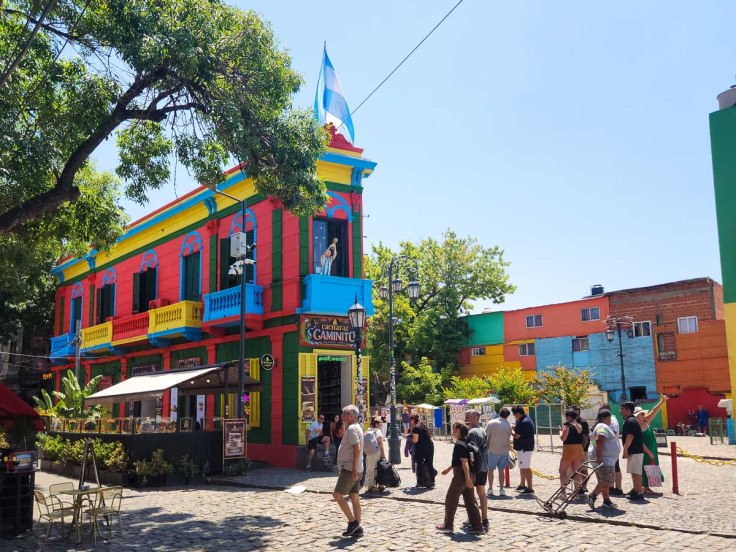
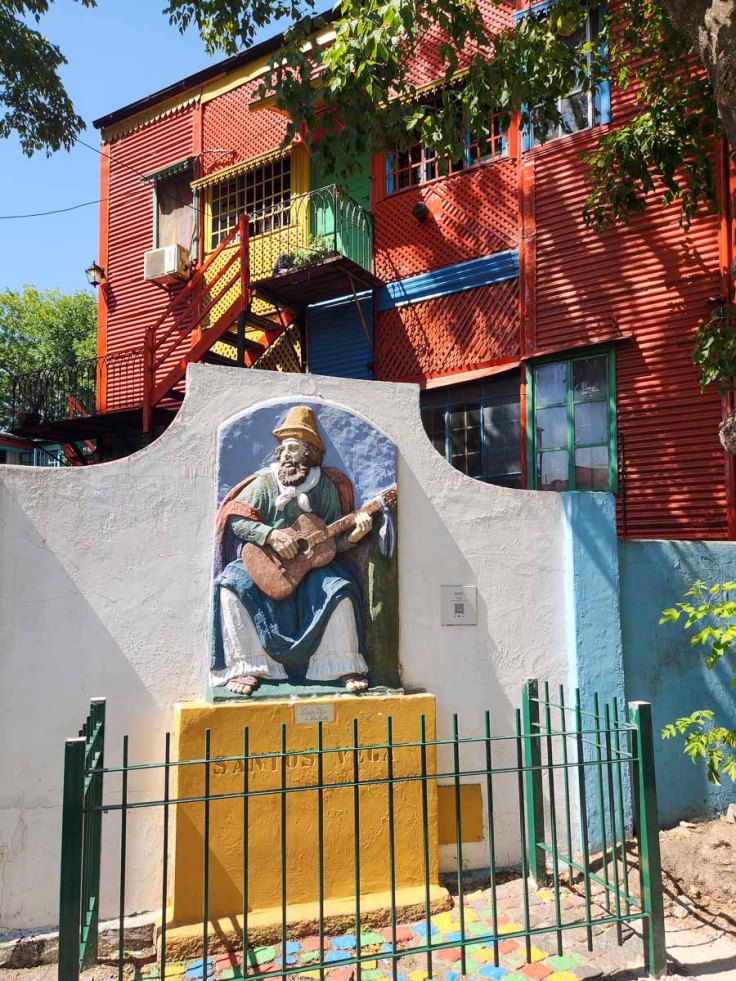
In contrast to the mural, the colours, balconies, and street art of Caminito felt theatrical and a little chaotic, though all of it is rooted in the neighbourhood’s history of ship paint, makeshift materials, and the artists who turned this corner of La Boca into one of Buenos Aires’ most photographed spots. Interesting and fun for a quick visit, but it is intensely touristy, with souvenir stalls, costumed characters posing for photos, and hawkers promoting a restaurant‑and‑tango show at every corner.
Teatro Colón
On our way toward Teatro Colón, we walked through the civic district around Plaza Lavalle, passing the grand neoclassical façade of the Escuela Presidente Roca with its Liber Liberat inscription and the broad plaza facing the Palace of Justice.
Teatro Colón has been Buenos Aires’ cultural showpiece for more than a century, a grand opera house completed in 1908 and long celebrated for its exceptional acoustics and ornate blend of Italian and French design. Its stage has hosted many of the world’s great singers and dancers, and the building itself has been carefully restored in recent years. We joined a guided tour to see the interior spaces, moving from the sweeping foyer to the gilded auditorium.
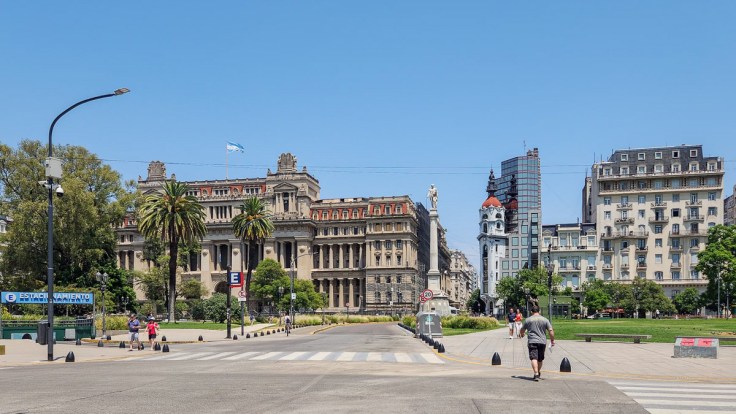
Supreme Court of Argentina behind Plaza Lavalle 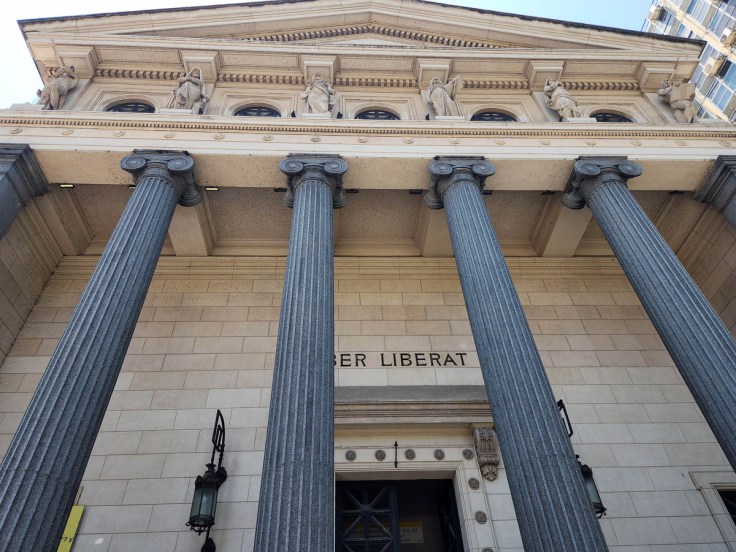
Escuela Presidente Roca 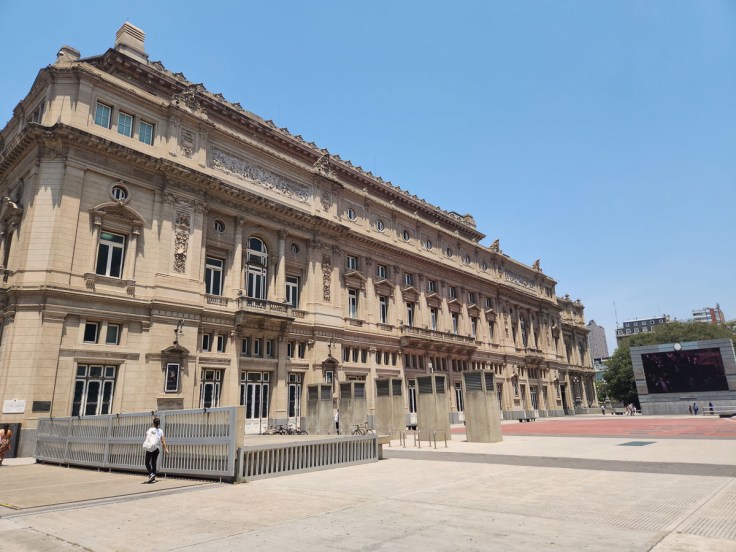
Side of Teatro Colón 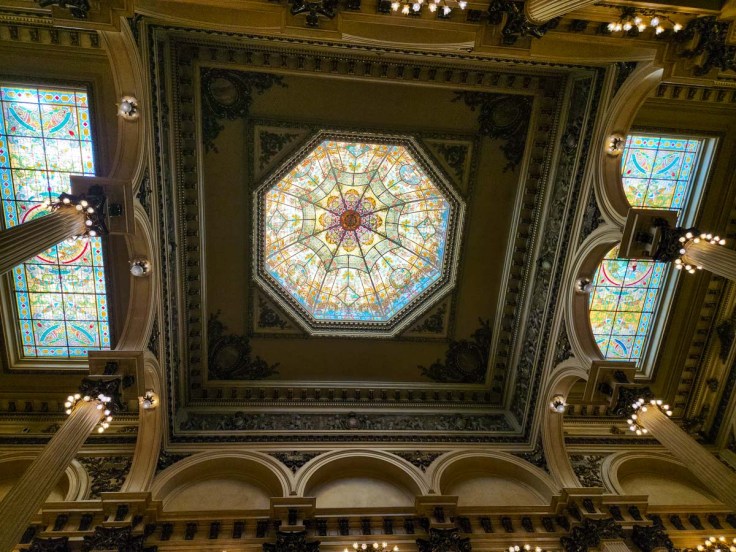
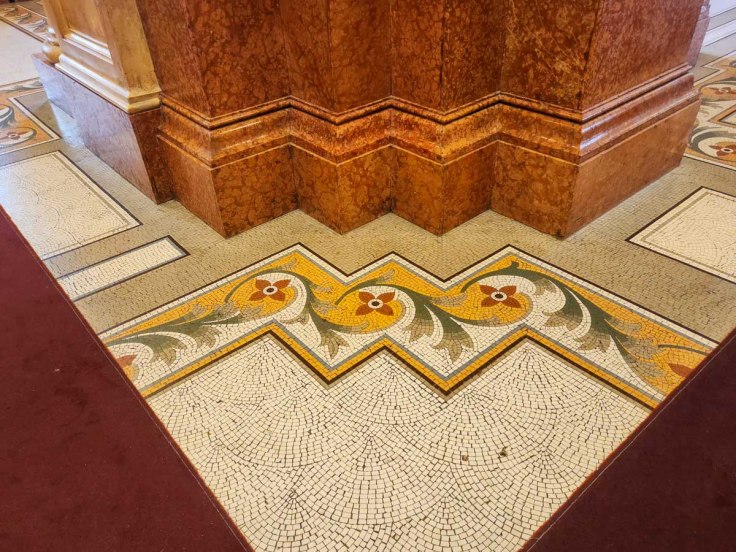
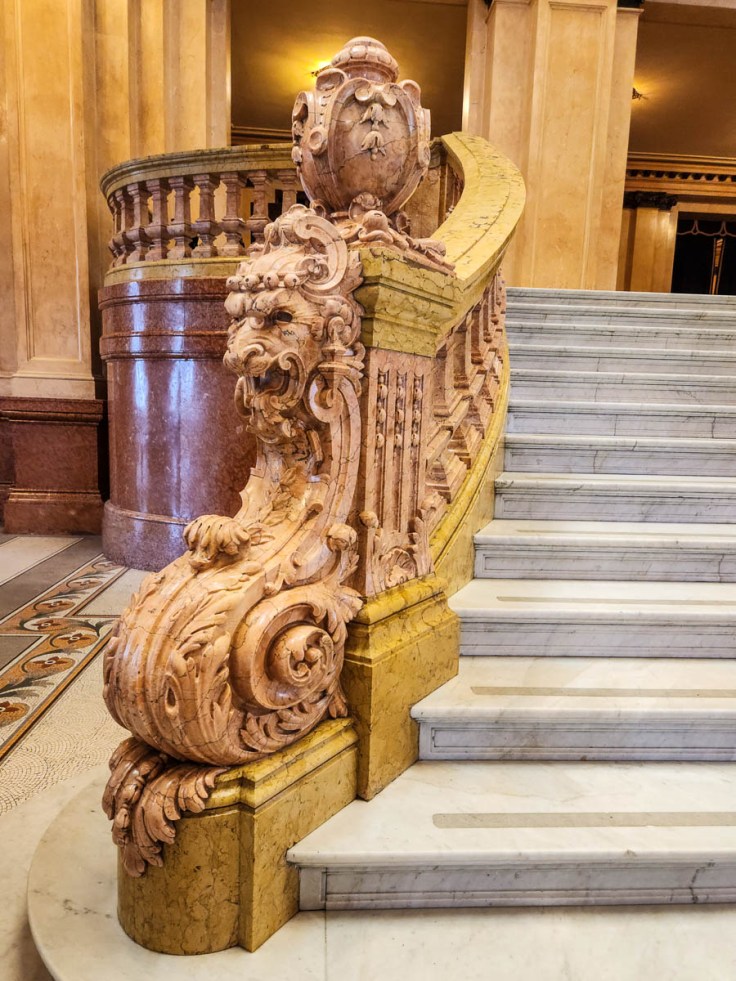
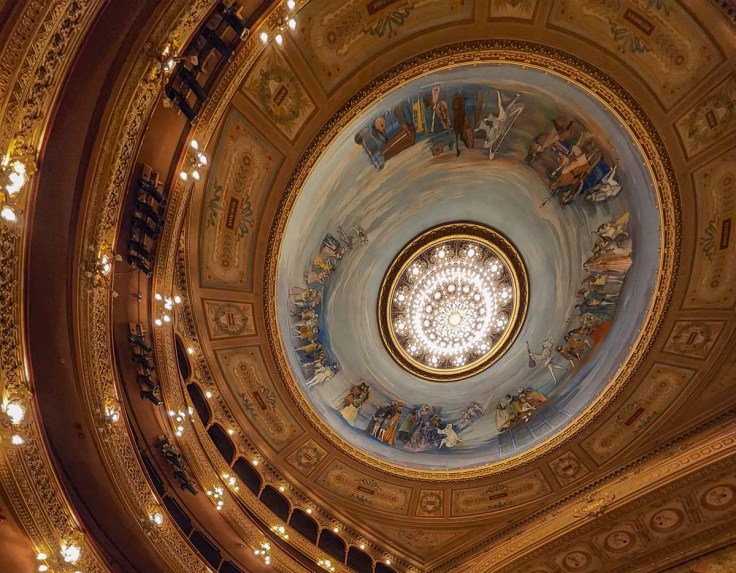
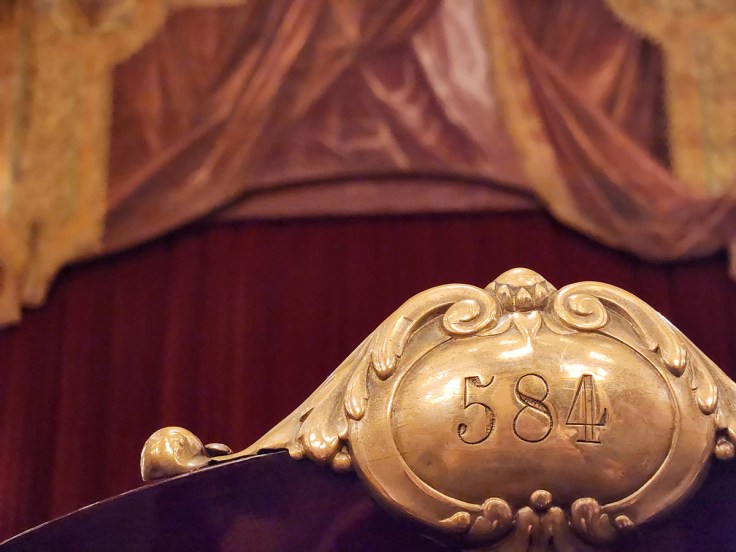
Ornate seat markers 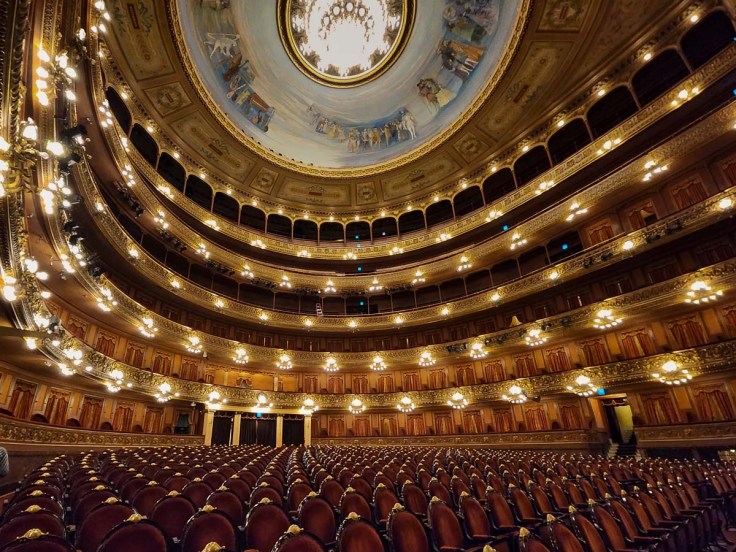
Scattered Impressions
From one theatre to another, we walked toward El Ateneo. Formally, El Ateneo Grand Splendid, this theatre has shifted genres. It still looks like a theatre with its frescoed dome, balconies, and stage, but the program has evolved over time, from opera, tango, radio, cinema, and finally to literature, though it is the books that now appear to be the audience, while a coffee house fills the stage.
Along our route to the bookstore, we chuckled at the idea that Tango is so ubiquitous in Buenos Aires that you can even learn the basic steps while window-shopping since they are embedded right into the sidewalk.
And, finally, hot and tired on our last day, we thought we would take an easy wander through Jardin Botánico to get back to our accommodation, but found the entire park fenced with only a few elusive entrances, which meant a long detour to get in and an equally long one to find our way back out on the other side. There are plenty of green spaces on the map of the city–hopefully not many are as difficult to access.
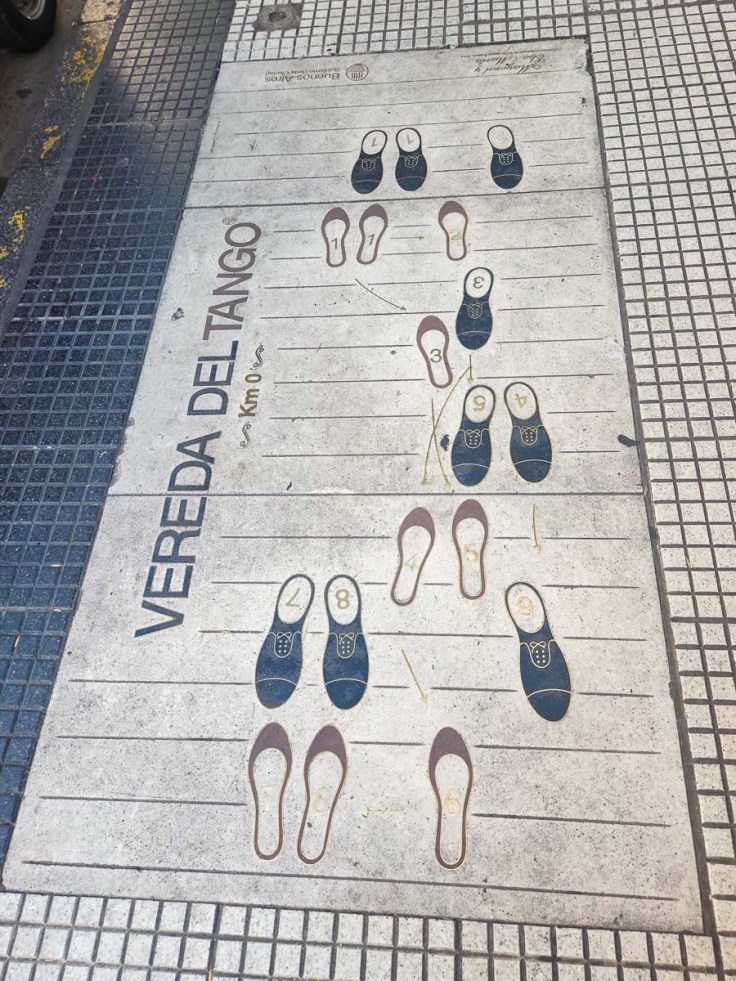
Teach yourself to Tango 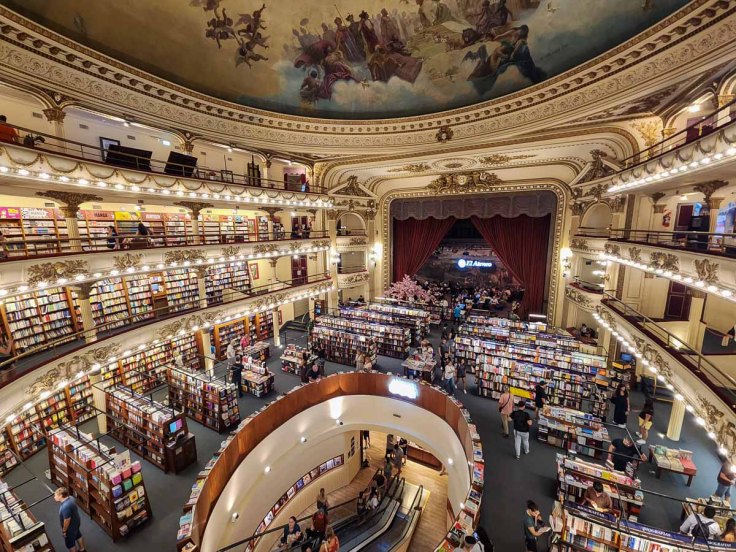
El Ateneo 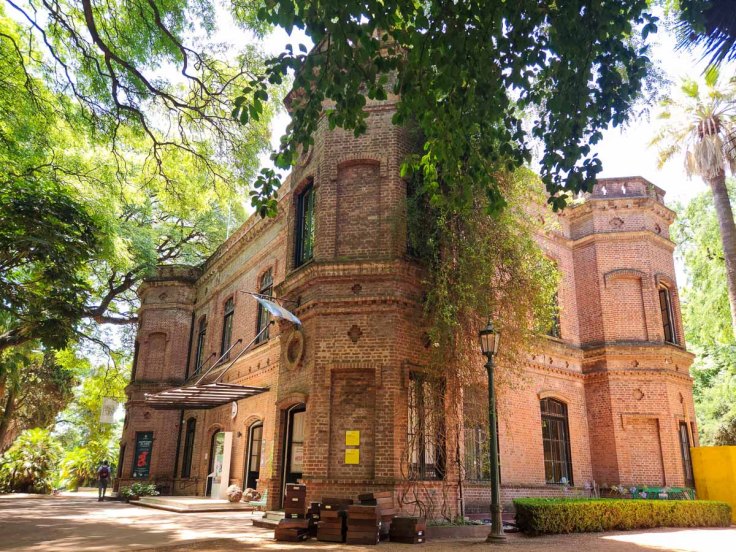
A building inside Jardin Botánico
TripBits
- Recoleta: Entry was about $45CAD for both of us.
- Hop-on-Hop-Off Bus: Cost for a day ticket for both of us was about $92CAD. There are two main offerings in Buenos Aires. We did the yellow Buenos Aires Bus.

 Life: Phase Next
Please drop us a note!