
We did a one-month house sit in a small town called Rose Bay about 20 minutes west of Lunenburg or an hour and 20 minutes west of Halifax. It turned out to be a wonderful base from which to explore the many towns and beaches, nooks and crannies, that we could reach within an hour or two.
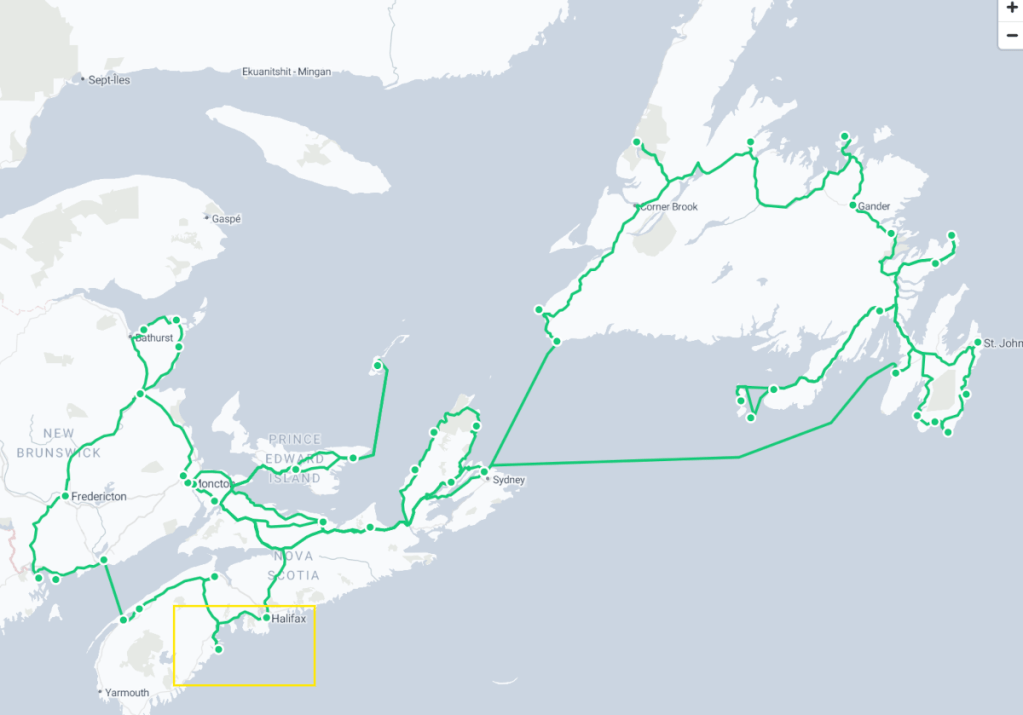
Our closest grocery shopping areas (except for a terrific cafe/general store just up the street) were Lunenburg to the east or Bridgewater, about 30 minutes to the north, both along scenic roadways. Drive up the La Have River was beautiful. We especially enjoyed the drive along the La Have River toward Bridgewater. Though we could also drive up to Bridgewater and over a bridge to cross the river, it was more fun to take the free ferry across to the other side to explore further east along the coast.

The popular La Have Bakery just across the river near the ferry dock 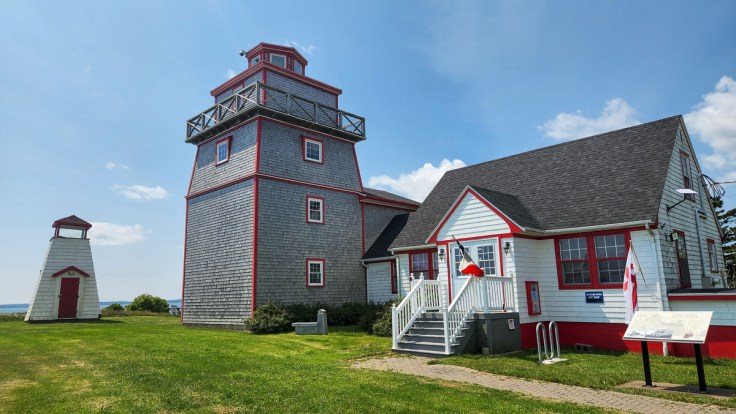
Fort Point Museum 
Colourful Adirondack chairs populated every home’s water vantage point 
The La Have ferry
Just a couple of days into our stay, we headed over to Riverport, just a few kilometres away, for a fun small-town Canada Day celebration. Activities took place in and around the firehall with firefighters and volunteers frying up platter after platter of fresh fish and constructing delicious strawberry shortcakes made with sweet, juicy local berries. The whimsical parade provided entertainment as we waited in line for our lunches.

Lunenburg
Since Lunenburg was so close, and a grocery shopping target, we visited there a few times: once just to walk around, another time for a night of music at the Tin Roof Distillery, and again when the Bluenose II was docked and to nosh on another tasty example of seafood chowder.

Art by school children depicting historic homes adds colour to the public washroom 
Lunenburg harbour 
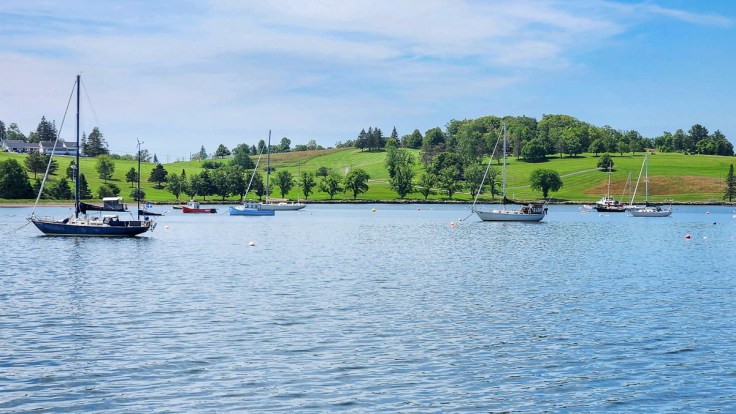
Looking across the harbour 
Colourful homes stand shoulder to shoulder 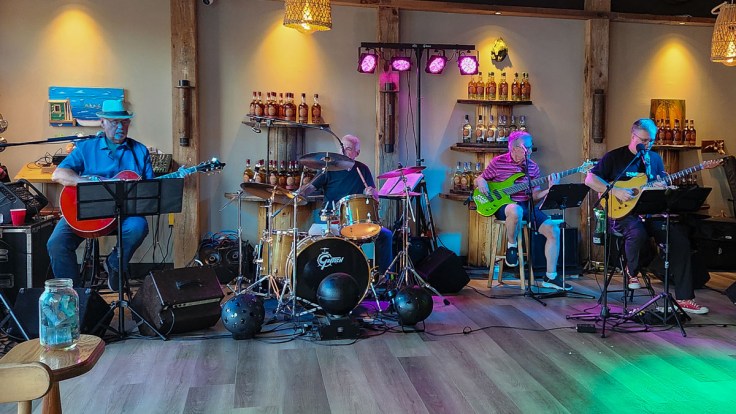
A night of rock classics at the distillery 
Bluenose II 
Details on the Bluenose II 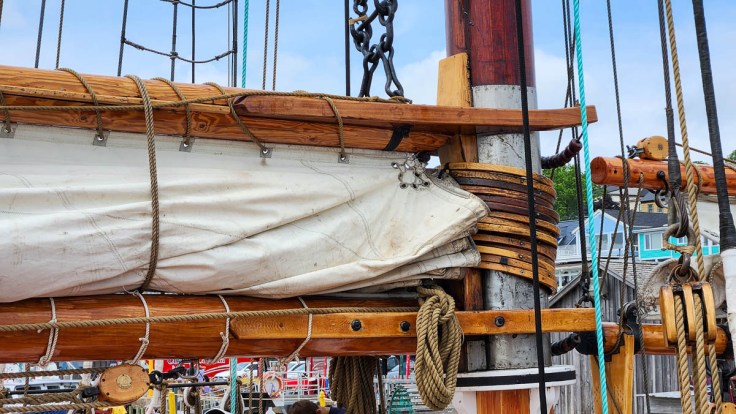

Lunenburg Acadamy, built 1893-1895
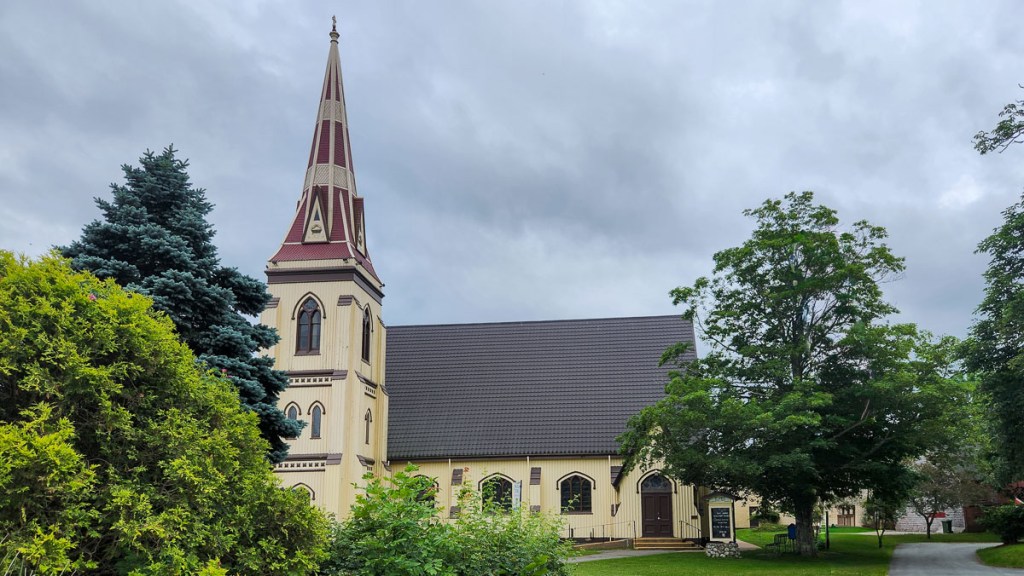
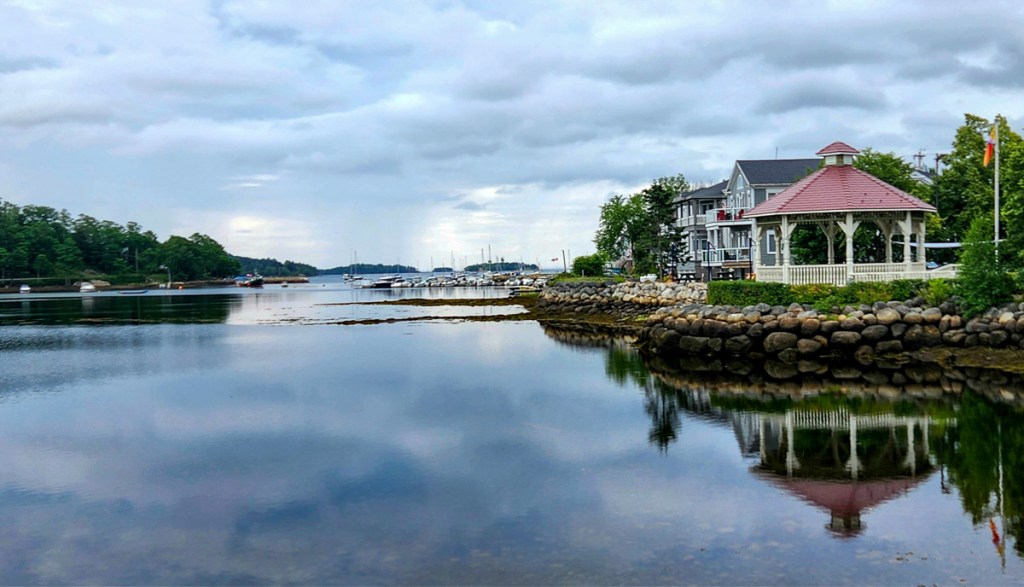
Mahone Bay
About 25 minutes northeast of Rose Bay is the small town of Mahone Bay, nestled at the tip of the long bay that shares its name. Known for its three picturesque bayside churches, we really liked what we saw, but ran into a lot of road construction, detours, and fencing that made exploring by car or on foot challenging.
Peggy’s Cove
One of Canada’s most photographed landmarks, Peggy’s Cove has been updated since we saw it last, over forty years ago, with accessible walkways and viewing platforms. We were entertained by an alphorn player and then a bagpiper as we sat and soaked up the scenery. We enjoyed our first lobster roll at a nearby restaurant that was recommended by friends who had visited recently.
As we headed away from Peggy’s Cove we stopped at a memorial for the crashed 1998 Swissair flight that killed all 229 people on board, and for those who helped with recovery and comfort. This connection to Switzerland made the alphorn we had seen and heard earlier make sense. The memorial’s location provides a different perspective of the coastline and Peggy’s Cove lighthouse.

Our first lobster roll 


A bagpiper takes over the serenade 
Swissair memorial 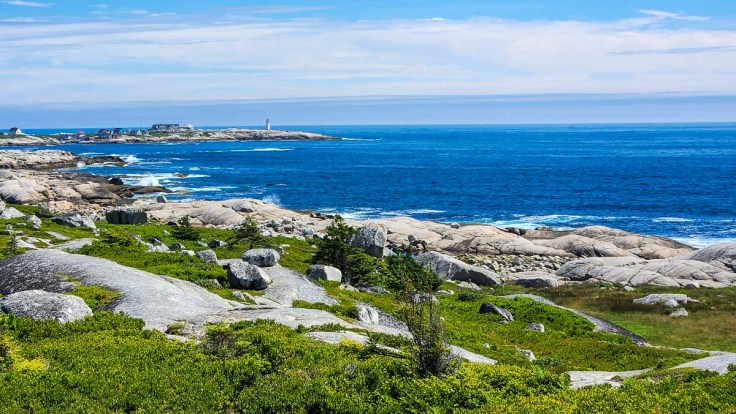
View of the coast and Peggy’s Cove from the memorial
Blue Rocks
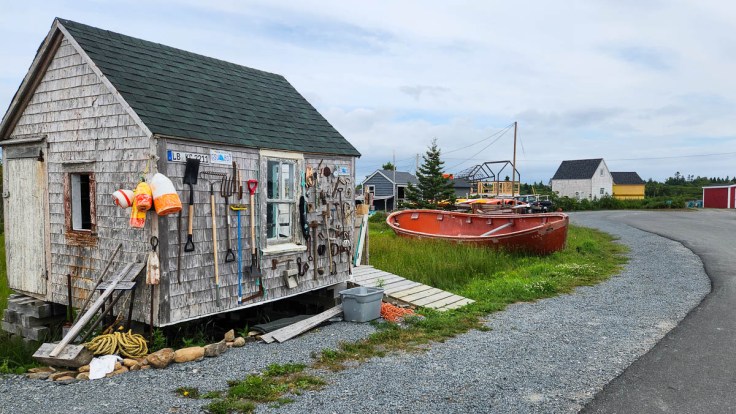
Beyond Lunenburg and out toward the end of that peninsula is a little fishing village called Blue Rocks. It is full of quirky buildings and offers rental kayaks for exploring the rocky shore and nearby islands.


The Ovens
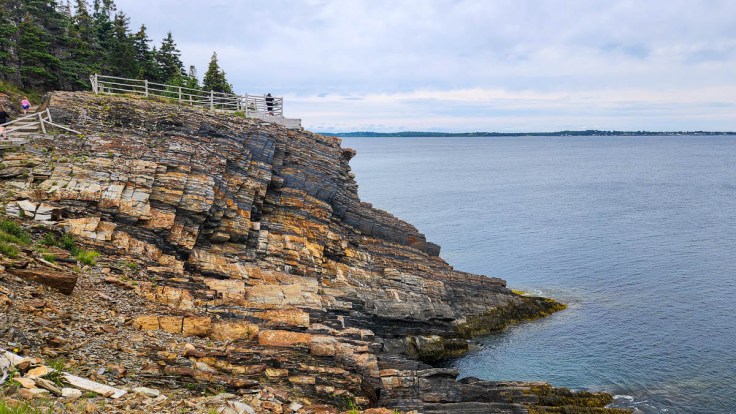
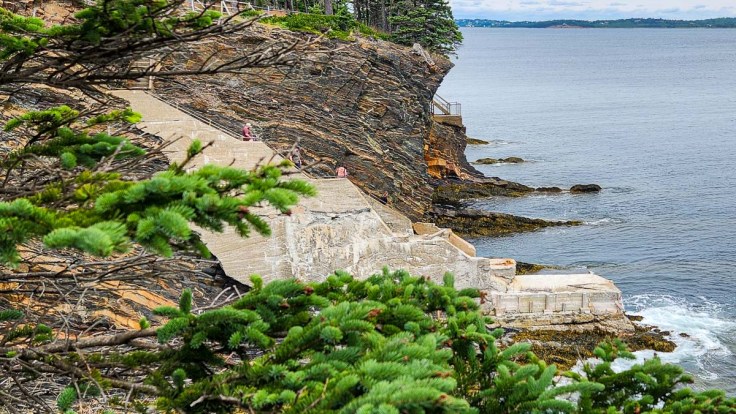
Across Rose Bay from where we were staying is The Ovens Natural Park, a privately owned 190-acre reserve offering camping and other activities. Of most interest to us was the walk along the cliff’s edge to see the rock formations and sea caves (via steep stairs).

Kejimkujik National Park and Historic Site
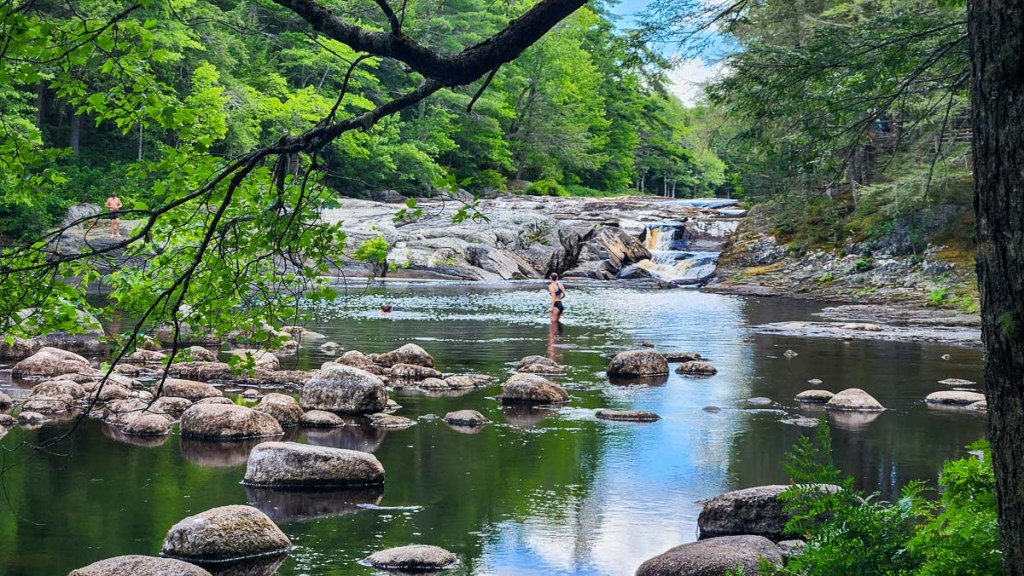
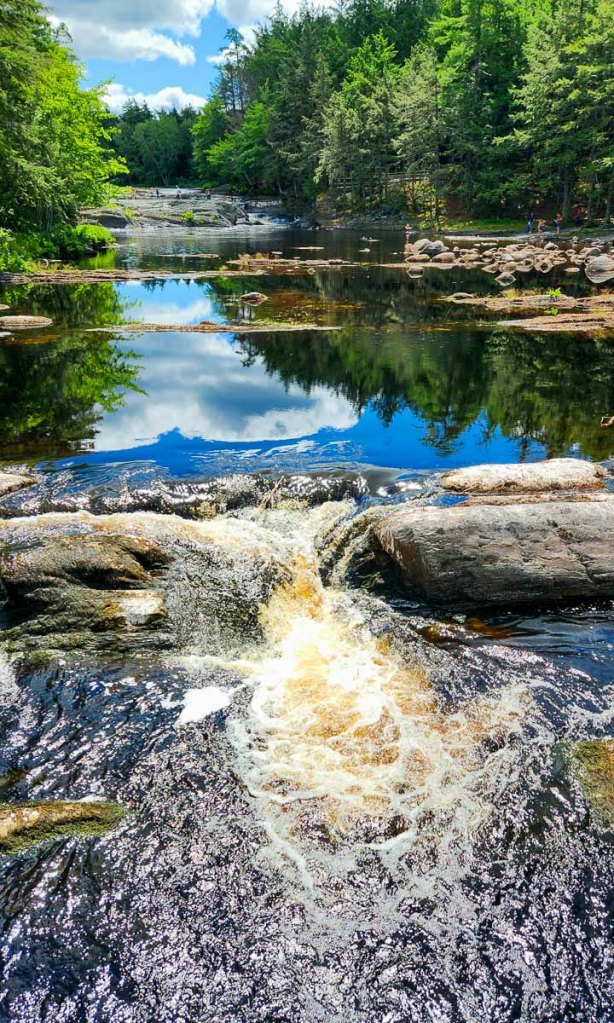
About an hour north of our housesit, Kejimkujik National Park (Keji for short) is an absolute gem. At over 400 square kilometres, we weren’t sure how we would approach this massive park or what we would find, but a stop at the visitor center set us straight. We drove the park’s roadways, stopping at several locations for short hikes and views. Everything was stunning. If we were living nearby, we could see ourselves spending a lot of time here cycling, kayaking, and just enjoying the beauty of the park.


Beaches
With the area’s many bays, inlets and craggy coastlines, there is an impressive range of beaches close by. These are some of our favourites.
Rose Bay
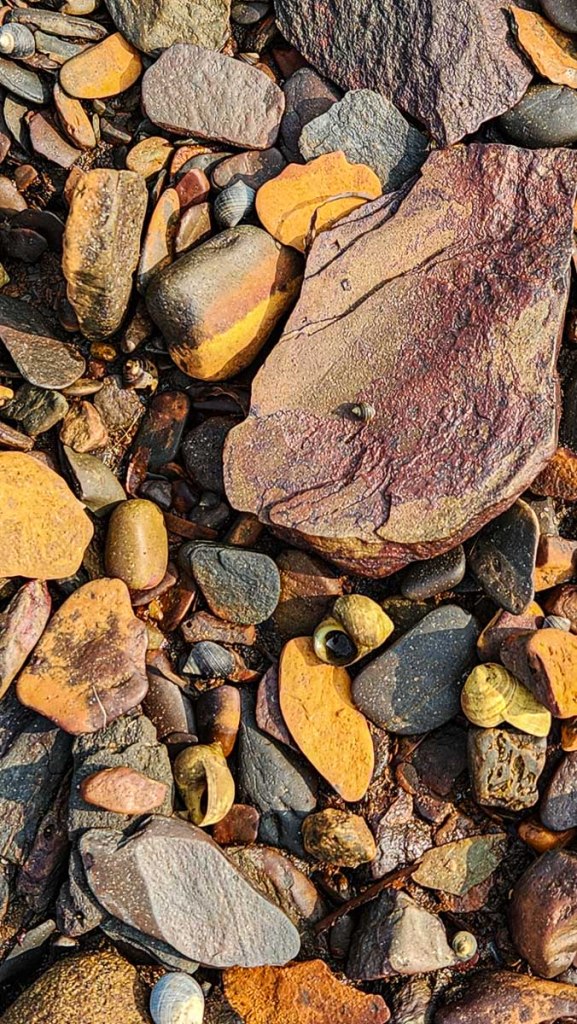
This colourful Rose Bay beach was right at the end of our driveway. As we drove around to other beaches, we regularly saw the strikingly bright yellow of this seaweed (possibly Rockweed?) along some shorelines. On this particular beach, the rocks seemed to mirror the colours of the seaweed.

Hirtle’s Beach
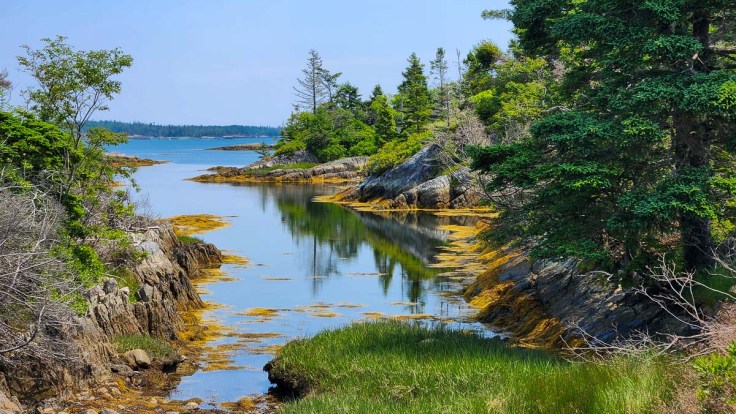
A five-minute drive away, Hirtle’s Beach runs along another bay at the end of a peninsula. A popular walking and running area with a parking lot and washrooms, the beach connects to the Gaff Point Trail, a moderate hike around the cliffs.


Crescent Beach and La Have Islands
Crescent Beach runs for more than two kilometres and connects the mainland to the La Have Islands. The beach is fine, seemingly never-ending sand that encourages relaxation, but the islands are definitely worth the drive out to poke around and explore.

Parking and driving along the beach is permitted 

Halifax
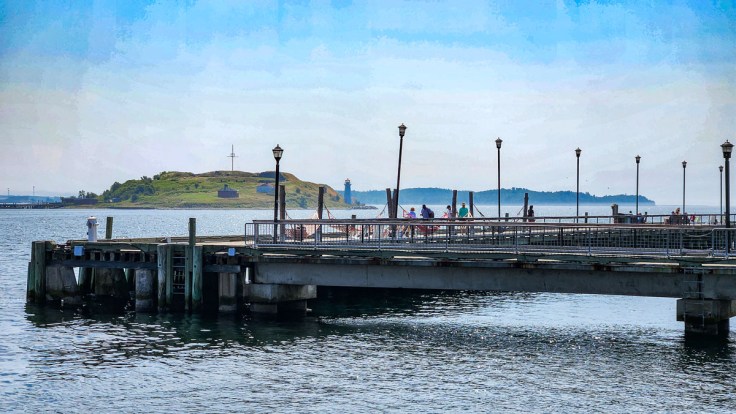
We ended our time on Nova Scotia’s south shore with a few days in Halifax. We walked the hills up to the citadel and down to the waterfront. We explored the Maritime Museum and took the ferry across to Dartmouth. We caught a bit of the Halifax Busker Festival while walking the length of the Harbour Walk and wandered through the peaceful Halifax Public Gardens. It was a colourful and fun few days.

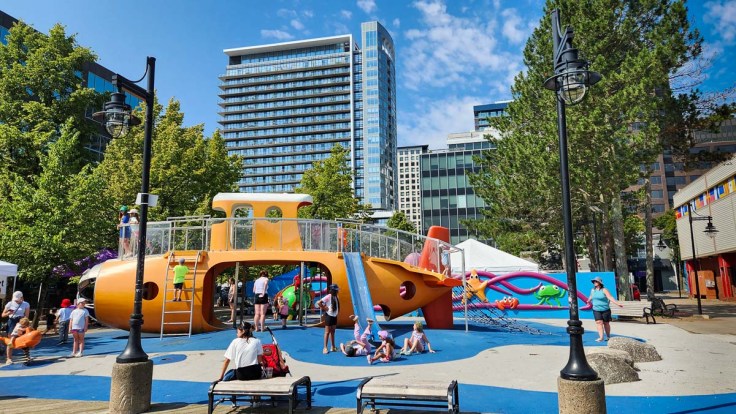
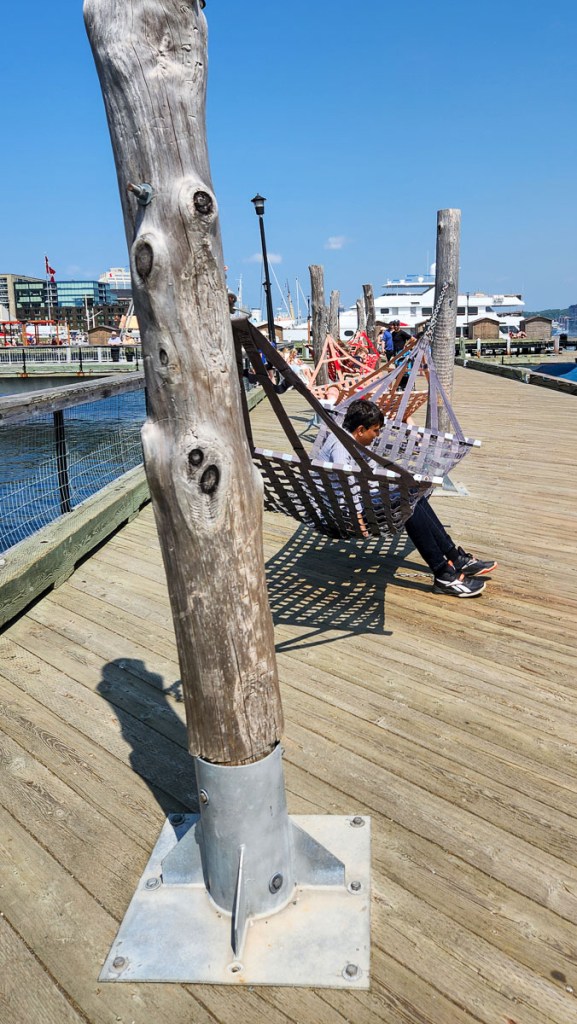

Whimsical sculptures “Get Drunk and Fall Down” beside Ken, and “Fountain” at the other side of the wharf (though the fountain is not active) 
A helicopter landing on Georges Island 
Ferry to Dartmouth 
Citadel 
Halifax Public Gardens
TripBits
- The Ovens Nature Park: $12/adult, $8/senior to park and walk the trails.

 Life: Phase Next
Please drop us a note!